Myanmar Genocide Case at International Court of Justice
The International Court of Justice is set to deliver a verdict that could hold Myanmar accountable for genocide against the Rohingya minority.
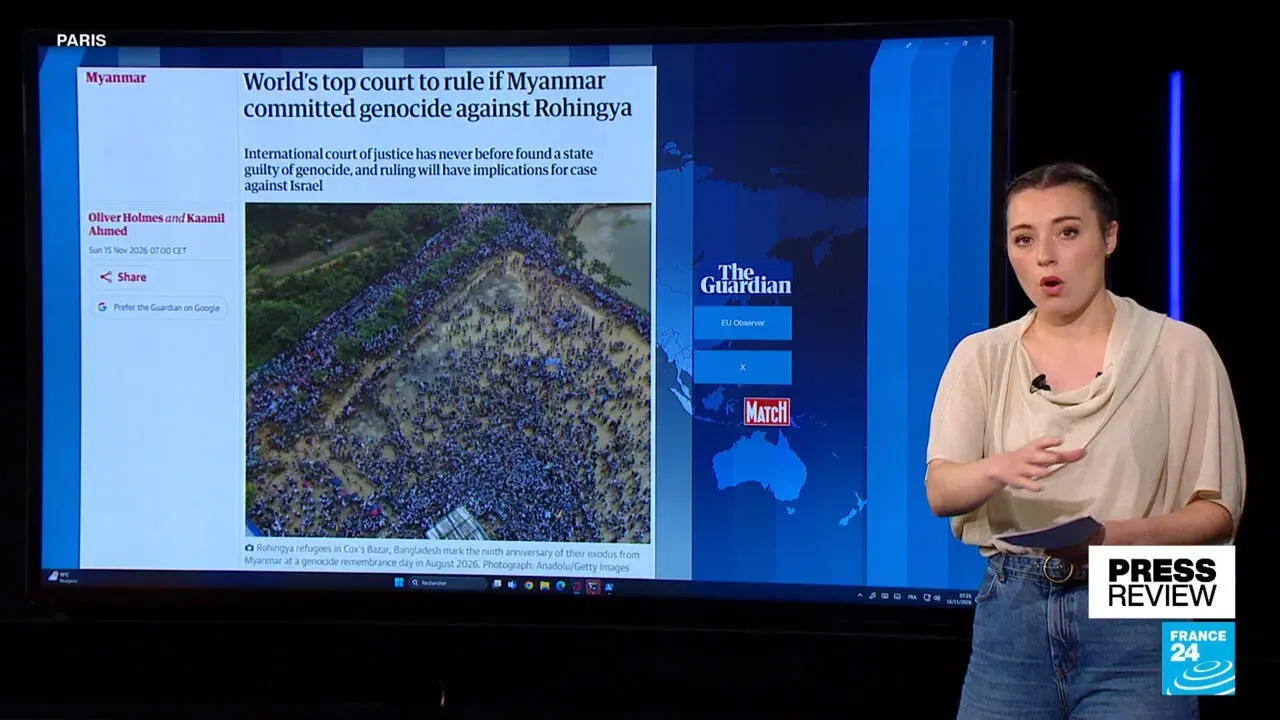
The International Court of Justice (ICJ) is set to deliver a verdict that could hold the state of Myanmar accountable for genocide against the Rohingya minority. The court's decision will be closely watched by international observers as it sets a crucial precedent on the question of intent in such cases.
Atrocities committed against the Rohingya in 2016 and 2017 included the burning of entire villages, systematic shooting of civilians, drowning of children in rivers, and brutal sexual violence. These acts have been well-documented by human rights organizations and international media outlets. The Guardian has extensively reported on these atrocities, shedding light on the suffering of the Rohingya people.
The EU Observer notes that no state has ever been held responsible for genocide since the creation of the ICJ and the adoption of the 1948 Genocide Convention. This raises questions about the effectiveness of the convention in preventing such crimes from occurring in the first place. Despite this, the court's ruling is expected to serve as an important reminder of the atrocities committed against the Rohingya.
The Myanmar case has significant implications for other countries facing similar accusations of genocide. South Africa, for instance, has brought a case against Israel over its actions in the Gaza Strip, and the ICJ's verdict may set a precedent for such cases. The question of intent will be crucial in determining the outcome of this case, as it is essential to establish that a state committed genocide with the intention of destroying a particular ethnic group.
The international community is eagerly awaiting the court's decision, which could have far-reaching consequences for Myanmar and potentially other countries accused of similar crimes. Human rights organizations are closely watching the proceedings, hoping that the ICJ will hold Myanmar accountable for its actions.
The verdict will also be scrutinized for its potential impact on international relations between countries accused of genocide. The case has sparked intense debate about the role of the ICJ in holding states accountable for human rights abuses and preventing such crimes from occurring in the future.
The Myanmar genocide case has reached its verdict week, marking a critical juncture in the international community's efforts to hold perpetrators accountable for their actions.
In related news, France is grappling with its own human rights issues, including child prostitution, which has been highlighted by recent trials involving minors as young as 13. These victims often have troubled pasts and are exploited by violent individuals who pose as their boyfriends or partners. The cases have exposed a disturbing trend of impunity among those who engage in such activities.
The verdict week in the Myanmar case is also significant because it raises questions about the role of international courts in preventing human rights abuses. Can these institutions truly make a difference, or are they limited by their jurisdiction and resources? These are the kinds of questions that will be debated long after the verdicts have been delivered.
In other news, France's Gironde region is still reeling from the devastating wildfires that swept through 42,000 hectares of land three months ago. The town of Le Porge was particularly hard hit, with 250 homes and buildings destroyed. While no one was left homeless, many residents are struggling to come to terms with their new circumstances.
The transfer of a collection of 12,000 formerly banned books from the Department of Justice to the National Archives in Ireland marks an important step towards reckoning with that country's long history of censorship. The records and ledgers from the Censorship of Publications Board will also be made available to the public, shedding light on a period that lasted from 1926 to 1996.
Facts based on reporting originally published by France 24 English.
You may republish this story, in full or in part, if you credit News Central Site and link to it (licence CC BY 4.0). Photos are not included.