Soil Loss from Heavy Rainfall Raises Concerns Globally
Heavy rainfall and strong winds are stripping away fertile topsoil from fields around the world, with researchers questioning the reliability of widely used formulas for estimating soil loss.
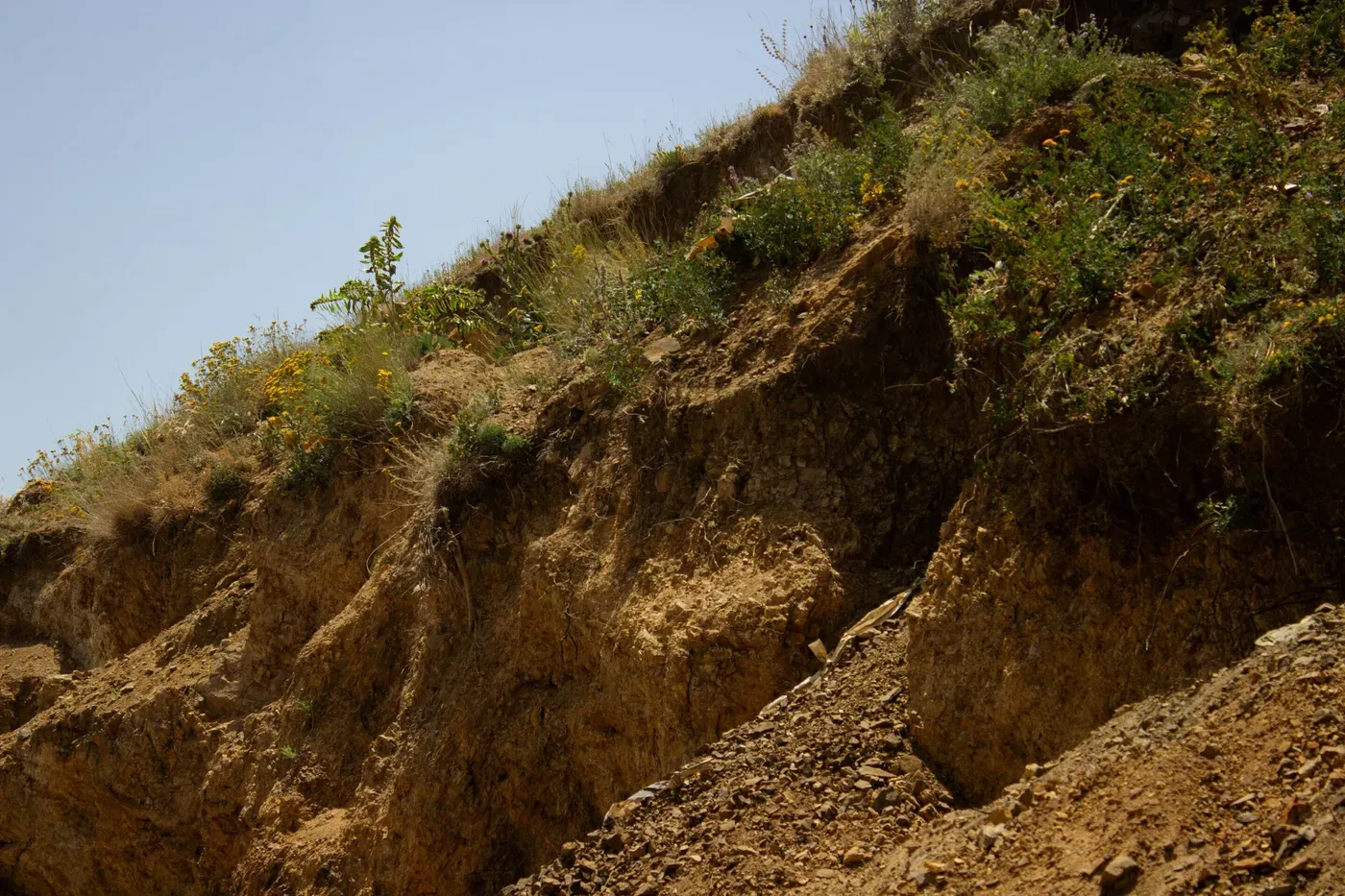
Heavy rainfall and strong winds are stripping away fertile topsoil from fields around the world. This valuable layer of soil is where plants take root and most nutrients are found, but it's being washed away by intense rain, particularly on sloping ground or areas with sparse vegetation. Once lost, topsoil can take decades to centuries to reform.
Researchers rely on computational models to estimate how much soil is being eroded globally. However, a widely used formula has been called into question for its reliability in certain regions. The Universal Soil Loss Equation and its revised version, (R)USLE, have become standard tools for estimating soil loss worldwide.
These formulas were originally developed from measurement plots primarily located in the Midwestern and Southern United States. Despite their widespread use globally, Dr. Pedro Batista has raised concerns about their accuracy when applied to tropical and subtropical regions.
The problems with these formulas are not limited to overestimating erosion rates. When used in these areas, they often produce catastrophic results that aren't supported by the available data, says Dr. Batista. His research focuses on understanding soil erosion patterns in the tropics, a critical area for agricultural productivity and food security.
Dr. Batista's work is part of his Emmy Noether Junior Research Group at the University of Augsburg, where he's investigating the unique challenges posed by tropical soils to erosion modeling.
The widespread use of a US-based calculation formula to assess soil erosion has been criticized by researchers from around the world, who argue that it produces unreliable figures for regions in the Global South.
This criticism stems from the fact that the model, which is based on data from the United States, does not account for unique characteristics of tropical soils and environments found in many countries in the Global South. As a result, the model's predictions often fail to accurately reflect local conditions, leading to flawed policy decisions and inadequate protection for vulnerable communities.
Researchers point out that if a model developed in India were used to predict soil erosion rates in Europe and North America, it would likely produce alarmingly high estimates - yet such results are often accepted without scrutiny when applied to the Global South. This phenomenon is seen as a consequence of neocolonial biases within the geosciences, where Western models and approaches are frequently adopted without consideration for local contexts.
The authors emphasize that their criticism is not intended to downplay the very real problem of soil erosion in the Global South, but rather to highlight the need for more nuanced and locally relevant approaches. They urge academic journals, peer reviewers, and funding organizations to critically evaluate the use of models outside their intended scope and provide greater support for local measurements and innovative research from regions in the Global South.
Advances in technology, such as affordable sensor systems and photogrammetry, now offer opportunities for more accurate and localized assessments of soil erosion. Researchers recommend presenting model results as ranges rather than single values to reflect the inherent uncertainty and variability of environmental processes.
The limitations of a widely used formula for estimating soil erosion have been exposed in regions where it was previously applied without question. Researchers are now calling for more nuanced approaches to understanding this complex issue. According to experts, presenting model results as single values can be misleading and fails to account for the variability inherent in environmental processes.
Batista's own research is shedding light on the need for alternative methods in tropical regions like the Brazilian Cerrado. By focusing on local conditions and adapting models to suit specific contexts, scientists aim to improve the accuracy of their findings.
Facts based on reporting originally published by Phys.org.
You may republish this story, in full or in part, if you credit News Central Site and link to it (licence CC BY 4.0). Photos are not included.