Severe Dental Problems Plagued Jeremy Bentham
CT scans of his severed head revealed severe oral issues that likely caused him constant discomfort towards the end of his life.
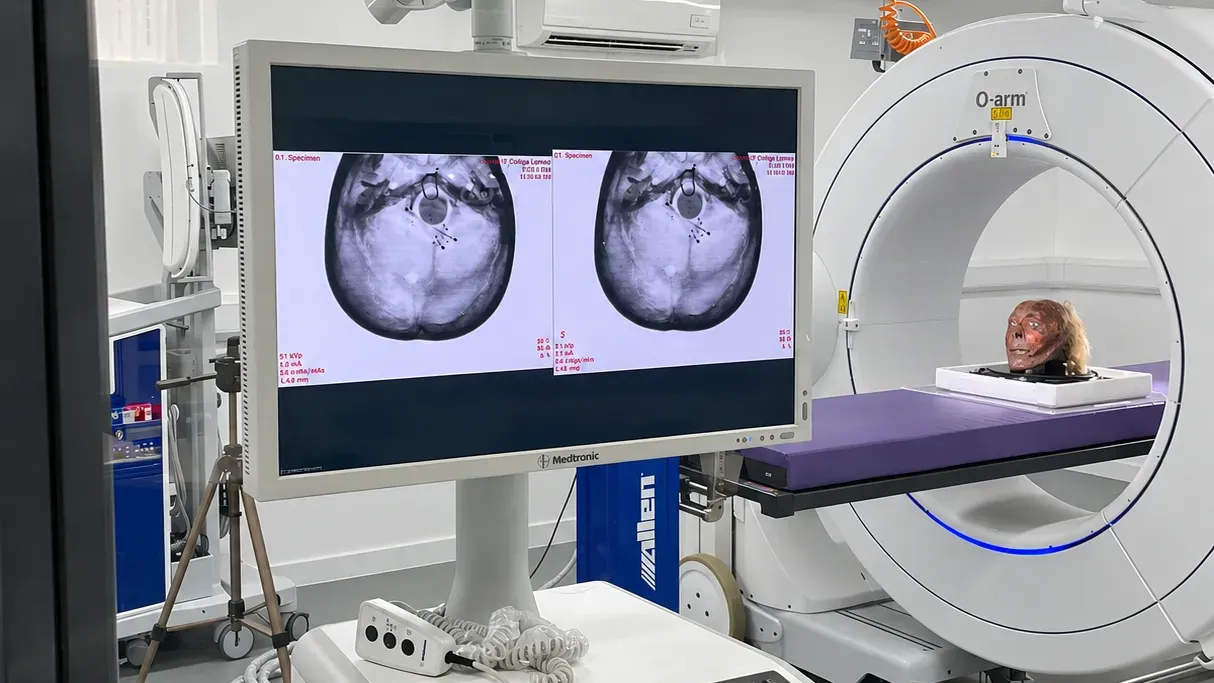
Severe dental problems plagued Jeremy Bentham, a prominent philosopher who founded University College London over 150 years ago.
CT scans of his severed head, conducted to create a digital 3D model for UCL's celebrations marking its 200th anniversary, revealed the extent of his oral issues. The scans also highlighted the significant role Bentham played in shaping the university's utilitarian philosophy. His ideas about maximizing happiness and minimizing suffering had a lasting impact on the institution.
Bentham's dental problems were severe enough to cause him "excruciating pain, according to Tannis Davidson, project leader of the scanning process and curator of UCL's Grant Museum of Zoology. The scans showed that his lower jaw was riddled with advanced arthritis, making it likely that he had been in constant discomfort towards the end of his life.
Bentham died at the age of 84 from natural causes, having declared as a young man that he would donate his body to science after passing away.
The auto-icon of Jeremy Bentham has been on display at University College London (UCL) since the 1850s, where students can catch a glimpse as they pass by. This unusual memorial is a replica of Bentham himself, fashioned from his remains after he passed away in 1832. According to Davidson, it was created to honor him in a way that's similar to a traditional tombstone.
The auto-icon is not a mummy, but rather a reconstruction made from the dissected body parts. To create this likeness, Bentham's skeleton was dressed in his own clothes, which were stuffed with straw for added realism. However, the process of preserving his head with sulfuric acid resulted in significant damage, necessitating a wax reconstruction based on existing paintings and death masks.
The real head of Jeremy Bentham was attached to the body, but its condition was far from ideal. The eyes had been replaced with highly detailed glass ones, which can be seen clearly in CT scans taken later. It's worth noting that these scans also revealed the extent of Bentham's dental problems and the excruciating pain he must have endured.
Bentham's head has an interesting history, having been stolen from UCL in 1975 by rival students from King's College London. The thieves held it for ransom for a few days before returning it to its rightful place, where it remains locked away to this day.
Bentham's concept of an auto-icon, or self-representation, aimed to preserve the deceased in a lifelike manner. He envisioned a future where people would create similar representations as a way to keep their loved ones close. The idea was not just about preserving physical appearance but also about capturing the essence and character of the individual.
The CT scans of Bentham's severed head reveal a different story from what he had planned for his auto-icon. Despite instructions for brain removal, some dura mater, a protective layer covering the brain and spinal cord, remained intact. This discrepancy highlights the complexities involved in preserving human remains according to historical standards.
Bentham's personal struggles with dental issues are well-documented, with him frequently writing about the pain he endured. However, it appears that his understanding of the underlying causes was limited. His dental problems were likely exacerbated by severe arthritis in his lower jaw, which would have made even basic oral care challenging.
The state of dentistry during Bentham's time differed significantly from modern practices. Dentistry 200 years ago was a very different kettle of fish than it is today," an expert notes, underscoring the challenges faced by individuals with dental issues in the past.
Jeremy Bentham's life and work continue to fascinate historians and scholars alike due to his unique approach to social reform.
Despite his significant contributions to utilitarianism, Bentham suffered greatly from dental issues throughout his life, which often left him in excruciating pain. His personal struggles are now being examined through CT scans of his severed head, providing a rare glimpse into the private life of this influential thinker. The scans reveal that Bentham's dental problems were severe, adding another layer to our understanding of his experiences.
Bentham's concept of the panopticon, introduced in 1791, was initially intended as a humane alternative to Australia's penal colonies but has since become synonymous with state control and surveillance. His other notable invention, the felicific calculus, allowed him to numerically assess the benefits and drawbacks of any given action based on several key variables. This meticulous approach to decision-making reflects Bentham's overarching goal of improving the lives of ordinary people.
The unusual circumstances surrounding Bentham's death have also garnered attention, with some speculating that his desire for an auto-icon was a deliberate attempt to circumvent traditional Anglican burial rites.
Facts based on reporting originally published by Live Science.
You may republish this story, in full or in part, if you credit News Central Site and link to it (licence CC BY 4.0). Photos are not included.