Samsung Releases New Flagship OLED TV S95H
The Samsung S95H offers exceptional picture quality and advanced AI processing capabilities in a remarkably straightforward setup process.
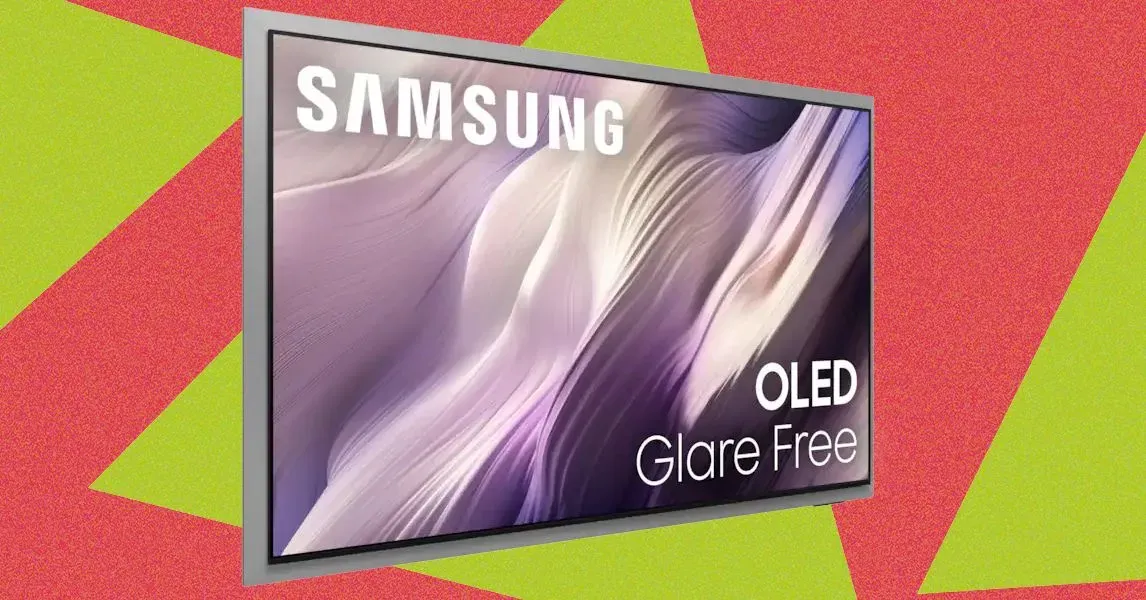
A new flagship OLED TV has been released by Samsung, the S95H, which promises exceptional picture quality and advanced AI processing capabilities.
The setup process for this TV is remarkably straightforward, requiring no additional hardware or breakout boxes to get started. This ease of use is a welcome feature in an era where home entertainment systems are becoming increasingly complex.
One of the standout features of the Samsung S95H is its incredibly accurate color reproduction, paired with deep and rich blacks that bring out the full depth of any visual content. The AI Optimized picture mode also enhances color quality and contrast, making for a truly immersive viewing experience.
However, some tests have revealed a notable limitation in the TV's ability to capture subtle skin tones, often resulting in less variation than what is seen on RGB models.
In addition to its technical prowess, the S95H has undergone a design overhaul, with a sleek new silver bezel that adds a touch of sophistication to any living room. This cosmetic update gives the TV a more premium look and feel.
The revised design may be more to some people's taste than others, but it is undeniable that the new bezel has generated significant interest among consumers.
The S95H marks an important milestone in the evolution of OLED technology, but it faces stiff competition from newer RGB models and art TVs that are pushing the boundaries of what is possible with television displays.
The Samsung S95H OLED TV has undergone some design changes that affect its connectivity options. Gone is the One Connect breakout box, which was previously included in the package but can now be bought separately if desired. This change means users must connect their external devices directly to the television, a setup that may seem more straightforward without the additional device.
While this shift does make the S95H slightly thicker than its predecessor at 1.04 inches compared to 0.4 inches for the S95F, it has some advantages in terms of convenience. Without the One Connect box, there's one less device to set up and manage, which can simplify the overall viewing experience.
The S95H features a more traditional array of ports on its right side, including four HDMI connections. These are supplemented by an Ethernet jack for wired internet connectivity, optical audio out for surround sound, two USB ports for playing files from external storage drives, and a headphone jack. The TV also supports the latest Wi-Fi 6E standard for faster speeds and improved compatibility.
The S95H's design allows it to be mounted flush to a wall, much like its predecessor. However, I opted to use the included pedestal stand during testing, which attached easily to the back of the television. This stand provides a stable base for the TV while also allowing for some flexibility in terms of placement.
The user interface on the S95H is powered by Tizen OS, an operating system that has its fans but can be confusing for those unfamiliar with it. While I have experience with Tizen and was able to navigate the setup process without issue, others may find it more challenging than models running other interfaces like Google TV.
One aspect of the S95H's design that I particularly appreciate is its remote control. Uncluttered and easy to use, it provides access to essential functions like channel selection, mute, and volume control, along with a few app shortcuts for popular services like Netflix.
The Samsung remote stands in contrast to some other models on the market, such as those from Hisense, which often feature an overwhelming number of buttons. In my experience, most users can get by with a more streamlined approach to remotes, focusing on essential functions and key app shortcuts.
The color accuracy of the Samsung S95H OLED TV has been put to the test in rigorous real-world evaluation, revealing its capabilities compared to other flagship models.
Measuring up against the competition, the S95H delivers excellent color quality across various scenes and content types, but falls short in specific instances. The market for high-end TVs is increasingly saturated with top-notch options, making it no longer a straightforward choice to opt for Samsung's latest flagship model.
A particularly demanding test case was the movie Awake, which features numerous dark scenes that often challenge even the most advanced TVs. Despite some initial struggles, the S95H ultimately performed well in these scenes, although requiring adjustments to achieve optimal results.
The AI Optimized picture mode proved instrumental in enhancing color and clarity in several key scenes from Awake, outshining its predecessor, the Samsung Micro RGB R95H, in certain instances. This feature not only improved overall image quality but also demonstrated the S95H's ability to showcase contrast and depth simultaneously.
A similar success story unfolded with The Creator, where AI Optimized helped reveal a wealth of texture details in a dark scene featuring cliffs that would otherwise appear dull on some OLED and RGB TVs.
This performance suggests that the S95H's OLED technology is capable of delivering high-quality visuals, including deep blacks, contrast, and clarity.
The Samsung S95H OLED TV has proven itself to be a capable performer when it comes to color representation. A scene from The End of Oak Street showcased people wearing brightly colored shirts without any noticeable color blooming or bleeding.
In contrast, the Super Mario Galaxy Movie is often used as a benchmark for color bloom testing, and the S95H exceeded expectations in this regard. Interestingly, the TV's Filmmaker picture mode, which can sometimes make movies appear too dark, actually corrected for color bloom issues in the Galaxy movie.
The OLED technology in the S95H also excelled when rendering darker scenes with complex colors. A particularly challenging scene from Guardians of the Galaxy Vol 2 showcased a dark uniform with excellent shadow detail, demonstrating the TV's ability to handle nuanced color gradations.
One notable aspect of OLED technology is its ability to render blacks and grays with exceptional depth and clarity by adjusting or turning off individual pixels as needed. This feature was evident in a scene from Game of Thrones where an army at night was depicted with good results when using AI Optimized mode, but would otherwise appear too dark.
A skin tone test revealed some minor issues with the S95H's color accuracy, particularly in scenes featuring multiple people. In one instance, there wasn't enough variance in color between individuals to make them easily distinguishable from one another.
The TV also exhibited some minor flaws when rendering certain nature scenes, such as a demo reel showcasing various outdoor environments. For example, grass appeared slightly less vibrant and detailed compared to the LG Micro RGB Evo in one scene near a fence, while dark trees in a forest scene still retained plenty of shadow detail.
When viewing a benchmark demo, it's clear that OLED technology has an edge over RGB in rendering blacks and grays regardless of the content being displayed.
OLED's color capabilities are also on par with those of RGB, as evidenced by a scene featuring a yellow flower and a red cactus that appeared brighter than any RGB model I've tested.
In particular, a 4K Ultra playback of Blade Runner 2049 showcased yellows and reds in one scene that looked hyper-realistic, almost like you could reach out and peel the color off the screen.
On other RGB models from Sony, Hisense, and even Samsung, colors were not as sharp or vibrant as those on the S95H OLED TV.
Moving to gaming tests, I was impressed by the picture quality, refresh rate, and sound of the S95H. A library scene in Resident Evil Requiem lacked texture and detail compared to some RGB models and projectors I've tested.
However, when playing Red Dead Redemption 2 at 165 Hz, the S95H looked crisp and felt responsive, especially during a lakeside horse ride scene that showcased incredible detail on the main character's face.
In other gaming tests, such as playtesting Senua’s Saga: Hellblade II on an Xbox Series X with AI Optimized picture mode enabled, the main character's face appeared a bit dark.
The anti-glare technology on the Samsung S95H OLED TV is effective in reducing glare, but it's not a standout feature compared to other TVs from the same brand.
Viewing artwork on this model is a treat, thanks to its OLED display and anti-glare screen. However, accessing most paintings requires a $5 monthly subscription to the Samsung Art Store. It's worth noting that the Samsung The Frame Pro 2026 still offers better art viewing capabilities.
The S95H is an exceptional TV with impressive picture quality features, including deep blacks, excellent contrast, accurate color, and AI Optimized mode. However, its performance in certain tests lags behind some of its competitors, particularly high-end RGB models like the LG Micro RGB Evo.
Despite this, the Samsung S95H stands out as a top-tier television option in many real-world tests, albeit slightly less capable than some other options available in the market today.
Facts based on reporting originally published by Wired.
You may republish this story, in full or in part, if you credit News Central Site and link to it (licence CC BY 4.0). Photos are not included.