Russian Air Defenses Test Underway Amid Drone Assaults
Russia's air defenses were put to the test as hundreds of Ukrainian drones buzzed through the skies from the Black Sea to Moscow overnight, forcing a prolonged and intense effort to fend off the aerial attacks.
Russia's air defenses were put to the test as hundreds of Ukrainian drones buzzed through the skies from the Black Sea to Moscow overnight, forcing a prolonged and intense effort to fend off the aerial attacks.
The Russian military reported shooting down 1,336 drones by daybreak on Monday, marking the largest number brought down since the invasion of Ukraine began in February 2022. This significant count suggests the scale of the challenge posed by Ukraine's drone assaults.
In response to the surge in Ukrainian drone attacks, Russia has escalated its own missile and drone strikes against Ukraine's power grid, aiming to disrupt electricity and heat supplies as winter sets in. The escalation follows a week of stalemate in US-mediated talks between the two countries.
Protecting such a vast territory is a daunting task for Russia, despite its extensive arsenal of defensive systems. Thomas Withington, an associate fellow with the Royal United Services Institute, noted that air defense systems are not designed to cover entire territories and their approaches.
Ukrainian drones operate at speeds of approximately 150 kph (95 mph), but fly very low, making it difficult for radar to detect them.
The sheer range of these Ukrainian drones allows them to strike deep within Russia's territory, posing a significant threat to its infrastructure and military capabilities.
In recent attacks, the drones have proven their capability to inflict massive damage on targets such as oil refineries, like the one hit in Omsk, eastern Siberia. This facility is approximately 2,500 kilometers from the border with Ukraine, demonstrating the drones' impressive reach and precision. The relatively small payload of about 50 kilograms does not diminish the impact of these attacks.
Kyiv has also employed long-range Flamingo cruise missiles to devastating effect, capable of reaching speeds of up to 950 kph. These missiles carry a significantly heavier payload than the drones, but Ukraine reportedly has fewer of them in its arsenal.
The number of Ukrainian drones successfully downed by Russia remains unclear, as official reports have not disclosed the extent of their losses. However, experts suggest that around 10% of launched drones manage to evade air defenses and hit their targets.
Air defense systems are designed to counter conventional threats like aircraft and ballistic missiles, but may struggle to engage drones due to their unique characteristics. As a result, some drones inevitably slip through the net, making it a challenging task for Russia's military to completely neutralize this threat.
Despite bolstered air defenses around key facilities like refineries, Ukrainian drones continue to wreak havoc.
The size of these targets makes them more susceptible to attack, according to Withington, who noted that Ukraine has gained valuable insights into Russia's air defense systems, allowing the military to refine its tactics and exploit weaknesses.
Years of fighting have compromised Russia's air defenses, making it easier for Ukraine to identify vulnerabilities and develop effective countermeasures, Withington explained.
In June, a Ukrainian drone sparked a blaze at an oil terminal in St. Petersburg and also struck a nearby naval base, casting a shadow over President Putin's economic forum in his hometown.
The damage from the attacks prompted Putin to acknowledge Russia's need for stronger air defenses, while Kremlin spokesman Dmitry Peskov downplayed the impact of the drone strikes, saying that no system can guarantee 100% protection against such relentless attacks.
Russian authorities have taken extra precautions to safeguard Moscow from aerial threats since the conflict began.
Additional air defense systems have been deployed on the outskirts of the capital, and some can be seen installed atop various buildings, including the Defense Ministry's headquarters overlooking Gorky Park across the Moskva River.
The presence of these systems has not entirely prevented Ukrainian drones from breaching Moscow's defenses, however. Despite claims by Mayor Sergei Sobyanin that most drones were successfully intercepted, independent verification of these assertions is impossible.
Russian officials scaled back this year's May 9 Victory Day parade due to concerns over potential drone strikes, and the capital's oil refinery has been repeatedly targeted in successive attacks, disrupting its operations.
A major priority for Russian authorities has been securing key installations, including Putin's residence in Valdai. In December 2025, a large-scale Ukrainian assault on the property was reported, although none of the 91 drones involved managed to hit their target.
Russia's extensive air defense arsenal spans from portable systems to long-range capabilities that can down ballistic missiles.
The S-400 Triumph system stands out as a primary long-range air defense asset capable of detecting and engaging aircraft or ballistic missiles at ranges up to 400 kilometers.
Russia's air defense arsenal extends beyond its most advanced systems, including the S-400 Triumph and S-500 Prometheus. The latter, capable of detecting targets at ranges up to 600 kilometers, is a less common sight on the battlefield.
In addition to these high-end systems, Russia employs various models of the S-300 air defense missile system, which, although older, remains a potent and versatile long-range asset. These systems are complemented by a range of shorter-range air defenses.
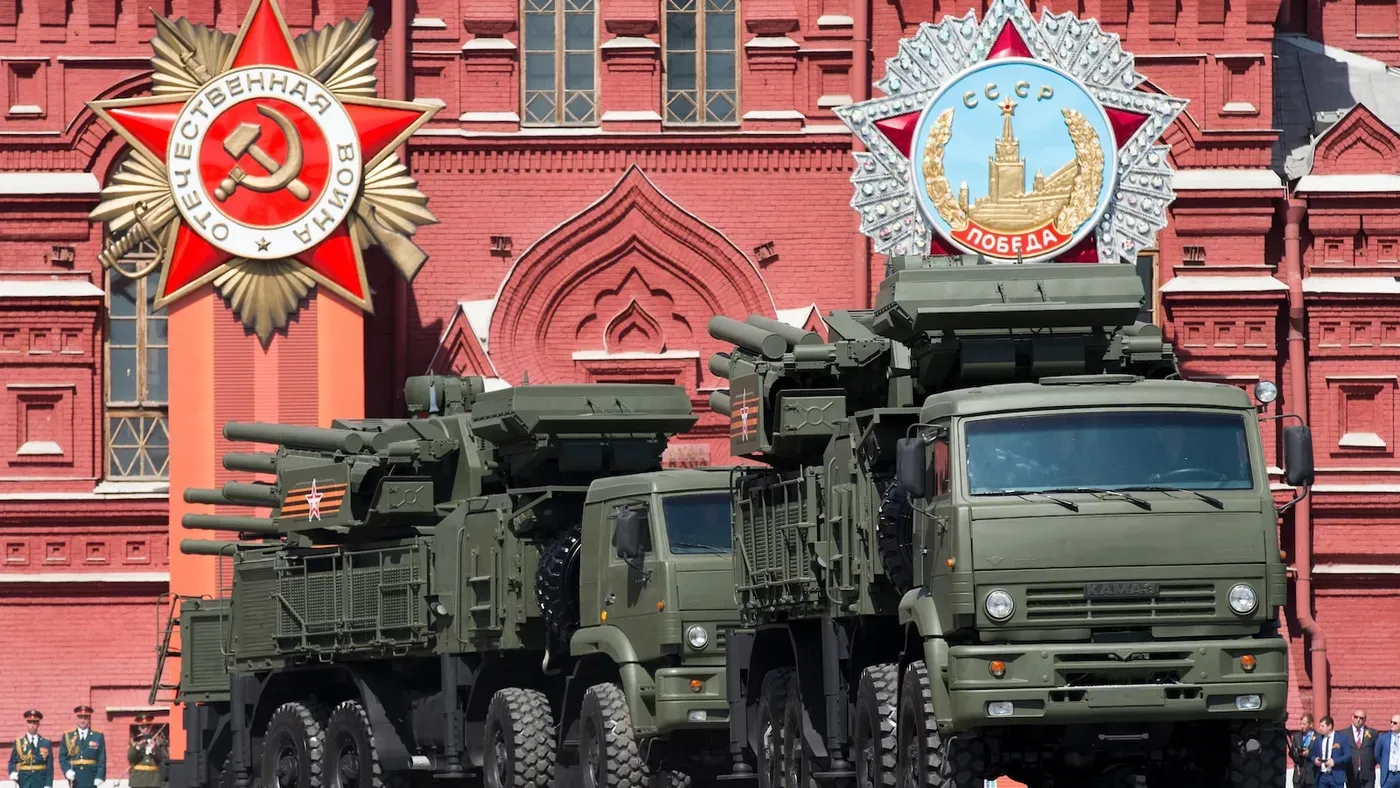
The Pantsyr, Tor, and Buk systems all play important roles in Russia's air defense network. The Pantsyr stands out for its ability to engage targets with both guns and missiles, providing flexibility on the battlefield. Meanwhile, helicopter gunships also contribute to Russia's aerial protection efforts.
As Ukraine continues to deploy swarms of drones against Russian targets, military experts predict a further escalation of drone-based attacks in the coming days. This trend will likely see an exponential increase in the number of drones launched by both sides, putting air defenses under intense pressure.
Facts based on reporting originally published by ABC News International.
You may republish this story, in full or in part, if you credit News Central Site and link to it (licence CC BY 4.0). Photos are not included.