Ramesses II Statues Discovered in Northern Egypt
A team dispatched by the Egyptian Ministry of Tourism and Antiquities is currently assessing a site where two massive statues of Ramesses II were discovered.
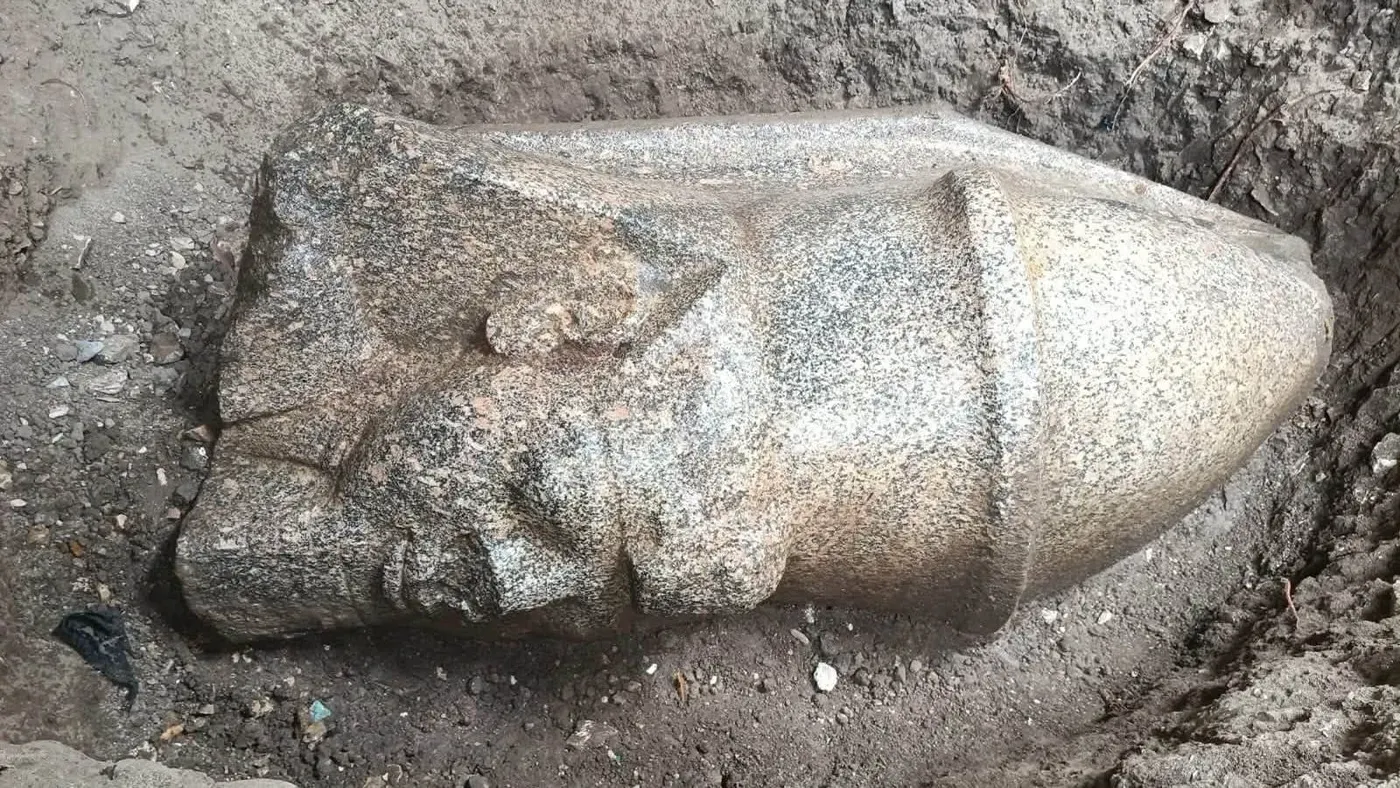
A man working on his land in a village in northern Egypt stumbled upon an incredible archaeological find - the remains of two massive statues of Ramesses II. The discovery was made by Khaled el-Shahat, who promptly notified the Egyptian Ministry of Tourism and Antiquities.
The ministry dispatched a team to excavate and study the statues found at Behbeit El Hagar village. According to a statement from the ministry, the team is currently assessing the site. Ramesses II's reign is notable for its length - he ruled Egypt for approximately 66 years.
During his rule, which spanned from around 1279 to 1213 B.C., Egypt expanded its empire, stretching as far northeast as modern-day Syria. The pharaoh was known for commissioning numerous building projects throughout the empire. His statues have been discovered at various locations across Egypt.
Archaeologists had previously found architectural fragments bearing Ramesses II's name at Behbeit El Hagar. This village is home to a temple dedicated to Isis, a goddess associated with healing and magic.
The newly discovered statues are a testament to the grandeur and craftsmanship of ancient Egyptian artistry. The larger statue's head measures 5.2 feet tall and showcases Ramesses II wearing the double crown of Upper and Lower Egypt.
A hieroglyphic inscription on the back pillar of this massive statue reveals the pharaoh's "Horus name, which translates to Strong Bull, Beloved of Right, Truth. This naming convention was a common practice among Egyptian pharaohs, who were honored with multiple alternate names, including their Horus name.
The second statue, slightly smaller at 7.9 feet tall, also likely represents Ramesses II and features the distinctive Nemes headdress, characterized by its striped pattern. The Egypt Exploration Society notes that this type of headcloth was a staple in pharaonic attire.
The discovery of these statues provides valuable insights into the artistic and cultural traditions of ancient Egypt during the reign of Ramesses II. Further research and excavation are likely to uncover more secrets about these remarkable artifacts.
The recent discovery near the Isis temple at Behbeit El Hagar in Egypt has shed more light on the significance of the site, which was previously believed to date back to the Ptolemaic period. However, new finds suggest that Ramesses II, one of ancient Egypt's most famous pharaohs, may have had a greater involvement with the temple than initially thought.
A block of pink granite discovered near the statue bears two hieroglyphic inscriptions, which confirm Ramesses II as King of Upper and Lower Egypt" and "Son of Ra". This reinforces the notion that the pharaoh was deeply invested in the site. The presence of these inscriptions adds to the growing body of evidence pointing to Ramesses II's involvement.
Previous excavations at the temple uncovered architectural fragments bearing the name of Ramesses II, which were published in a 2017 paper by Emam and his colleagues. These finds included a possible statue fragment from the upper part of a monument and another believed to be from the upper part of a wall.
Archaeologists have made significant discoveries in Egypt, uncovering two colossal statues of Ramesses II, one of which is believed to wear a double crown. The finds suggest that these massive structures were likely part of a grand complex or temple dedicated to the pharaoh.
The discovery included several other fragments, such as a possible statue fragment from the upper part of a monument and another thought to be from the upper part of a wall. These additional findings provide further insight into the architectural design and grandeur of this ancient site. The excavations have shed new light on Egypt's rich history, allowing researchers to better understand the culture and significance of these monumental structures.
Facts based on reporting originally published by Live Science.
You may republish this story, in full or in part, if you credit News Central Site and link to it (licence CC BY 4.0). Photos are not included.