New MacBook Pro Model Released with Touchscreen Display
The new MacBook Pro model features a touchscreen display and OLED technology, among other upgrades.
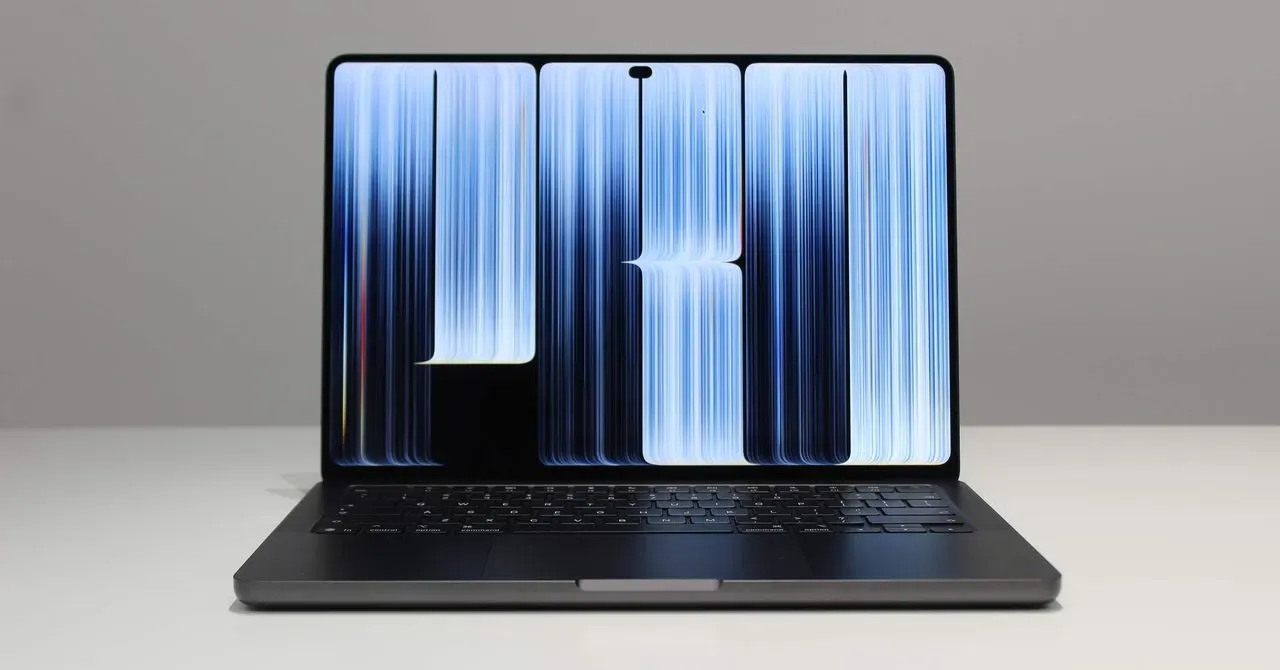
A new MacBook Pro model has been released, featuring a touchscreen display that was previously seen as unlikely by Apple enthusiasts. The company's history suggests it rarely changes its mind on design or technology decisions. Despite this, the MacBook Pro with a touchscreen has made its way into existence.
The OLED display on the new MacBook Pro is a significant improvement over previous models. It boasts better speakers and a lighter design, making it easier to carry around. The return of the glowing Apple logo on the lid adds a touch of nostalgia to the device.
One of the most notable changes to the MacBook Pro is its touchscreen feature. While some may argue that this is not ideal for laptop ergonomics, the new model makes it work. However, the implementation of the touchscreen feels somewhat half-baked.
The price of the OLED MacBook Pro has increased by almost $1,000 compared to a similarly specced model from last year. This significant jump in cost raises questions about whether the added features are worth the extra expense.
Apple now offers two premium laptop options: the standard Mini-LED model and the new OLED model. The standard option comes with an M6 processor and improved graphics and battery life, but its design remains largely unchanged.
The exterior of the OLED MacBook Pro looks identical to previous models. Color choices remain limited to Silver and Space Black, and screen sizes are still available in 14- and 16-inch options. Ports have also remained the same.
Opening up the device reveals a familiar keyboard and trackpad layout, with no significant changes to be seen. However, it's what lies beneath that sets this model apart from its predecessors, making it an interesting addition to Apple's lineup of premium laptops.
The most noticeable difference between the OLED MacBook Pro and its non-OLED counterpart lies not in the display itself but rather in the subtle visual cues that set it apart. The lid of the laptop features a glowing Apple logo, a distinctive touch that adds to the overall premium feel of the device.
This attention-grabbing feature is a deliberate design choice, meant to serve as a status symbol for those who opt for the high-end OLED model. Its brightness is cleverly synchronized with the display's own illumination levels, ensuring it doesn't become a distraction in dark environments.
One of the most significant advantages of the OLED MacBook Pro becomes apparent when you pick up the device, its weight has been significantly reduced compared to non-OLED models. The 16-inch version I tested weighed in at just 4 pounds, representing a substantial decrease of over half a pound from its heavier counterpart.
The majority of this weight savings can be attributed to the inherent properties of OLED technology itself, which employs much thinner and lighter layers than traditional displays. This reduction in weight makes the laptop feel less cumbersome when carried around, despite its already considerable size.
A welcome change for those who've long been bothered by Apple's design decisions is the disappearance of the notch at the top of the screen. Gone is the large cutout that housed the webcam and sensors, replaced instead with a punch-hole camera that not only looks sleeker but also serves as a functional improvement.
The punch-hole camera has been integrated seamlessly into the design, allowing for an unobstructed view of the display's narrow bezels. Apple has also seen fit to include Dynamic Island functionality on this latest model, enabling interactive Live Activities such as timers or music playback to be displayed through the camera.
A few other subtle refinements have been made to the overall design language of the OLED MacBook Pro. The rubber feet at the bottom now feature softer, rounded edges for improved grip and reduced wear and tear.
The arrival of tandem OLED displays on the MacBook Pro marks a significant milestone in Apple's continued push towards high-end display technology, one that has its roots in the iPad Pro, where this tech first debuted over two years ago. The result is a laptop display capable of delivering an unparalleled level of brightness, reaching up to 1,000 nits in standard dynamic range (SDR) across everyday content and applications.
The OLED display on the MacBook Pro has a clever feature that allows it to exceed its 1,000-nit brightness limit in certain situations. When working outdoors or in very bright environments, the webcam's ambient light sensor kicks in and adjusts the display accordingly.
This results in an even brighter image, making it perfect for use outside. In fact, this is one of the key advantages of the OLED screen over traditional laptop displays, which often struggle with glare in such conditions.
For those who want to take their outdoor productivity to the next level, Apple offers a nano-texture screen option that further reduces glare and provides an even more immersive experience. However, it's worth noting that this feature is only available on certain models of the MacBook Pro.
The standard glass display on the OLED model also features an antireflective coating that helps reduce glare and reflections. While not as effective as the nano-texture option, it still provides a noticeable improvement over traditional laptop screens.
When compared to the non-OLED M6 MacBook Pro, the OLED model's screen appears relatively less reflective, even in bright environments. However, for those who plan on using their laptop extensively outdoors, the nano-texture upgrade is definitely worth considering.
In addition to its impressive brightness levels, the OLED display can also reach an astonishing 2,000 nits of peak brightness when handling HDR content. This allows for incredibly detailed and colorful visuals, making it perfect for watching movies, videos, or playing games in HDR mode.
While I didn't quite hit the 2,000-nit mark during my testing, maxing out at 1,849 nits, the results were still impressive, with a 25 percent window reaching an astonishing 1,025 nits. This level of brightness is only matched by the latest OLED TVs on the market.
When paired with its ability to produce deep blacks, the OLED display offers truly exceptional HDR capabilities that are unmatched by even the Mini-LED MacBook Pro. In fact, I was able to notice a significant difference when watching professional HDR footage side-by-side with the Mini-LED model.
The implications of this technology are exciting, as it could potentially lead to more widespread adoption of HDR video production, not just for professionals but also for creators working on web content.
The new MacBook Pro's six-speaker sound system is a significant improvement over its predecessor. According to Apple, this enhanced audio setup delivers 50 percent deeper bass, which can be felt during both music listening and movie-watching experiences.
When compared side-by-side with the previous-gen model, it becomes apparent that the increased bass does indeed make a noticeable difference. The overall sound is fuller and more immersive, making it an even better option for those who enjoy watching movies or listening to music on their laptop.
It's worth noting that Apple already had one of the best speaker systems in the industry prior to this upgrade. However, the addition of deeper bass has elevated the MacBook Pro's audio capabilities to new heights.
The touchscreen functionality on the new MacBook Pro is a feature that can be both useful and unnecessary at the same time. When working on complex tasks or projects, it's easy to forget about the touchscreen and rely solely on keyboard and mouse inputs.
However, there are instances where swiping away notifications with your finger feels intuitive and convenient. Additionally, using the touchscreen to scroll through content on social media platforms like Instagram can be a seamless experience.
The same phenomenon is observed when using an iPad connected to the Magic Keyboard. It's often faster and more efficient to keep hands in their usual positions rather than reaching out to touch the screen.
One of the notable software optimizations made for the MacBook Pro is the way it handles window controls. When tapped, these controls expand and allow for more precise selection, making tasks like closing or minimizing windows easier and more intuitive.
Apple has also tweaked its menu bar to make navigation via touchscreen more accessible. Drop-down menus are now more spaced out, and users can tap and drag their fingers to select options with greater ease, a feature that is particularly useful in certain apps designed for touch input.
The touchscreen on the MacBook Pro OLED is still an optional feature that feels somewhat disconnected from the rest of the laptop's functionality. While some users may appreciate the ability to draw directly onto the screen or tap controls into existence, others will likely find themselves struggling with the unfamiliar input method. This lack of integration has led me to wonder if Apple will ever adopt a more radical design approach, such as incorporating a 180- or 360-degree hinge.
This is not merely a matter of aesthetics; there are also practical implications for the user experience. When working on complex tasks or using resource-intensive software, it can be challenging to navigate the touchscreen with precision and accuracy. This issue is compounded by the fact that many third-party apps still require optimization for touch input. While Apple's click-to-touch functionality will work seamlessly across all applications, not every developer will invest the necessary time and resources into creating a smooth experience.
The creative professionals who are supposed to be the primary beneficiaries of this feature have so far been underwhelmed by its capabilities. Even with high-end software like Pixelmator Pro and ZBrush, I struggled to see how the touchscreen added significant value to my workflow. The ability to draw directly onto the screen or apply textures to 3D models is certainly an interesting concept, but it remains to be seen whether these features will prove truly useful in practice.
One area where the touchscreen does show some promise is with music production software like Logic Pro. I was able to play virtual drums on the screen and even draw automations into Remix FX using my fingers. However, this experience felt somewhat gimmicky and limited compared to working with a physical MIDI keyboard or mouse. Even amateur musicians will likely prefer these more traditional input methods.
In our conversations about the touchscreen, Apple representatives never suggested that it was intended to replace the keyboard and trackpad as the primary means of interaction. This cautious approach makes sense, given the company's history of watching Microsoft struggle with its own touch-based interface in Windows 8. It seems that Apple is content to play catch-up rather than pushing the boundaries of what a touchscreen laptop can do.
The absence of a more radical design approach has allowed me to treat my MacBook as a safe haven from the fingerprints and smudges that plague so many other devices. However, this also feels like an opportunity missed for Apple to take a bold step forward in terms of user experience.
One possible explanation for Apple's hesitation is its commitment to preserving the traditional keyboard-and-mouse interface that has defined the MacBook experience for so long. This approach may be seen as safe and conservative, but it risks relegating the touchscreen to a mere novelty rather than a core part of the laptop's functionality.
As I continue to use the MacBook Pro OLED, I am struck by the tension between its innovative features and its more traditional design sensibilities. While the touchscreen is certainly an interesting addition, it feels like a feature that is still waiting for its moment to shine.
Ultimately, the success or failure of this feature will depend on how Apple chooses to integrate it into its overall product strategy. Will the company commit fully to touch input and develop new ways to harness its potential, or will the touchscreen remain a mere add-on that fails to live up to its promise?
The 2026 OLED MacBook Pro's processor is a notable departure from previous models, as it retains the same M5 Pro and M5 Max chips used in the preceding generation.
This marks the first time Apple has reused processors since introducing its Apple Silicon lineup in 2020, raising questions about whether the company's pace of innovation is slowing or if the OLED touchscreen will be a sufficient draw to convince buyers to upgrade their existing devices.
The M5 Pro and M5 Max were already among the most powerful available, even when compared to newer laptops like the Microsoft Surface Laptop Ultra with Nvidia RTX Spark processors. Despite this, there are rumors that Apple may skip the M6 Pro and M6 Max configurations altogether, reserving these more advanced options for the next generation.
If true, this would be a significant departure from Apple's typical practice of updating processor designs with each new Mac release, but it remains to be seen whether the OLED touchscreen will provide sufficient justification for buyers to opt for the latest model.
Facts based on reporting originally published by Wired.
You may republish this story, in full or in part, if you credit News Central Site and link to it (licence CC BY 4.0). Photos are not included.