High school in Virginia to host first US quantum computer
The high school is set to become one of the first institutions in the country to have a quantum computer, marking a significant step in the growing industry's efforts to inspire and educate the next generation of innovators.
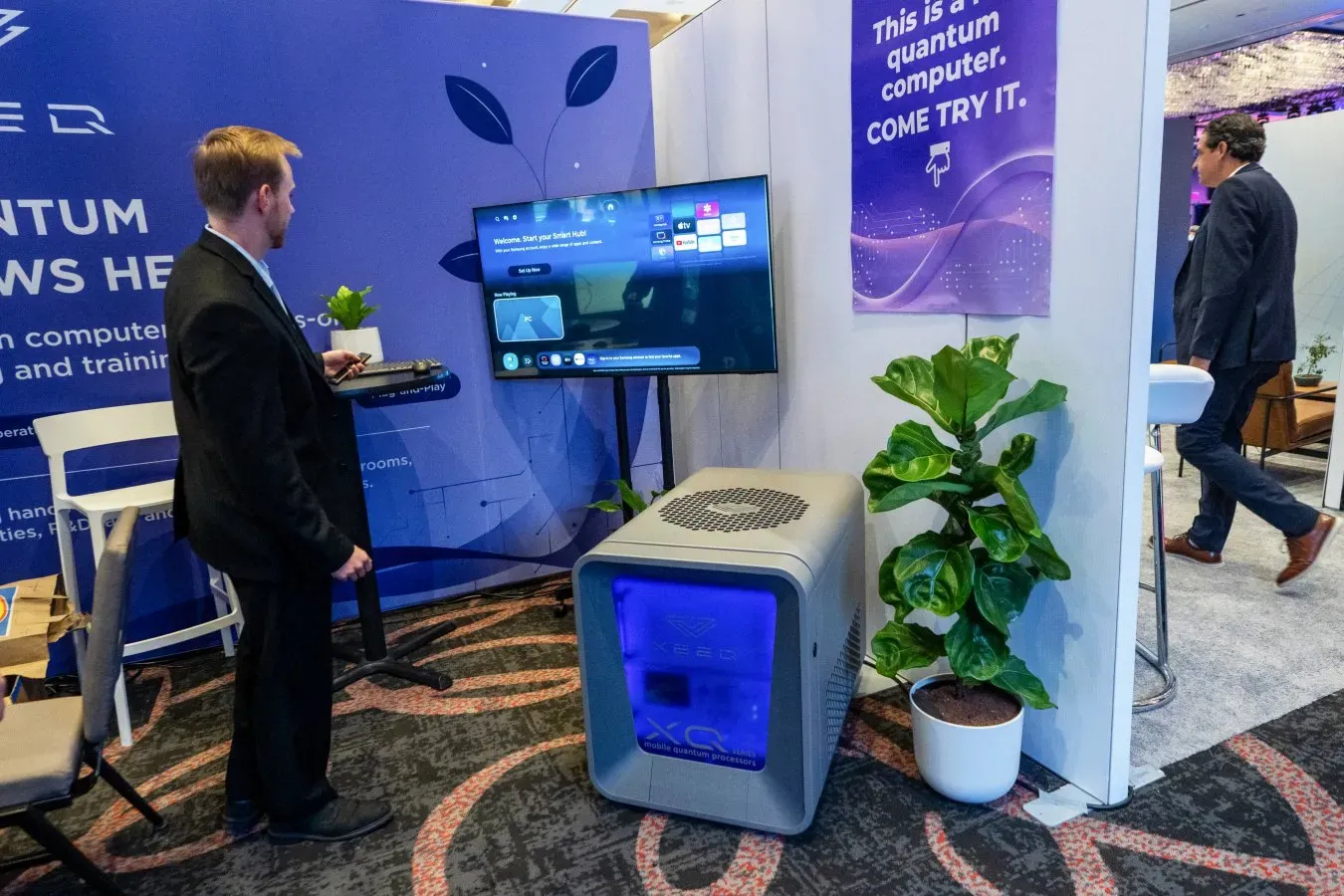
A high school in Virginia is set to become the first in the US to host a quantum computer, marking a significant step in the growing industry's efforts to inspire and educate the next generation of innovators.
The XQ1, developed by XeedQ, will be used as a teaching tool to introduce students to the principles of quantum computing. With its four qubits - the basic building blocks of quantum computation - each based on a diamond with specifically designed defects, the device is expected to provide hands-on experience for high school students.
The decision to bring a quantum computer to Skyview High School is part of Fairfax County Public Schools' (FCPS) efforts to prepare students for emerging career opportunities. FCPS Superintendent Michelle Reid notes that this move is a bet on a rapidly expanding field, with potentially 800,000 quantum-related jobs expected to be created within the next decade.
The introduction of quantum computing in high schools comes as governments and private investors increasingly focus on the industry's growth. Industry leaders agree that while investing in quantum technology is crucial, it is equally important to develop a skilled workforce to meet the demands of this rapidly expanding field.
The new quantum computer designed by XeedQ, called XQ1, is expected to be robust enough to withstand the conditions of a classroom environment. According to Gopalakrishnan Balasubramanian, who worked on the project, XQ1 is about the size of a small refrigerator and has been designed to run continuously for several years.
One of the key features of XQ1 is that it can operate at room temperature, which eliminates the need for expensive cooling systems. This makes it more practical for use in educational settings, where space and budget constraints are often a concern. The cost of XQ1 is estimated to be around $900,000.
The quantum computer will not provide students with direct access to sophisticated programs or computational power. Instead, its primary function will be to help students develop an intuitive understanding of the fundamental principles underlying quantum computing. This includes grasping the probabilistic nature of qubits and how they can produce different outcomes even when given the same inputs.
The high school's quantum computer, XQ1, is expected to engage students in hands-on learning experiences, where they will be able to manipulate electromagnetic pulses that control qubits and observe their behavior firsthand.
As part of this interactive approach, students will work in teams to learn the coding language Python, which will enable them to directly interact with the quantum system and study its physics. This immersive experience aims to help students grasp complex concepts, including the probabilistic nature of qubits and how they can produce different outcomes even when given the same inputs.
The XQ1 is initially set to be integrated into mathematics and physics classes for high school seniors or juniors, but it's possible that the curriculum could expand in future years. Additionally, students from other schools in Fairfax county will have opportunities to engage with the machine through weekend programs, allowing a broader group of learners to benefit from this cutting-edge technology.
Facts based on reporting originally published by New Scientist.
You may republish this story, in full or in part, if you credit News Central Site and link to it (licence CC BY 4.0). Photos are not included.