Neanderthal Fossil Shows Evidence of Fatal Wooden Spear Attack
A 75,000-year-old Neanderthal fossil has been found with a wound that experts believe was caused by a sharpened wooden spear.
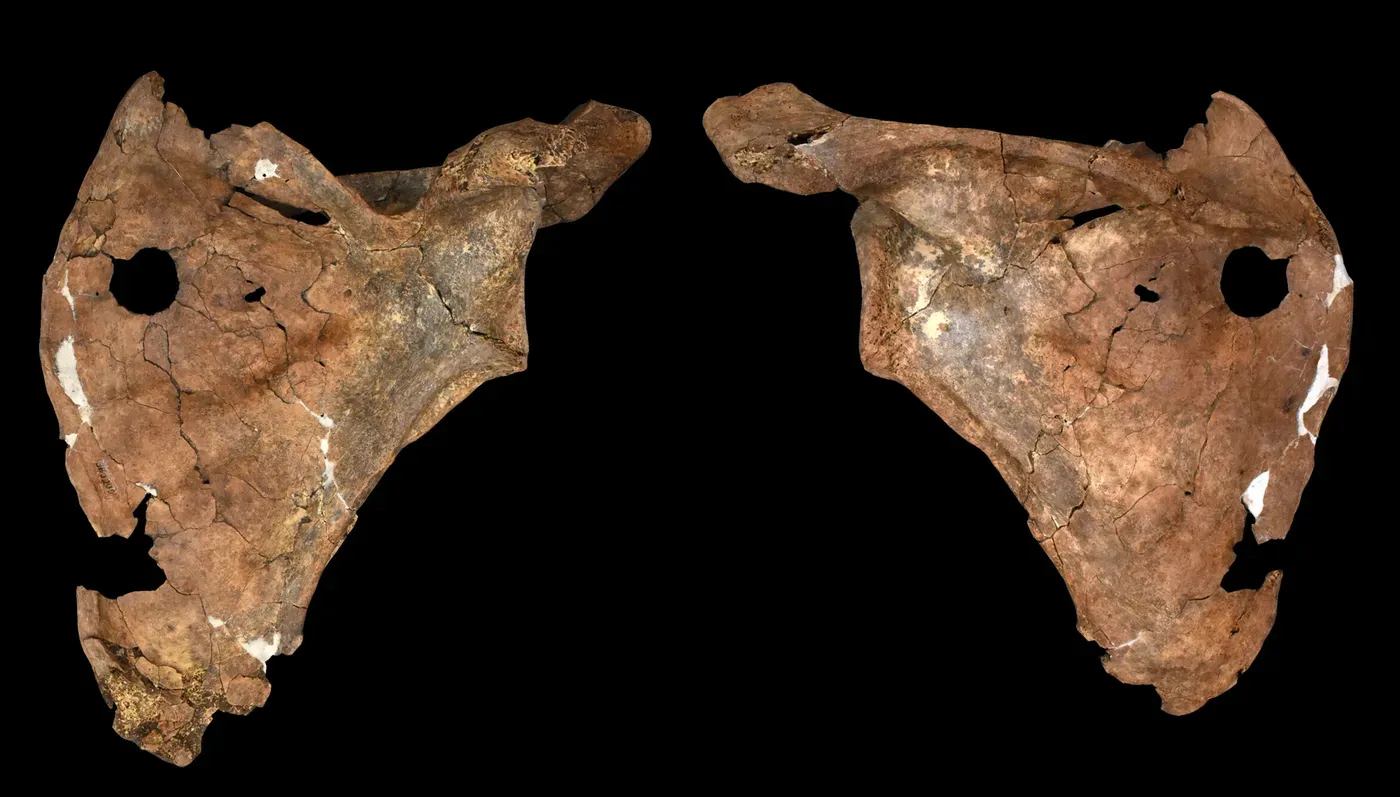
A 75,000-year-old Neanderthal fossil has been discovered in a cave in Iraqi Kurdistan, and experts believe it may be the earliest evidence of a fatal attack using a wooden spear on a human ancestor.
The remains were found under 25 feet of rock and sediment, with only one area of significant damage - a 15mm-wide circular perforation on the Neanderthal's scapula. Cambridge archaeologists who led the excavation suggest this was caused by a sharpened wooden spear, rather than one made from flint or stone, which would typically leave a flat or angular hole.
The wound appears to have been inflicted from the front and traveled through the chest cavity, including the lung and major arteries, before causing rapid death. Researchers believe the fatal strike may have targeted the heart, given its location and the damage caused.
Closer inspection of the wound reveals beveling around the edge, a characteristic typical of an exit wound. Tiny shards of bone were displaced by the impact, which suggests the spear entered from above at a downward trajectory.
These fragments were found in the area surrounding the wound, and researchers used them to piece back part of the hole, guided by faint ridges where muscle had marked the bone.
The exact nature of the spear that caused this fatal injury remains unclear, but experts believe it was likely made from sharpened wood. Further analysis will be needed to confirm the theory and shed more light on this early example of lethal interpersonal violence.
The discovery of a remarkably preserved scapula from 75,000 years ago provides valuable insights into the lives and deaths of Neanderthals.
Archaeologists have been studying the remains, known as Shanidar A, which were found in a cave in what is now Iraq. The scapula, or shoulder blade, was recovered from beneath almost 8 meters of rock and sediment, an extraordinary feat given its fragile nature.
The find is significant because very few wooden objects have survived from deep prehistory due to the natural process of decomposition. However, some examples of ancient spears have been discovered in Europe, where early Neanderthals roamed thousands of years ago.
These preserved spears were crafted with care to achieve optimal weight distribution for throwing, similar to modern javelins, and were likely used for hunting large game. The earliest known rounded wooden spear dates back over 400,000 years, but only the pointed end has survived.
The wound on Shanidar A may have been caused by a sharpened wooden spear, argue researchers, who suggest that this could be the first evidence of such technology in the prehistoric Middle East.
The discovery of a fatal wound on Shanidar A has sparked debate about the origins of violence among Neanderthals. Researchers suggest that the wound may have been caused by a sharpened wooden spear, which could be the earliest evidence of such technology in the prehistoric Middle East.
In contrast to this new finding, existing research suggests that Neanderthals and their ancestors developed woodworking and weapon-making skills thousands of years before Shanidar A's death. This expertise is believed to have been widespread across Neanderthal homelands, spanning from Wales to Siberia.
The wound on Shanidar A may not have been the result of a hunting accident, as some experts propose. Instead, the position and force of the wound suggest an intended kill shot directed at the heart, hinting at deliberate violence.
Archaeologists believe that the most straightforward interpretation is interpersonal violence between Neanderthals, rather than involvement from modern humans. However, this remains uncertain due to the limited context available for understanding the circumstances surrounding Shanidar A's death.
The discovery of systematic violence in prehistory is extremely rare, with most evidence emerging from periods following the transition to settled farming communities. The wound on Shanidar A provides a unique window into the lives of Neanderthals and their capacity for violence.
The remains of Shanidar A, an adult Neanderthal estimated to be around 45 years old at the time of death, have yielded some remarkable insights into the lives and capabilities of our ancient ancestors.
A tooth from the lower jaw, specifically an incisor, was found split lengthwise, with only half remaining. The surrounding teeth had been rotated inward, suggesting a significant impact on the front of the face. This damage would have caused immense pain and difficulty for the individual in question.
The exposed root canal of the damaged tooth showed substantial tartar buildup, indicating that it remained in the mouth for an extended period after the initial trauma. Scientists believe this would have required care and support from other Neanderthals to survive, as the individual would have struggled with basic functions like eating.
According to experts, Shanidar A may have been fed soft food following the injury, given the presence of soaked plant foods in the cave around the same time. This implies that the individual was unable to communicate effectively and endured prolonged agony during their final period.
The dual nature of human existence is reflected in the remains of Shanidar A, which showcase both violence and care for an individual who suffered a terrible end.
The cave of Shanidar in Iraqi Kurdistan is renowned for its Neanderthal discoveries, and excavations there have shed new light on these ancient humans. A cluster of four individuals found in one area, despite dying at different times, suggests that the Neanderthals had a practice of returning to inter their dead.
One of the most significant discoveries from Shanidar is the evidence of compassion shown towards an individual who lived thousands of years later. This Neanderthal had suffered a range of debilitating conditions, including paralysis, arthritis, deafness, and partial blindness, yet they must have received care and support to live for so long.
These signs of social support and ritual around death have led to a significant revision in the way we view Neanderthals. Gone are the days when they were seen as brutish and subhuman; instead, evidence suggests that they possessed a level of sophistication, from their art and jewelry to their genetic interactions with modern humans.
The team has unearthed several more Neanderthals since 2015, including three found in the same burial cluster where Shanidar A was discovered. This brings the total number of individuals found in this area to five, four adults and an infant, all of which were laid to rest in a small space measuring just 1.5 meters by 1 meter.
The location of these remains is particularly interesting, as they are situated directly behind a large vertical boulder that serves as a prominent marker. The bodies are separated by thin layers of sediment, with Shanidar A being the deepest yet found in the cluster and possibly the first to be laid to rest in this space.
The position of Shanidar A's body is notable, lying on its back with its head facing east, just like the individual directly above it. This alignment suggests a deliberate placement, perhaps as part of some ritual or ceremonial practice.
The discovery of a Neanderthal individual at Shanidar Cave has provided new insights into the lives of ancient humans. The analysis suggests that these early humans returned to the same location to lay their dead to rest, indicating intentional and symbolic funerary behavior.
This practice likely involved returning to the site within years or decades, as evidenced by some bodies being deposited before earlier ones had fully decomposed.
Facts based on reporting originally published by Phys.org.
You may republish this story, in full or in part, if you credit News Central Site and link to it (licence CC BY 4.0). Photos are not included.