Protesters Clash with Police in Paris on Saturday
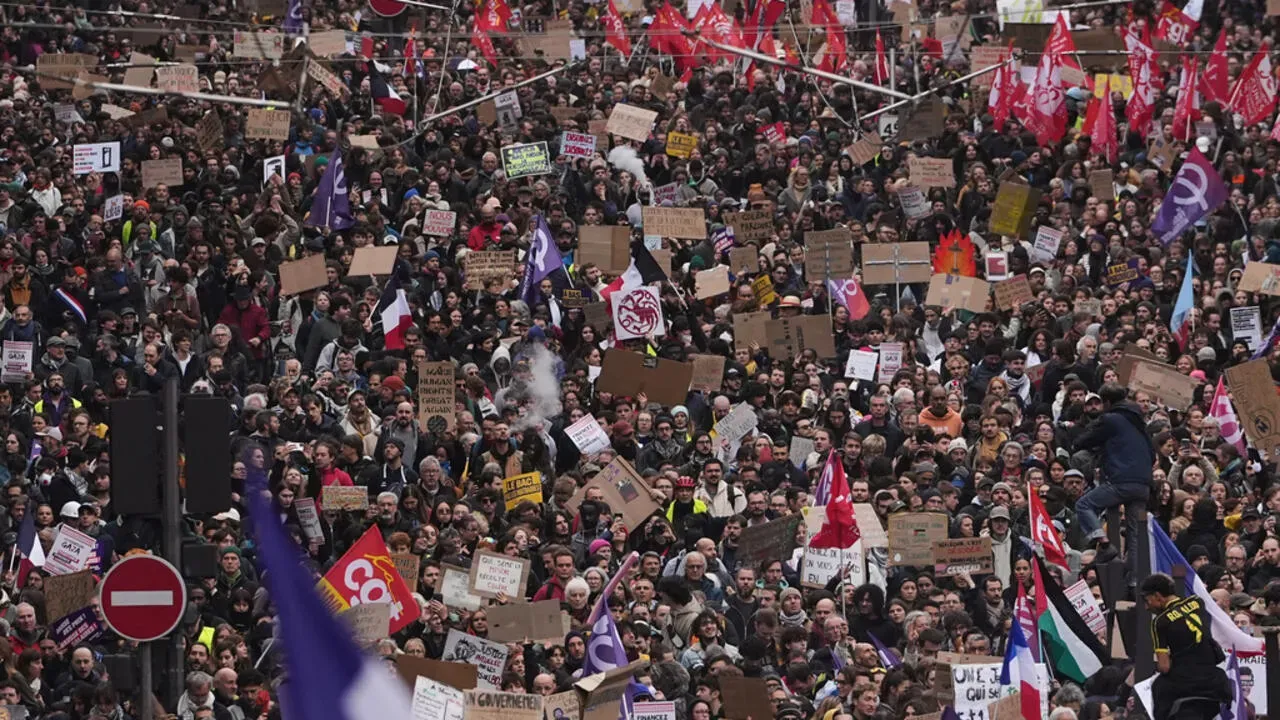
Tens of thousands of protesters clashed with police in Paris on Saturday as a mass march drew to a close, marking a fresh challenge to President Emmanuel Macron's authority.
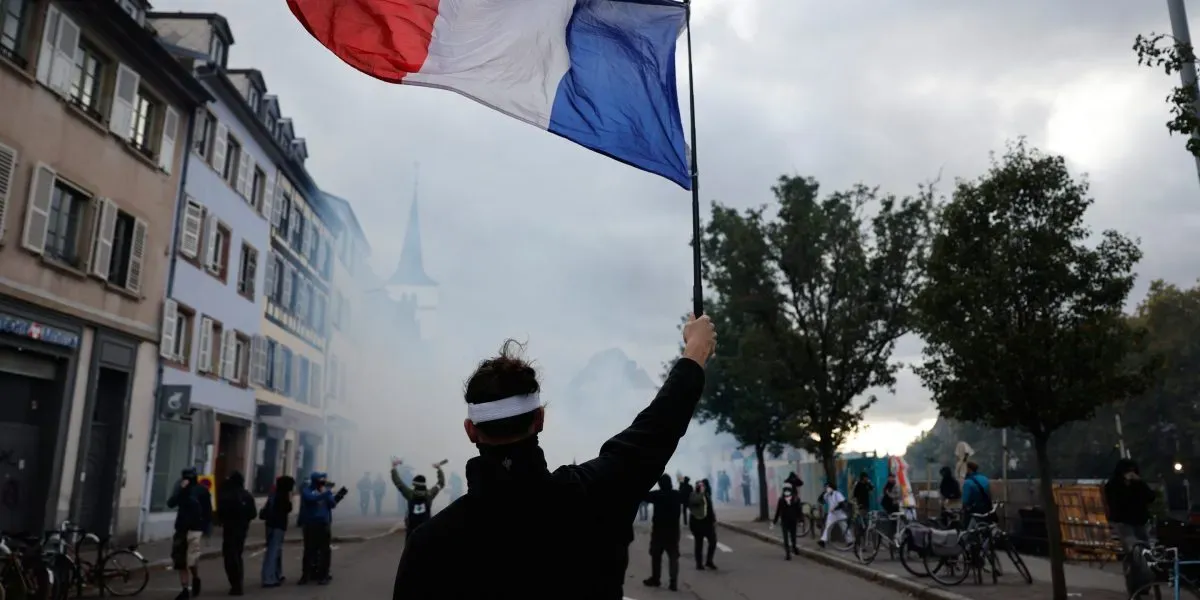
Tens of thousands of protesters clashed with police in Paris on Saturday as a mass march drew to a close, marking a fresh challenge to President Emmanuel Macron's authority.
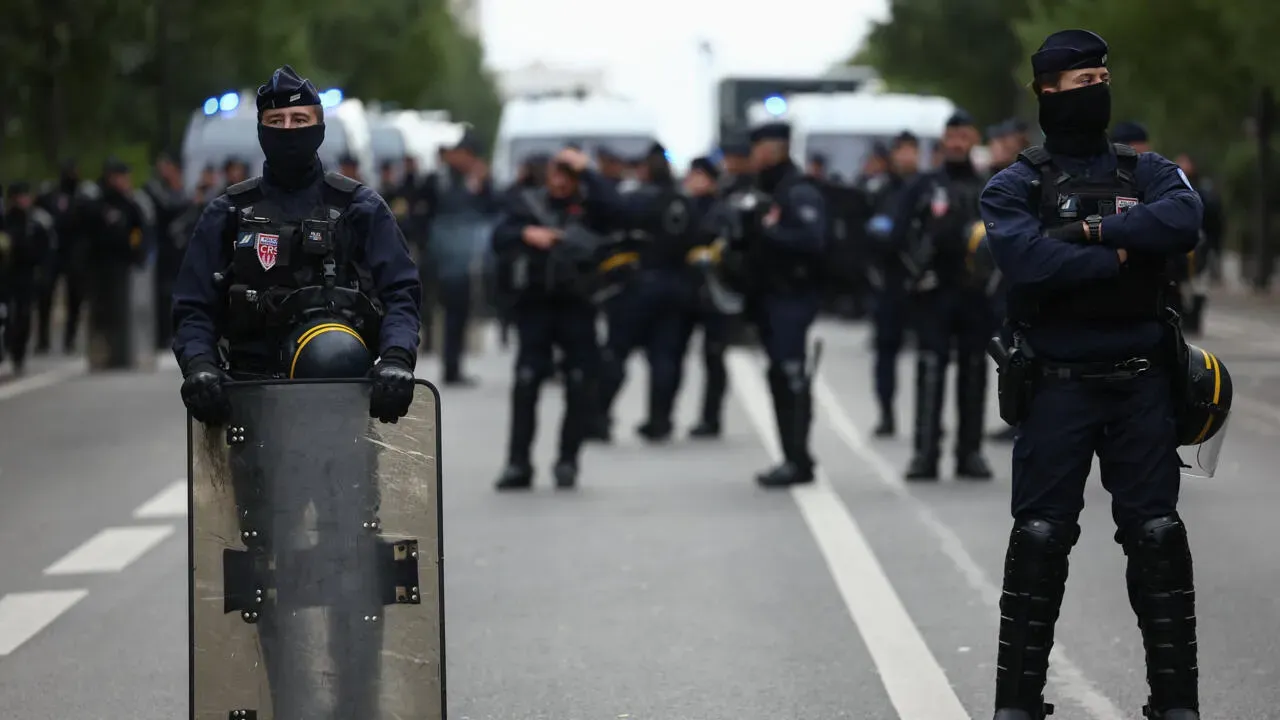
The protests began peacefully, but near the demonstration's endpoint in eastern Paris, masked protesters hurled objects and fireworks at police, who responded with tear gas, sound grenades, and water cannons.
Police made nearly 1,000 arrests across France as a result of the clashes. The government reported this number, which is likely to fuel further tensions between protesters and authorities.
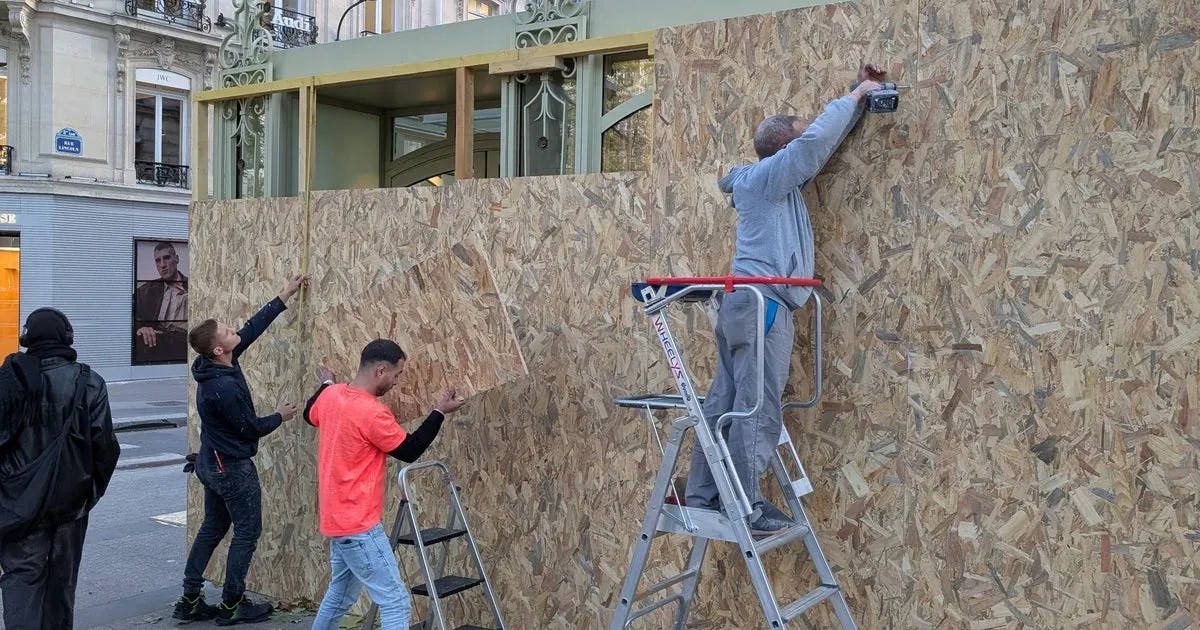
Many shopkeepers in Paris took precautions by boarding up their storefronts ahead of the protests, anticipating potential unrest. This move was seen as an attempt to protect property from possible vandalism or looting.
The scale of the protests was massive, with estimates suggesting that over 410,000 people participated nationwide, although some organizers put the number at nearly 800,000.
Violence erupted in several cities across France as protests against rising living costs continued to spread nationwide. Street fires burned in Marseille and Lyon, while police used tear gas in multiple locations, including Clermont-Ferrand, Strasbourg, and Bordeaux.
The clashes were particularly intense in Nice, where far-right extremists clashed with demonstrators downtown, leading to 11 arrests by regional authorities. Water cannons were also deployed in Nice, along with Nantes. French media reported on the use of force by law enforcement.
According to Interior Minister Laurent Nuñez, nearly 1,000 arrests have been made so far, but this number is expected to rise significantly as more are counted. The minister attributed the relative calm in some areas to a beefed-up police presence, which included 70,000 officers supported by helicopters and armored vehicles.
The protests began last month as a small demonstration over staff shortages at one high school southeast of Paris, but they have since grown into a nationwide movement demanding more funding for education and relief from soaring costs for fuel and other essentials.
As the protests continue to gain momentum across France, Paris is witnessing a growing sense of urgency among demonstrators. Bénédicte Pittion, a 46-year-old teacher, joined forces with her daughter Garance, a 16-year-old high school student, in their first protest together.
Pittion expressed solidarity with the young protesters, stating that as both a parent and teacher, she stands with them in demanding better conditions for education. Her daughter, Garance, acknowledged feeling scared after witnessing violence at previous demonstrations but felt that staying away would only give the government an upper hand.
Macron's meeting with high school representatives on Friday has not satisfied the protesters' demands. Despite promises to overhaul university admissions, the students are calling for concrete measures and have urged their peers to continue demonstrating until their voices are heard.
Protesters in Paris are facing a new challenge as authorities attempt to divert them away from the city center. Soumaya Abed, a 58-year-old nurse wearing a CGT union vest, accused the authorities of trying to stifle the movement by forcing protesters onto the outskirts of the capital.
The anger among protesters is palpable, with many expressing frustration over record poverty and wealth inequality under Macron's leadership. Camille Chesnier, 27, spoke out about her own struggles in finding employment despite holding an engineering degree and a master's degree.
Protesters took to the streets in several cities across France, with varying estimates of attendance numbers. In Marseille, authorities reported around 17,000 people joined the demonstrations, while the CGT union estimated a much higher number of 100,000 attendees.
In other cities, such as Toulouse and Orléans, significant crowds also gathered to protest against the government's policies. According to authorities in Toulouse, approximately 26,500 people participated in the rallies there.
The presence of police was notable in several locations, including Paris and Lyon, where authorities had banned rallies due to concerns over public safety. Gendarmes were deployed near iconic landmarks such as the Arc de Triomphe, while shopkeepers across Paris boarded up storefronts in anticipation of potential unrest.
In Orléans, a separate peaceful protest was held against the far right, coinciding with Le Pen's National Rally congress. The event drew thousands of marchers, who were joined by student groups advocating for increased access to higher education and an overhaul of the national admissions system.
The economic frustrations driving the protests in Paris are multifaceted. In addition to seeking financial support for their studies, protesters are also calling for assistance with everyday living costs.
Protesters have taken to the streets of Paris, frustrated by rising energy prices and overall inflation. Energy prices soared 21.3% higher in September compared to the same period last year, according to national statistics agency INSEE, contributing to a 3.1% overall inflation rate.
Facts based on reporting originally published by Fortune.
You may republish this story, in full or in part, if you credit News Central Site and link to it (licence CC BY 4.0). Photos are not included.