Protest Against School Funding Cuts and Rising Living Costs in Paris
Over 100,000 people protested against school funding cuts and rising living costs in Paris on Saturday.
More than 100,000 people took to the streets of Paris on Saturday, protesting against school funding cuts and rising living costs. The massive demonstration was largely peaceful until clashes broke out near the end point, marking a challenge to President Emmanuel Macron's government. Despite restrictions that confined the march to the southeastern edge of the city, demonstrators mobilized in large numbers.
Students, union members, environmentalists, and other groups marched through the cold, rainy weather, showing their discontent with the current state of affairs. The march was attended by an estimated 110,000 people, according to Paris police. The turnout was a testament to the widespread frustration among the French population.
As the demonstration reached its end point at Porte de Vincennes, some protesters turned violent, throwing bottles and rocks at police. In response, officers charged at the crowd, fired tear gas, and used water cannons. The clashes lasted for about an hour, causing disruptions in the area.
The use of force by police was not limited to Paris. Reports emerged that police had deployed tear gas in several other cities, including Lyon, Clermont-Ferrand, and Strasbourg, while water cannons were used in Nice and Nantes. In Marseille, officers fired tear gas during clashes with a group of people near the end point of the march.
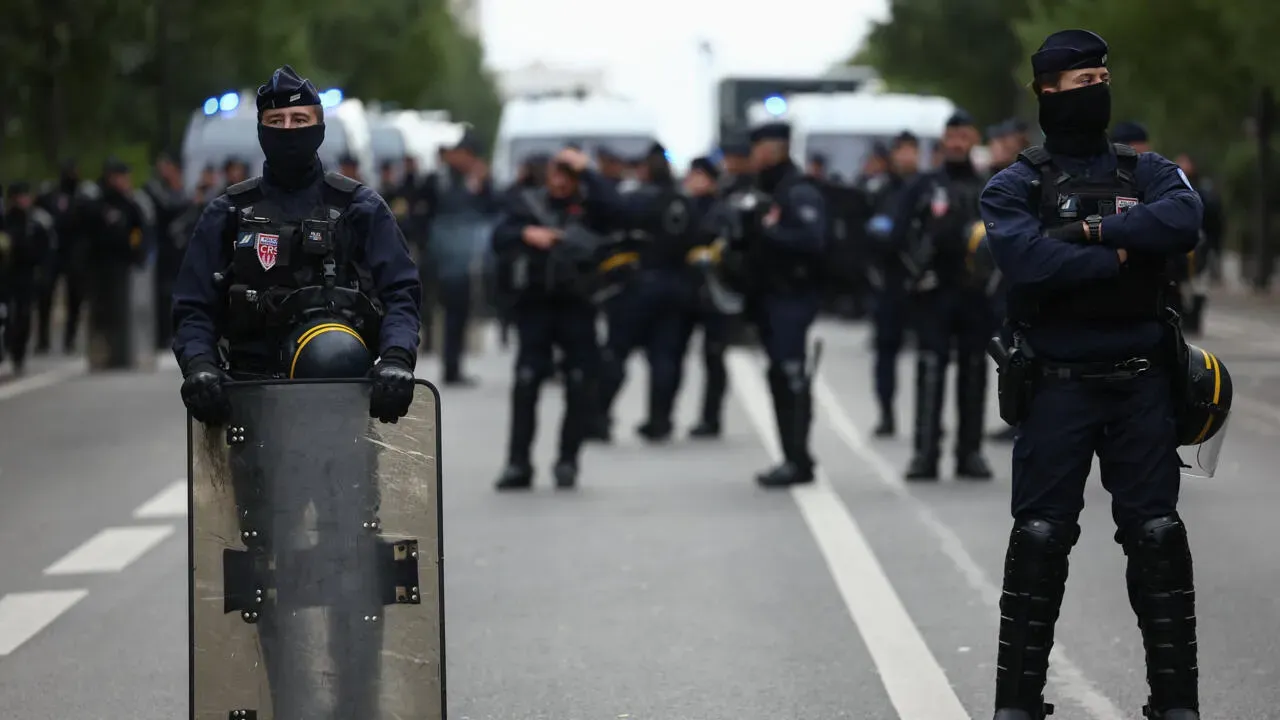
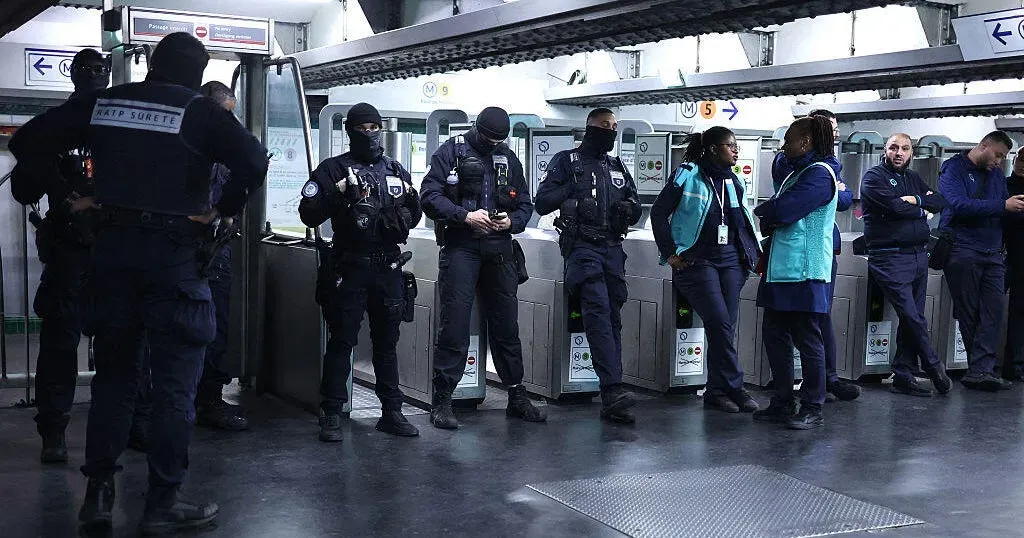
The nationwide deployment of up to 70,000 officers by Interior Minister Laurent Nuñez has brought a massive police presence to the streets of France, as protests against President Emmanuel Macron's government continue to escalate.
Trade unions took the lead in organizing the marches, which drew tens of thousands of people from Porte d'Italie and other parts of the city. Demonstrators carried handmade placards and flags, with many dressed in raincoats to brave the elements. The sheer scale of the turnout has put a strain on police resources.
As protesters attempted to march toward Place de la Nation, they were blocked by police at Porte de Vincennes, according to reports from French media outlets. This move has sparked further tensions between demonstrators and law enforcement, with some participants expressing frustration at being unable to continue their march.
The personal stories of protesters like Camille Chesnier, a 27-year-old engineering graduate struggling to find work, have highlighted the economic grievances driving the protests. Another demonstrator, Domitille, said that people are taking to the streets on several critical issues, including rising living costs and unemployment.
As protests in France continue to grow, demonstrators are voicing their discontent with the government's handling of rising living costs and unemployment. The situation has become increasingly tense, with police using tear gas and water cannons to disperse crowds.
The widespread nature of these protests is a testament to the fact that people from all walks of life are taking to the streets to express their grievances. This includes students demanding better schools and workers seeking higher wages and pensions, as well as those concerned about rising living costs. According to national statistics, the cost of living has increased by 1% in recent times.
The protests have been met with a mixed response from authorities, with some demonstrations being banned outright. However, this move appears to have had little effect on the momentum of the movement, which began as a small protest over staff shortages at a high school southeast of Paris but has since grown into a national phenomenon. Despite police efforts to clear crowds, protesters remain determined to be heard.
On Saturday morning, authorities ordered protesters out of Place de la Bastille in Paris, using a megaphone to inform them that they faced fines of 135 euros ($150) if they refused to leave. While some people complied with the order, others chose to stay and continue their demonstrations, adding to the sense of urgency and frustration that pervades this national movement.
A 58-year-old nurse from Paris, Soumaya Abed, has been participating in protests for over three decades and claims this march was unique due to its unusual starting point at Porte d'Italie.
The protests continue despite the government's efforts to quash them, with some demonstrators expressing frustration that authorities are using last week's events as a pretext to silence them.
A student from Paris' Sorbonne University joined the protests after witnessing police crack down on demonstrations at Sorbonne Nouvelle University, which he described as chaotic and unjustified.
The student emphasized that protesters are not violent, but rather peaceful demonstrators seeking their rights, and he noted that students make up a significant portion of those participating in the movement.
Protests were also held in Marseille, where police estimated 17,000 people attended, while the CGT union put the number at 100,000; in Toulouse, authorities reported 26,500 protesters.
The French government's response to the protests has been met with criticism from some quarters, as President Emmanuel Macron faces growing opposition in the final stretch of his term.
Macron's popularity has plummeted to its lowest since he took office in 2017, and his efforts to address the crisis have been seen as insufficient by many. The use of tear gas and water cannons by police has only added fuel to the fire, with protesters accusing authorities of heavy-handed tactics.
In an effort to quell the unrest, Macron has maintained that the measures are necessary to protect city centers, businesses, and public buildings. However, his stance has been met with skepticism by many, who see it as a desperate attempt to cling to power.
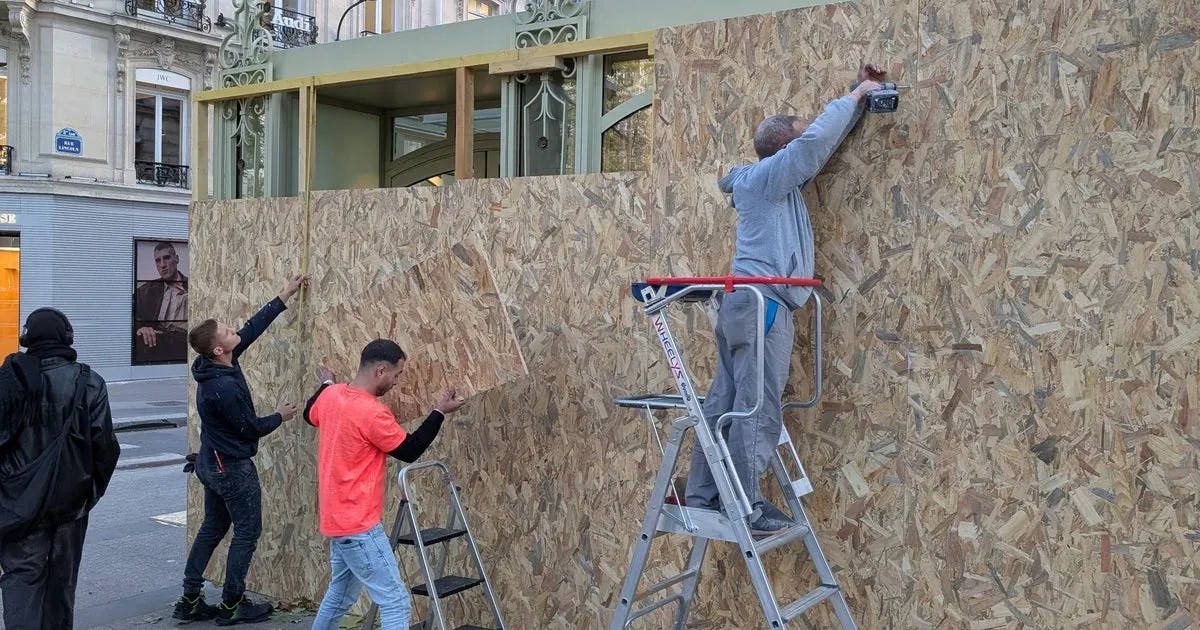
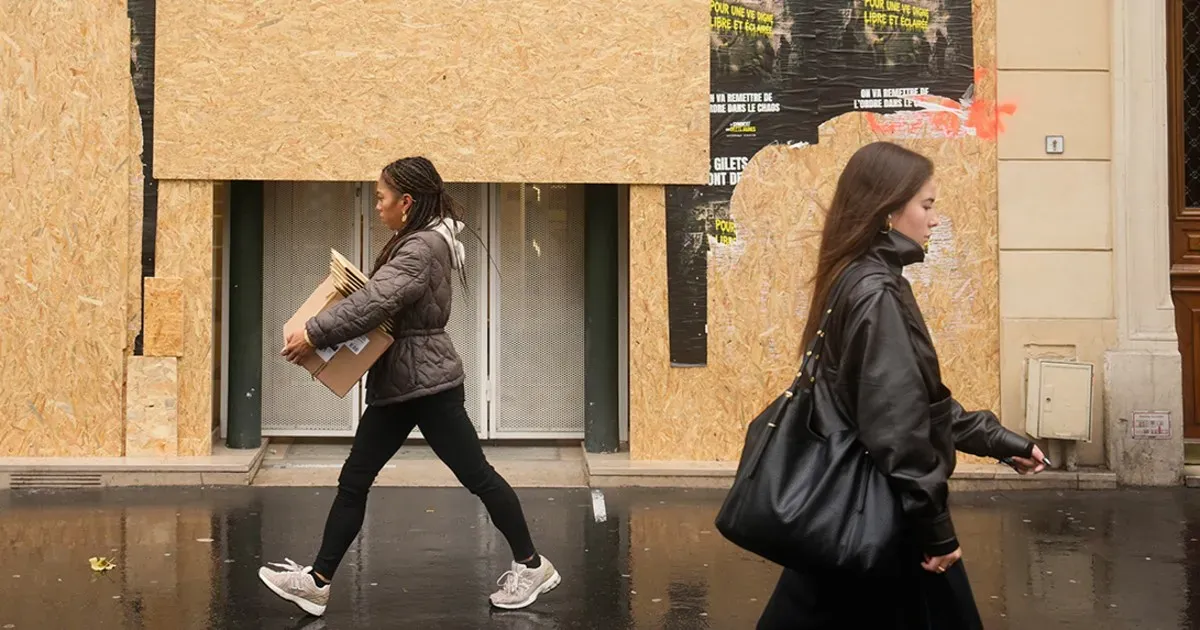
As the protests continue to escalate, shopkeepers across France are taking precautions to secure their properties. In Paris, gendarmes stood guard beneath the Arc de Triomphe while shopkeepers boarded up storefronts in preparation for further unrest.
Thousands of students and workers took to the streets in France, voicing their discontent over the country's education system. Their demands include a significant increase in higher education spots - specifically, 250,000 more places are being sought.
Their joint plan also calls for an overhaul of the national admissions system, Parcoursup, which currently employs selection methods that have been criticized by protesters. Furthermore, they are seeking increased support to cover everyday costs, including a student grant boost and rent freeze in public housing.
Facts based on reporting originally published by NBC News World.
You may republish this story, in full or in part, if you credit News Central Site and link to it (licence CC BY 4.0). Photos are not included.