Democrats Hold Eight-Point Lead Among Likely Voters
A new poll shows Democrats holding a significant lead among likely voters just one week before election day.
A new poll has been released just one week before election day, showing Democrats holding an eight-point lead among likely voters.
The survey, conducted by PBS News/NPR/Marist, also found that Democrats' advantage grows to 13 points when considering independent voters.
This shift in enthusiasm is reflected in the level of excitement among party supporters, with a significant majority of Democrats expressing strong eagerness to cast their ballots.
In contrast, fewer Republicans and independents report feeling similarly engaged, with only 61 percent of Republicans and 48 percent of independents saying they are very enthusiastic to vote.
Domenico Montanaro, Political Editor at NPR, points out that these numbers suggest the current state of the race, with Democrats appearing well-positioned to retain control of the House.
The generic congressional ballot is currently favoring Democrats by eight percentage points, which historically has been a good indicator of electoral outcomes.
According to analysts, when one party holds this advantage on the congressional ballot in midterm elections, they tend to make gains.
However, the Senate presents a different challenge for both parties. With many Republican-held seats and districts where Donald Trump won by significant margins, Democrats face an uphill battle to gain ground.
A closer examination of pro-Democratic voting groups reveals some potential concerns about their enthusiasm levels.
Pro-Republican groups show higher enthusiasm levels compared to their Democratic counterparts, according to recent polls. These groups include MAGA supporters, white evangelical Christians, and white women without college degrees, all of whom have expressed strong approval for President Trump.
The shift in voter demographics is also noteworthy, with college-educated white voters increasingly leaning towards the Democrats. This realignment is part of a broader trend where older voters are also moving towards the Democratic party. In fact, 71 percent of older voters surveyed reported being very enthusiastic about voting.
Midterm elections tend to have lower turnout compared to presidential elections, with an average voter participation rate of 42 percent among registered voters since 1992. This volatility makes polls a challenging tool for predicting election outcomes. The disparity in turnout between midterm and presidential elections is significant, with around 60 percent of registered voters typically participating in the latter.
The impact of President Trump's involvement on the election cannot be overstated. By effectively nationalizing many races through his campaign efforts, he may inadvertently harm Republican candidates. This could be particularly problematic given that only 40 percent of likely voters approve of the job he is doing as president, while a majority, 59 percent, disapprove.
The motivations behind voter decisions are also worth examining. While 44 percent of respondents stated that their vote is primarily against President Trump, 21 percent said it is in support of him.
The Trump effect on voter enthusiasm remains a crucial factor in the upcoming election, with President Trump's supporters making up 21 percent of respondents.
A closer look at exit polls from the 2024 presidential election reveals that 55 percent of people who voted for Trump did so explicitly, rather than as part of a broader anti-Trump vote.
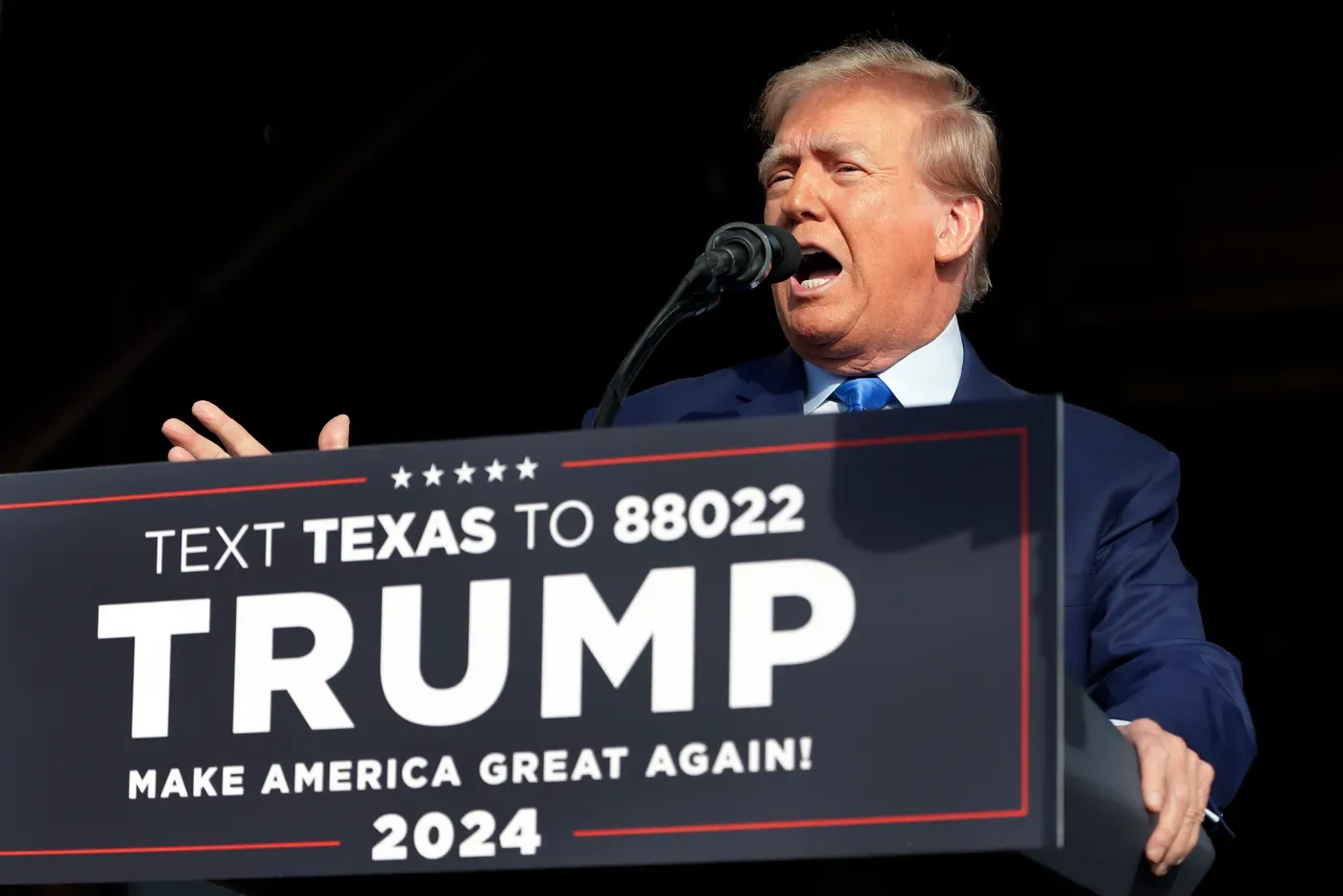
This distinction is important, as it suggests that while some voters may be motivated by their opposition to President Trump, others are genuinely enthusiastic about his candidacy. In order to capitalize on this enthusiasm, the president has been campaigning in key red states like Texas and Kansas.
By doing so, he aims to mobilize Republican voters and ensure a strong turnout in areas where they hold sway. This effort is crucial, as even small losses can have significant consequences if not enough Republicans are at the polls.
The administration's actions, however, may be undermining confidence in the elections themselves. The Department of Justice has filed a lawsuit in Alaska aimed at halting vote counting if a Republican candidate loses.
This move, combined with efforts to prevent 20,000 voters or votes from being counted in California, is sparking concern among voters and could potentially impact turnout on election day.
Trust in state and local elections is generally high among voters across all political parties, according to recent polling data. This optimism is reflected in the fact that seven out of 10 Republicans have confidence that elections will be fair and accurate, while an impressive 88% of Democrats share this trust.
A significant majority of both Republican and Democratic voters agree that their candidates should accept the results if they lose. Specifically, seven out of 10 Republicans and nine out of 10 Democrats concur on this point. This near-unanimity highlights the strong faith in the electoral process among voters from both parties.
Interestingly, there is a notable discrepancy between the two groups. A significant gap of 20 points exists between Republican and Democratic trust levels regarding election fairness. However, it's essential to note that even with this divide, an overwhelming majority of voters across the board have confidence in the integrity of state and local elections.
The delay in reporting election results is a factor that could potentially impact voter turnout on election day. Alaska has historically been one of the last places to report its results, often taking a significant amount of time due to the remote nature of some areas. In 2024, it took an extended period for the state's election results to be finalized.
The prolonged wait may become particularly relevant in Alaska this year, as the state's Senate seat is still up for grabs. The Justice Department has already indicated its intention to file a lawsuit aimed at mitigating what could potentially be a Democratic win due to the presence of two individuals named Dan Sullivan on the ballot, an issue that has been previously litigated by the Alaska Supreme Court.
Misinformation is likely to be a significant issue in the upcoming election, particularly among Republicans who are skeptical about accepting the results of the vote. According to recent polls, nearly a quarter of GOP voters believe their preferred candidate should contest the outcome.
The potential for confusion and disputes is further complicated by the presence of individuals with similar names on the ballot, which could lead to misunderstandings and disputes over election results.
Facts based on reporting originally published by PBS NewsHour Politics.
You may republish this story, in full or in part, if you credit News Central Site and link to it (licence CC BY 4.0). Photos are not included.