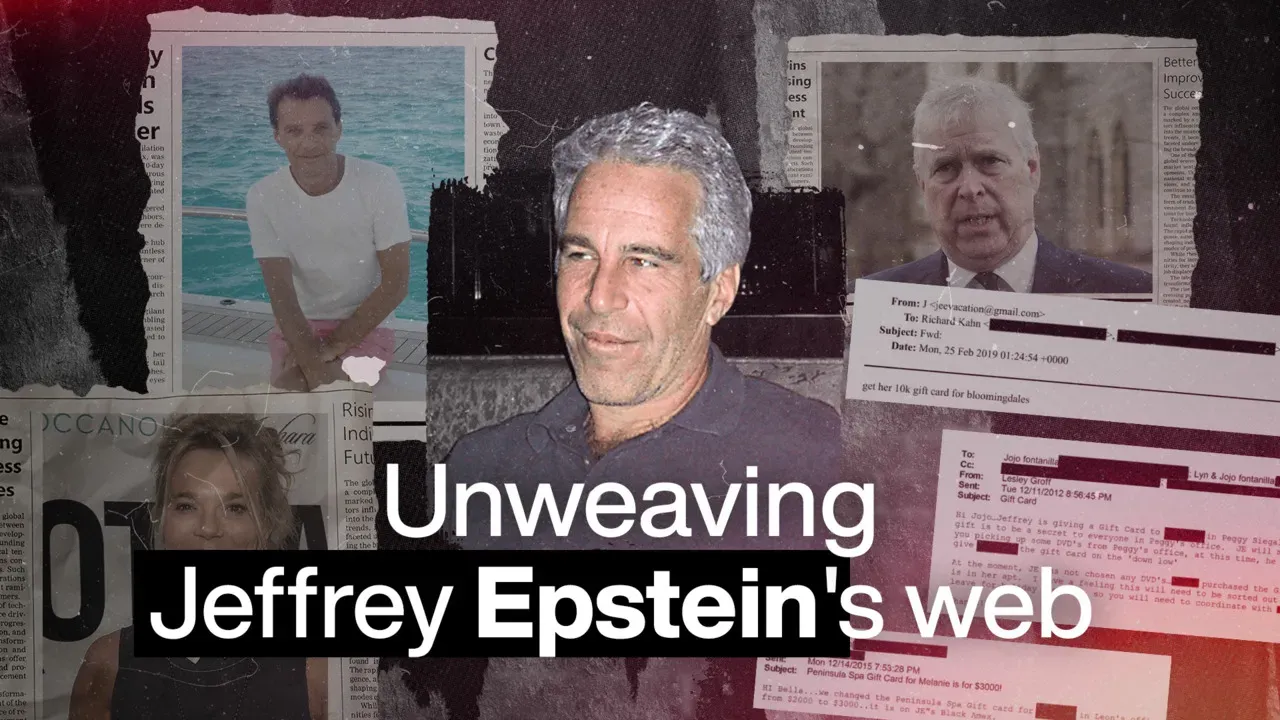
Missing Classified Material Found in Epstein Files
A closer examination of files collected by the Department of Justice has revealed that at least three documents hint at the inclusion of classified information related to Jeffrey Epstein.
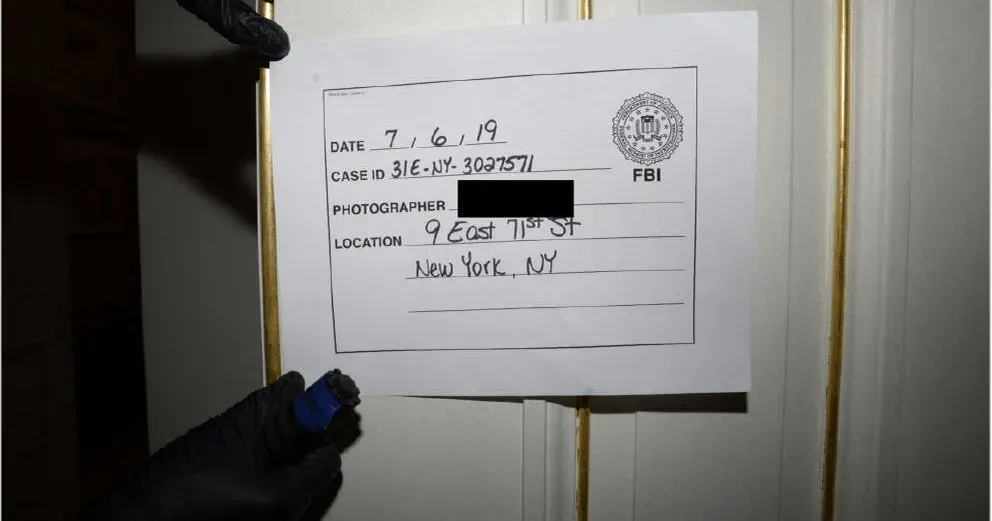
Classified Material Missing from Epstein Files, Documents Suggest
A closer examination of the massive trove of files collected by the Department of Justice has revealed that at least three documents hint at the inclusion of classified information related to Jeffrey Epstein.
According to one document, the Office of the Deputy Attorney General received classified material in March 2025. This raises questions about what exactly was deemed sensitive enough to warrant classification and why it was included in files intended for public release.
The Department of Justice's review process, known as The Epstein Transparency Project, aimed to identify and redact or withhold any sensitive information that may compromise national security. However, the exact nature of the classified material remains unknown.
A total of 6 million pages were collected by the DOJ, with over 3 million eventually released after a thorough review for duplication, attorney-client privilege, and relevance to Jeffrey Epstein's case.
A numerical coding system used by the Department of Justice (DOJ) to organize documents in the Jeffrey Epstein case has shed light on some missing pages from the files.
The coding system assigns a unique Bates number to each page, and in the Epstein case, the sequence runs from 1 to 2,858,498. This indicates that approximately this many pages of documents were released as part of the case.
However, closer examination reveals that there are gaps in the numbering, suggesting some pages may be missing. Among those reported missing are pages from Epstein's own financial records collected as evidence during a federal prosecution.
The presence of older coding numbers on some documents suggests they originated from other cases, such as the Ghislaine Maxwell criminal case.
Documents obtained by the FBI during their investigation into Jeffrey Epstein's trafficking activities contain gaps in financial records from his banks, including JPMorgan and Deutsche Bank.
Independent researchers have previously conducted similar gap analyses on other documents, highlighting the simplicity of identifying missing pages through a straightforward counting process.
The presence of gaps suggests that some pages were removed after the Department of Justice obtained them. This can be inferred by observing how certain Bates numbers advance differently than others in tens of thousands of instances. For example, the main EFTA number may increment by one while other numbers, such as JPM-SDNY and SDNY_GM, jump forward by two or more.
In some cases, entire images are missing from documents, including checks from Epstein's accounts. The gaps appear to be selective, with only the front or back of a check sometimes being absent, rather than both sides. Calculations based on available page numbers indicate that tens of thousands of pages of financial records may be missing without any clear explanation for their absence.
The Bates numbering system is used to track federal documents, and prosecutors rely on it to identify discrepancies. A large sequence of numbers labeled "R1" has been found between EFTA and page numbers in approximately 995,000 released pages.
These R1 numbers are present throughout the files, spanning from page 61 to page 2,214,171. However, a closer examination reveals that while the EFTA page numbers are sequential, the R1s have gaps ranging from one page to hundreds of pages.
Each time an R1 gap appears, it suggests that documents, mostly emails, were removed between the earlier review and the final release. By comparing these sequences, investigators can identify gaps where documents were taken out of context.
The non-sequential nature of the removed emails makes it impossible to determine when they were deleted, as their dates jump by days, months, and years.
The email gaps found in the Epstein files may be attributed to a process called de-duping, which aims to eliminate duplicate emails within a chain to speed up redaction.
This method considers all emails exchanged before the last one in a chain as duplicates, as the final message is supposed to include all previous messages. However, this approach was only partially applied, leaving numerous duplicate emails scattered throughout the files.
The review and redaction process of the Epstein files involved hundreds of DOJ attorneys working under intense time pressure, which may have led to mistakes resulting in withheld pages. Without a clear explanation or roadmap for the removals, it is impossible to determine whether these omissions were intentional or unintentional errors.
A federal judge has already made several rulings in favor of independent journalist Katie Phang's lawsuit against the Justice Department. She is seeking the release of additional files and an explanation for the redactions and removals. The DOJ is currently appealing these court decisions, which could further delay transparency into the Epstein file matter.
The handling of classified material within the Epstein file matter has raised concerns about potential negligence or intentional concealment. According to Phang, it is unclear whether the missing documents were an oversight or a deliberate attempt to withhold information from the public.
Attorney Stanley Brand suggests that the process used in releasing these files has eroded trust in the government's transparency efforts, echoing similar concerns seen in cases like the Pentagon Papers and Epstein files.
Facts based on reporting originally published by CBS News Politics.
You may republish this story, in full or in part, if you credit News Central Site and link to it (licence CC BY 4.0). Photos are not included.