Preschool Boys Prefer Playing with Larger Groups of Characters
A recent study by researchers at the University of Oslo found that preschool boys tend to prefer playing with larger groups of characters, while adult preferences vary by gender.
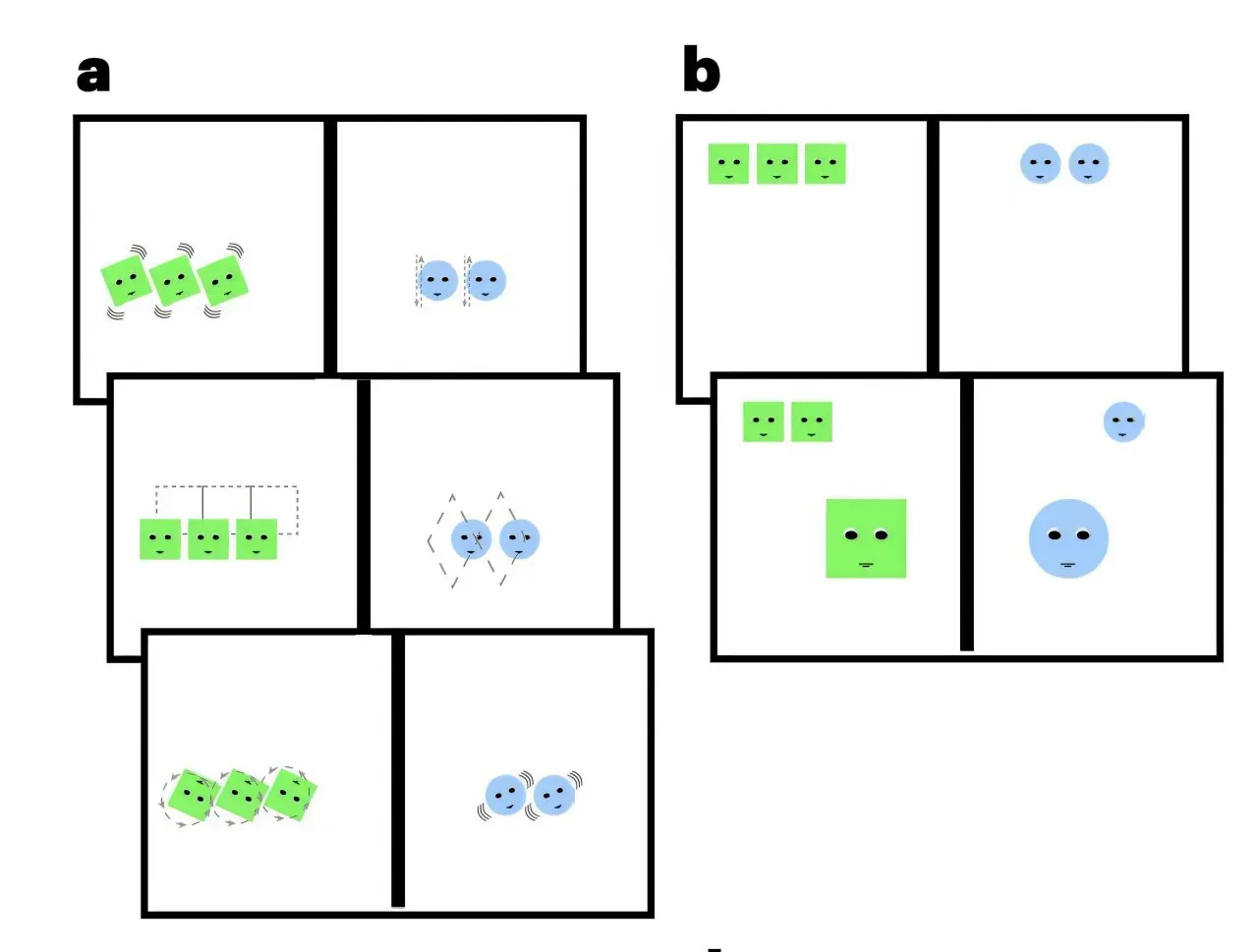
A recent study conducted by researchers at the University of Oslo has shed light on how children and adults make decisions when it comes to group size. The findings suggest that preschool boys in Norway tend to prefer playing with a larger group of characters.
In an experiment designed to test preferences for group size, 153 children aged three to six were shown animations featuring two groups of colored characters. Each group consisted of either two or three characters and moved independently on opposite sides of the screen without interacting with each other.
The results showed that preschool boys overwhelmingly chose to play with the larger group, which comprised three characters. In contrast, the preferences of adults in the study varied by gender and demonstrated a weak link to their attitudes towards social inequality.
Further analysis is needed to fully understand the implications of these findings for our understanding of how group size preferences emerge over time. The researchers' investigation into this phenomenon continues with the aim of exploring when and why people's preferences for larger groups develop.
In a follow-up experiment, researchers sought to determine whether children's preferences for larger social groups were driven by a simple preference for numbers or something more complex.
To test this hypothesis, 164 preschoolers were presented with shapes without faces, scattered and moved randomly on the screen. The results showed that both boys and girls chose the more numerous type of shape about half the time, suggesting that the presence of multiple individuals was not in itself a determining factor.
However, when it came to animated characters, the dynamics changed. In a separate experiment involving 180 infants aged 6-13 months, researchers found no preference for characters in larger groups. A subsequent looking-time analysis involving 220 infants revealed roughly equal attention given to both groups, indicating that even at an early age, there may be some nuance in children's social preferences.
Moving on from infancy and into adulthood, the researchers investigated whether similar patterns emerged in adults. In three studies involving a total of 3,467 white adults living in the U.S., participants were asked to rate which cartoon groups they would rather join.
In one of these studies, an additional question probed individual preferences by asking which specific members each participant would like to associate with.
The researchers' focus on white Americans allowed them to examine preferences within a dominant social group. Interestingly, both men and women in this demographic showed a preference for smaller groups overall, with women exhibiting an even stronger inclination towards smaller groups.
In another study, adults were found to perceive larger groups as more dominant, while smaller groups were associated with greater wealth and refinement. This perception suggests that adults view bigger numbers as conveying social power, albeit not necessarily status or power in general terms.
Despite the absence of explicit labels indicating nationality, religion, or party affiliation in the cartoons used, adult participants' choices showed small correlations with attitudes towards real-world social hierarchies. These associations were subtle but present nonetheless.
Adults who demonstrated a preference for larger groups also tended to be more accepting of dominant groups and supportive of military action in international affairs. Furthermore, they were more likely to favor harsher punishment for crimes and oppose policies benefiting minority groups.
A preference for larger groups may be an early indicator of attitudes towards group dominance, according to researchers who explored this phenomenon in children and adults. They found that preschool boys tend to favor bigger groups, which could be a building block for later attitudes.
In contrast, the choices made by adults in their final study were unrelated to their overall left or right leaning politics. This suggests that early preferences may not necessarily predict an individual's later political beliefs or affiliations. The relationship between group preferences and politics is complex and multifaceted.
The researchers propose that an attraction to stronger alliances could be an evolutionary adaptation that helped ancestors compete for resources by joining forces. However, this interpretation is still speculative, and more research is needed to understand the underlying mechanisms driving these preferences.
The studies were conducted in Norway and the United States without following children into adulthood, so it remains unclear whether early preferences persist and relate to later beliefs. Further investigation could shed light on the long-term consequences of group preferences and their potential impact on social attitudes.
Research suggests that preschool boys tend to favor larger groups over smaller ones, whereas adults' preferences for group size may be influenced by their political attitudes.
This difference in preference is evident when comparing the choices of young children and adults, with the former often opting for bigger groups even if it means less control. In contrast, adults' selection of group size appears to be linked to their underlying values, potentially indicating a connection between social preferences and societal views. Further investigation could shed light on the long-term consequences of such group preferences and their potential impact on social attitudes.
Facts based on reporting originally published by Phys.org.
You may republish this story, in full or in part, if you credit News Central Site and link to it (licence CC BY 4.0). Photos are not included.