PepsiCo Lags Behind in Cola Wars Amid Shift in Focus
The company's beverage division has struggled under the leadership of its former CEOs, including Steve Reinemund and Indra Nooyi.
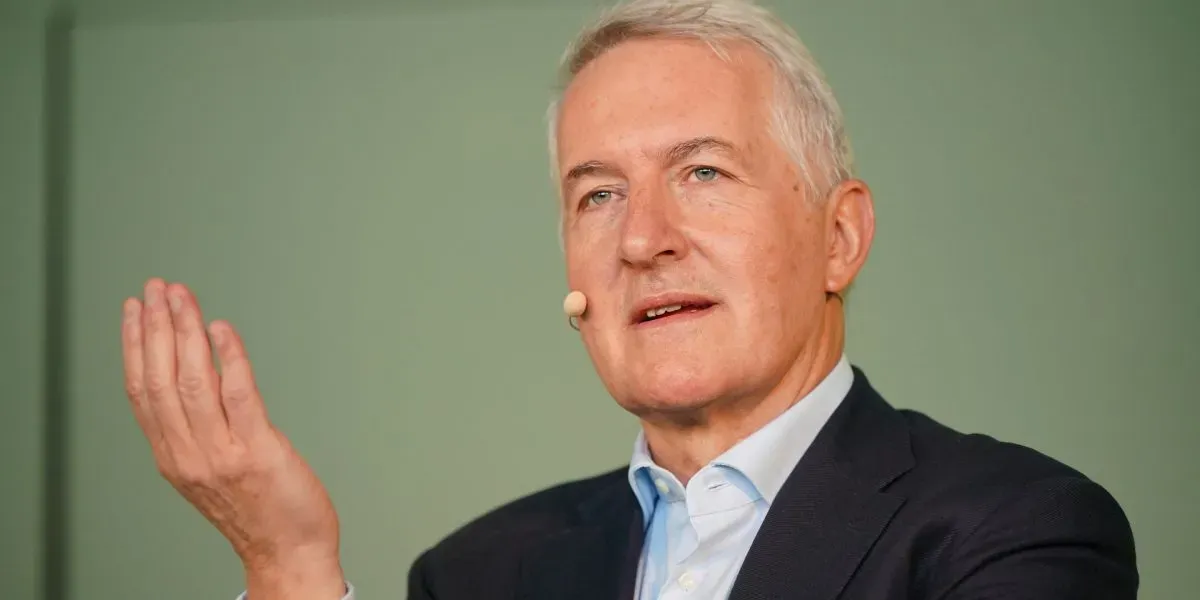
PepsiCo has been losing ground in the cola wars, and its CEO Ramon Laguarta acknowledged this fact on his company's third-quarter earnings call. He candidly stated that PepsiCo is not competing effectively in the soft drinks market.
The problem at PepsiCo's beverage division can be traced back to decisions made by Steve Reinemund, who led the company from 2001 to 2006. During his tenure, he expanded the portfolio through a merger with Quaker Oats in 2001, acquiring Gatorade as a result. However, this move also created a less flexible distribution structure and added complexity to the business.
The shift in focus under Reinemund's leadership was notable, as the company began discussing crop yields and health trends. Meanwhile, Coca-Cola seized an opportunity and signed a deal with Subway in 2003 to replace Pepsi as its largest fountain customer. Although Pepsi managed to win back this contract last year, it was a significant setback for the company.
Indra Nooyi, who succeeded Reinemund as CEO, continued along a similar path by dividing the portfolio into three categories: "Fun for You (fatty and sugary foods), Better for You" (lower-calorie or lower-fat versions), and "Good for You (nutritious foods like oatmeal and hummus). This division of focus may have contributed to declining attention on Pepsi's soda business, particularly in a time when cities were considering banning large sugary drinks.
The recent loss of KFC as a partner is the latest blow to PepsiCo's beverage division. The fast-food chain announced that it will switch to Coca-Cola products at its 3,700 U.S. restaurants, ending a 40-year partnership with Pepsi.
PepsiCo's diversified portfolio has been a key factor in its success, generating more than twice as much revenue as Coca-Cola despite having a smaller market capitalization.
The company's focus on building a total beverage company" has led to the creation of 32 billion-dollar brands, showcasing its ability to adapt and innovate in an ever-changing market.
While being a diversified conglomerate presents certain advantages, such as increased opportunities for growth and innovation, it also requires careful management and prioritization.
PepsiCo's continued success in the beverage industry is a testament to its commitment to innovation and marketing, but its lack of focus on its core business has raised concerns among investors and analysts.
The beverage industry's shift in consumer preferences has forced PepsiCo to adapt its business strategy, with a focus on affordability and trendy partnerships. Under Michael Buckley's leadership, the company is now courting younger generations with more affordable clothing lines and music collaborations, rather than trying to set new trends.
This approach marks a significant departure from PepsiCo's previous focus on innovation and trendsetting. According to data scientist Thomas Miller, who accurately predicted the 2024 presidential race, the Democrats' chances of taking control in the 2026 midterms are gaining momentum. Since October 14th, their odds have jumped from 71.5% to 77.6%.
Global stock markets are showing a mixed performance this morning. The S&P 500 futures are up by 0.30%, while the last session closed with a decline of 0.52%. In Europe, the STOXX index is up by 0.31%, and the UK's FTSE 100 is also rising, up by 0.45%.
The Japanese Nikkei 225, however, has taken a hit, falling by 0.80% in early trading. South Korea's KOSPI is down by 1.46%, while China's CSI 300 is only marginally lower, down by 0.04%. In contrast, Hong Kong's Hang Seng is up by 0.51%.
Meanwhile, the value of Bitcoin has dropped to $80k, a significant decline from previous levels. This morning's market trends suggest that investors are cautiously optimistic about global economic prospects, but still wary of potential downturns.
Market trends suggest a cautious optimism among investors regarding global economic prospects, but concerns about potential downturns persist.
A closer look at recent market developments reveals that investor sentiment is still fragile, with many remaining wary of any signs of instability. This uncertainty has led to a mixed bag of reactions from markets around the world, with some showing resilience while others continue to struggle. Despite these challenges, there are indications that economic growth may be stabilizing in certain regions.
The overall outlook for global markets remains uncertain, and it is unclear when or if investor confidence will fully recover.
Facts based on reporting originally published by Fortune.
You may republish this story, in full or in part, if you credit News Central Site and link to it (licence CC BY 4.0). Photos are not included.