Oobah Butler's New HBO Show Promises Satirical Commentary on Society
The new show, Oobah: Scams for a Better Tomorrow, will feature Butler using satire and parody to comment on societal norms through outrageous stunts.
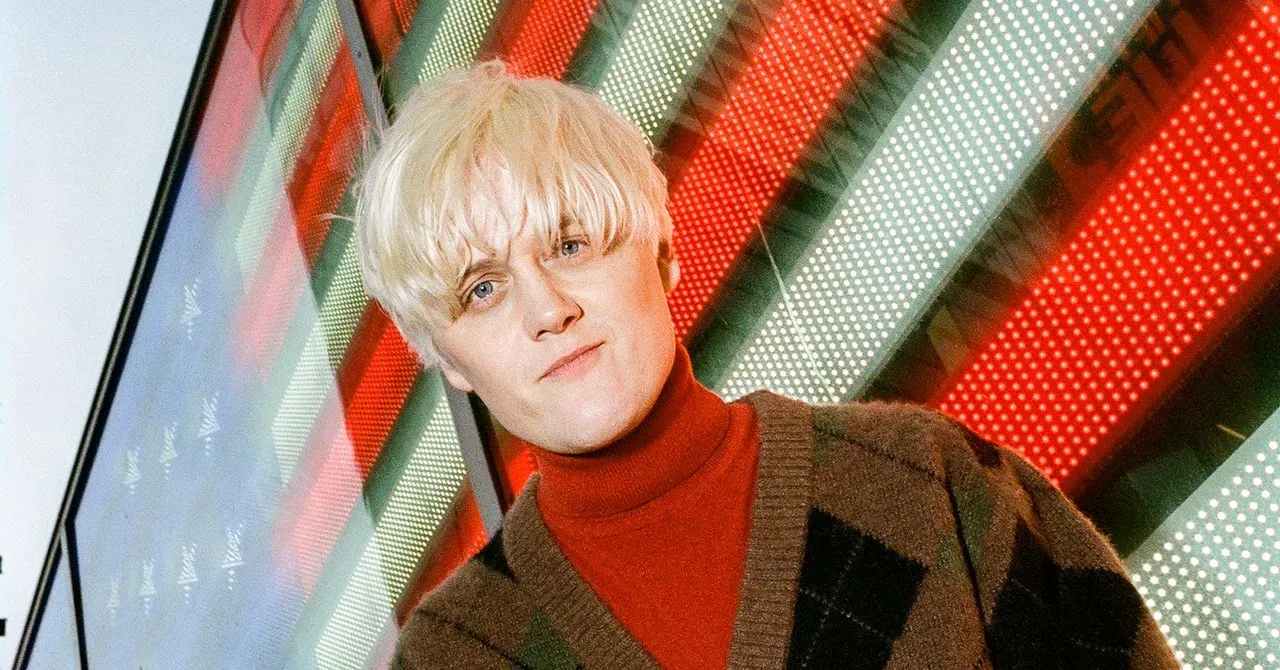
Oobah Butler has made a name for himself as a master of deception, using his unique blend of satire and parody to comment on societal norms.
The British documentarian's repertoire is filled with outrageous stunts, including creating a fake restaurant in London that topped the city's Tripadvisor list and selling Amazon drivers' urine online.
Butler's antics have earned him both praise and criticism, but his new HBO show promises to take his brand of satire to new heights. The series, Oobah: Scams for a Better Tomorrow, is set to premiere on November 22.
Each episode will focus on Butler scamming his way into success in a different industry, from wellness to music, using increasingly absurd ideas that somehow manage to fool even the most skeptical observers.
The show's creators have drawn comparisons between Butler and master of manipulation Nathan Fielder, who also uses satire to comment on social issues. However, while Fielder has been criticized for exploiting vulnerable individuals, Butler's targets are typically the wealthy and powerful.
Butler's methods often involve a single-minded focus on minute details that others might overlook, carrying these tangential pursuits to absurd lengths in the pursuit of his goals.
Butler's ability to persuade high-profile executives and influencers to endorse his outlandish business ideas is nothing short of remarkable. He has a knack for convincing even the most skeptical individuals that his schemes are worth their while.
In one episode, he enlists the help of former Theranos chief creative officer Patrick O'Neill to develop a marketing strategy for a wellness company that sells human tears as a skin serum. The plan is to create an air of mystique around this dubious product, and O'Neill seems eager to contribute his expertise in doing so.
O'Neill's involvement with Theranos, the scandal-plagued biotech startup, has left him with a reputation for being able to spin even the most questionable ideas into something palatable. Butler takes full advantage of this skill, telling O'Neill that he "smashed it in creating an aura of intrigue around the company.
As they brainstorm together, O'Neill begins to offer advice on packaging and branding, suggesting a tear-shaped bottle for the product. The name Lacrimé (tears in Italian) is also floated as a possibility, with O'Neill arguing that it will add an exotic touch to the product's image.
The irony of using human tears as a skin serum is not lost on Butler, who confides in a $1,500-an-hour lawyer about his misgivings. He tells her that the wellness industry is a gold rush of bullshit, but one that he is happy to exploit for the sake of exposing its flaws.
Butler's love of history and New York City is evident in his choice of meeting location - the New York Historical Society. His interest in Robert Moses, a powerful urban planner, has given him an appreciation for how power works in the city.
As Oobah Butler reflected on his experiences, it became clear that New York City's allure had been building for some time. His initial visit in 2016 was a defining moment, sparking an enduring fascination with the city.
The inspiration he drew from NYC was palpable as we strolled through Central Park, surrounded by towering skyscrapers and the hum of urban activity. I just found it so inspiring, he said, his words echoing the sense of awe that many visitors feel when encountering the city's grandeur.
Butler's background in a small village in the UK, Feckenham, with its 700 residents, couldn't have been more different from the high-stakes world of New York. Growing up in a lower-class family, he developed a keen awareness of social class and its implications. I've definitely got a bit of a chip on my shoulder about class, he noted.
As we continued our walk, Butler's thoughts turned to the contrast between the UK's aristocracy and the American experience. He observed that wealthy individuals from both countries carry themselves differently in New York, where they are largely ignored by the public. I see them come here and no one gives a shit, he said with a hint of amusement.
Butler's unconventional path began early on, without the benefit of a college education. Instead, he turned to music as an outlet, forming a band called My Grey Horse in 2010. He played guitar and sang, while also writing music reviews at the age of 17, a venture that was, in his words, a scam on the go."
Oobah Butler's television career has taken him down several paths, including working on multiple projects for Channel 4 in the UK and co-hosting the popular show Catfish UK on MTV.
This stint at Catfish UK proved to be a pivotal moment in his life, allowing him to secure financial stability that enabled him to relocate to a new location.
Butler credits this experience with giving him a newfound sense of freedom, saying it was an opportunity he wouldn't have been able to afford otherwise.
His natural comedic flair often brings laughter, and at times even his carefree demeanor is enough to elicit chuckles from those around him.
It's possible that his innate ability to be funny stems from his family's history of being skilled con artists, a legacy that dates back generations.
Asimov's taste buds are put to the test once again as Butler attempts to deceive him into thinking he's sipping a glass of Barolo, the fine Italian wine Asimov claims to have fallen in love with when first introduced to wine.
Butler's trickery pays off, and Asimov offers his seal of approval, which is promptly used on Fumare's label. This clever move highlights Butler's knack for persuasion, a skill he has honed over time.
In another instance, Butler founded an AI dating company called Sole, but instead of relying on technology to match people, he pairs them with other humans in the hopes they'll connect. The idea behind this approach is that people trust in the efficiency of technology more than the uncertainty of human interactions.
Butler's explanation for his unconventional methods reveals a deeper insight into the world of Big Tech, where promises are often made without being grounded in reality. He notes that many companies in this space rely on speculative ideas and the promise of utopia rather than tangible results.
The authenticity of Butler's stunts is evident in their haphazard nature, which stands in contrast to the polished productions typically associated with big-budget projects. With only a small team involved, including himself, Butler emphasizes the DIY aspect of his work, aiming to make viewers feel included and invested in the process.
Butler's approach to creating engaging content often involves acknowledging the limitations of his budget, which he believes can actually be a strength in making viewers feel more connected to the process.
He has a knack for getting people to reveal themselves on camera, and when asked directly if it's unwise to answer his calls, he turns the question back around, seeking my opinion instead.
This dynamic can sometimes make individuals appear foolish, especially those with some level of influence or prestige, but Butler seems to find this outcome entertaining.
Facts based on reporting originally published by Wired.
You may republish this story, in full or in part, if you credit News Central Site and link to it (licence CC BY 4.0). Photos are not included.