Crows' Decision-Making Speed Surpasses Humans and Primates
Researchers have found that carrion crows can make decisions at speeds of less than a quarter of a second, outperforming humans in similar tasks.
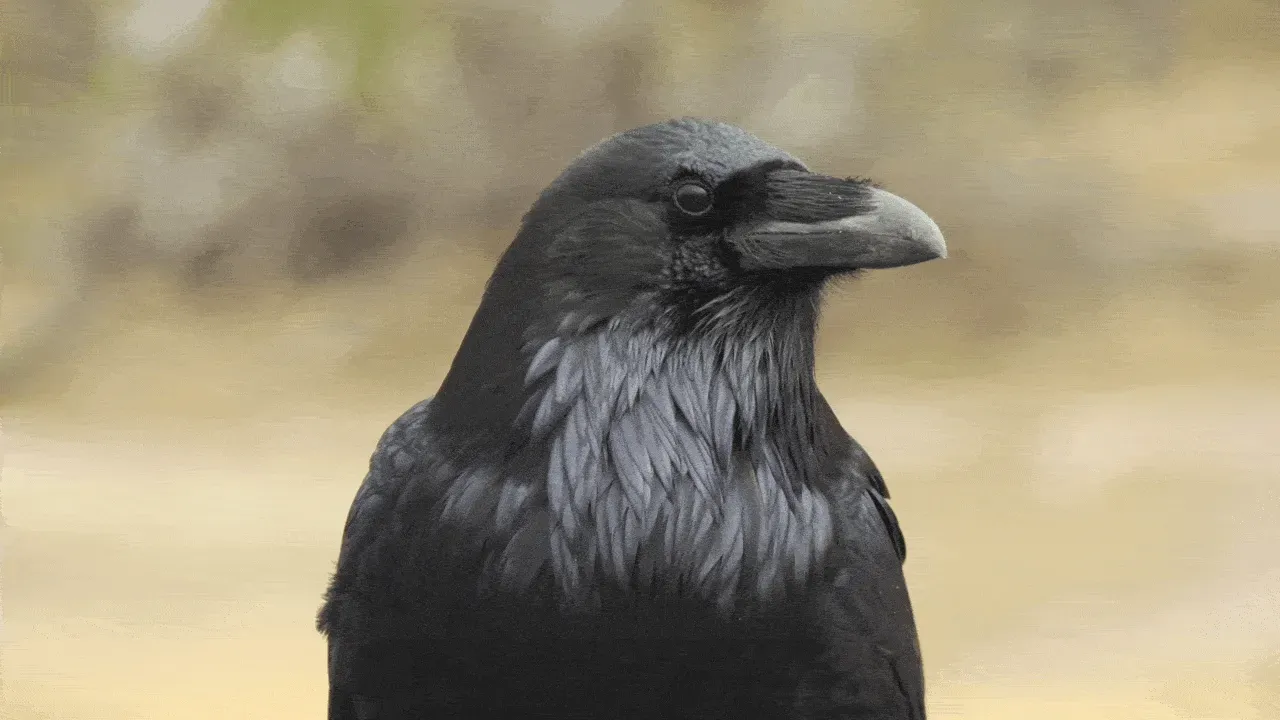
Researchers have uncovered evidence that crows may possess lightning-fast decision-making abilities, potentially rivaling those of humans and primates.
Studies suggest that these intelligent birds can use tools, hold grudges, and even conduct funeral rites, demonstrating a level of cognitive sophistication previously thought to be unique to mammals. Now, new research indicates that crows can make certain decisions at speeds unmatched by their counterparts in the animal kingdom.
In a recent study published in the journal Science, two carrion crows were tasked with identifying the direction of moving dots on a screen. The birds performed this task in an average time of 235 milliseconds, which is less than a quarter of a second. This speed exceeds human decision-making times for similar tasks by several seconds.
Historical studies indicate that humans typically require six seconds to make decisions in comparable tasks. In contrast, the crows' accuracy and reaction times were remarkably high, suggesting an efficient decision-making process.
The findings have sparked interest among researchers, particularly given the distinct evolutionary paths of birds and mammals, which diverged over 310 million years ago. The study's authors suggest that evolution may have independently developed similar solutions to complex problems in these two groups.
Two carrion crows were trained on a touchscreen task to test their decision-making abilities using visual cues from their environment. The birds watched a cloud of white dots moving against a black background, where some dots moved in a coordinated manner while others moved randomly.
The experiment allowed the researchers to manipulate the proportion of synchronized movement among the dots, making it easier or harder for the crows to make a decision based on the visual information. When most dots were moving together, the task was relatively straightforward for the birds, but when only a small percentage were in sync, the evidence for their decision was weaker.
Under conditions with many dots and clear motion, the crows achieved nearly perfect accuracy, pecking the correct target almost every time to earn a mealworm reward. However, even when just a tiny fraction of the dots moved together, both birds demonstrated impressive decision-making skills, getting it right 50% of the time.
This level of performance is notable considering that the crows were only presented with weak visual evidence, just 3% of the dots moving in concert, suggesting they are capable of making relatively rapid and accurate decisions based on limited information.
The crows' exceptional speed and accuracy in making decisions were maintained throughout multiple rounds of the experiment, indicating that they did not compromise on judgment for the sake of quickness.
While this study does not directly compare the crows to humans and monkeys performing the same task, previous research suggests that these primates take roughly twice as long to complete comparable visual motion tasks.
To understand how the birds reached their decisions so quickly, researchers recorded activity from 248 neurons in the nidopallium caudolaterale (NCL), a region of the bird brain equivalent to the prefrontal cortex in humans and primates. The NCL performs advanced functions despite the fact that birds lack the layered cerebral cortex found in mammalian brains.
Neural activity patterns were recorded, revealing that crows accumulate sensory information and their neurons' activity increases until it reaches a critical threshold, prompting the brain to make a decision, much like in primates.
The study's findings suggest that crows' speediness in decision-making may be a result of their demanding daily lives.
Flight is a complex task that requires birds to process visual information and coordinate motor movements quickly, often navigating through three-dimensional environments and reacting to moving objects. The ability to find food and capture prey also demands rapid and precise decisions. These pressures may have driven the evolution of fast information processing in crows.
However, more research is needed to confirm the study's results and explore why crows seem to outpace primates in this type of decision-making. With only two birds included in the study and no direct comparisons made to primates, the findings are preliminary and require further investigation.
The study's lead author suggests that the faster decision-making process in crows raises important questions about how scientists define intelligence. By studying different species, researchers can discover which computational principles are shared across animals and which reflect adaptations to their specific environments.
Researchers have found that crows can make decisions at an incredible speed, often twice as fast as humans. This lightning-fast decision-making ability is likely due to the unique structure of their brains, which may allow for more efficient processing of information.
The study's findings suggest that understanding how different species process information could lead to breakthroughs in artificial intelligence and machine learning. By studying various animal models, scientists can identify common computational principles used across the animal kingdom and pinpoint those that are specific to certain environments or adaptations. This knowledge could ultimately improve human-made AI systems by borrowing from nature's own efficient algorithms.
Facts based on reporting originally published by Live Science.
You may republish this story, in full or in part, if you credit News Central Site and link to it (licence CC BY 4.0). Photos are not included.