Bomb threats target dozens of European flights
Dozens of passenger flights received threatening messages claiming explosive devices on board, prompting emergency responses from military forces to police investigations.
Dozens of passenger flights were targeted by hoax bomb threats across Europe this week, sparking a series of emergency responses from military forces to police investigations.
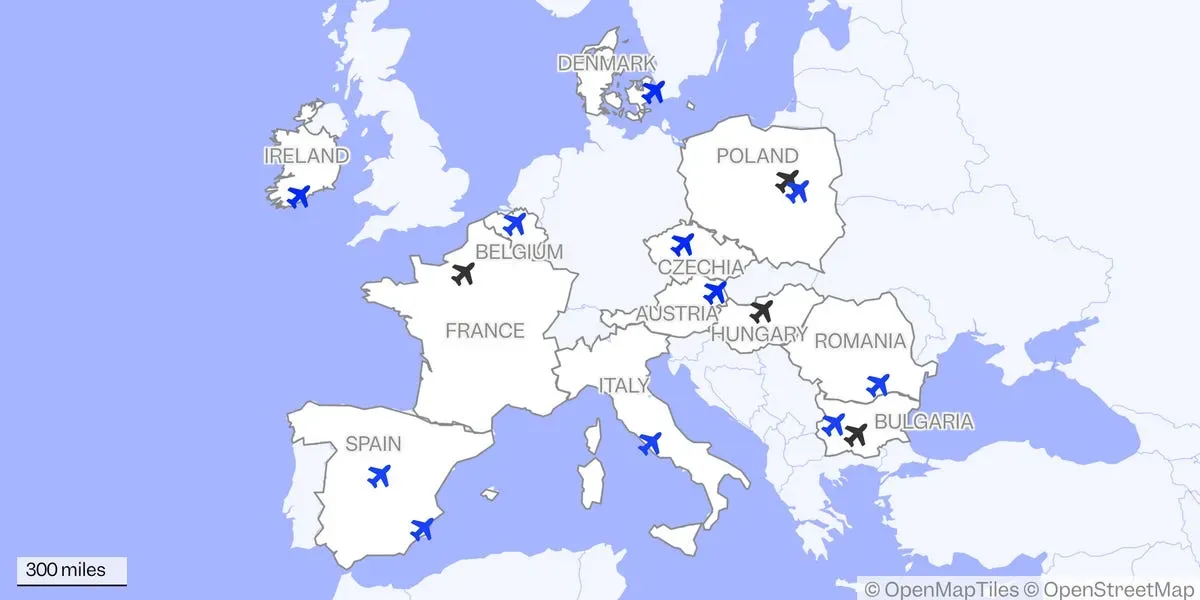
According to statements from airlines and governments, at least 35 airplanes received threatening messages claiming the presence of explosive devices on board. This number may be higher as some police reports mentioned unspecified numbers of incidents, while others could not be immediately confirmed.
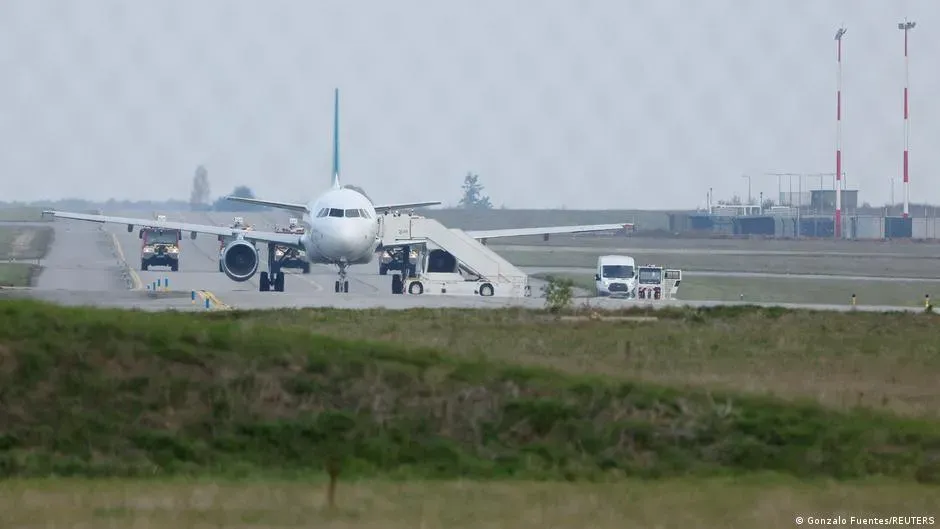
The first reported incident occurred on Monday when a Wizz Air flight from London to Sofia, Bulgaria, was diverted to Budapest, Hungary due to a bomb threat received during the flight.
Airport and airline officials said that most flights continued to their intended destinations before being searched, although some were forced to divert or land prematurely as a precautionary measure.
The bomb threats sent shockwaves across Europe this week, prompting a swift response from authorities.
Several air forces scrambled fighter jets in response to the threats, further escalating the situation. French Prime Minister Sébastien Lecornu took decisive action on Tuesday by ordering fighter jets to intercept an Aer Lingus flight from Dublin that had received a bomb threat.
The plane, carrying 157 passengers en route to Rome, was diverted to a French air base in Normandy as a precautionary measure. This move reflects the gravity of the situation and the need for swift action to ensure public safety.
In addition to France, Bulgaria also scrambled jets to intercept three Ryanair flights, one of which was diverted to Plovdiv, the country's second city. The Italian Air Force dispatched Eurofighters to escort a Finnair flight from Helsinki to Rome.
The recent wave of bomb threats across Europe has sparked concerns about a potential hybrid war waged by Russia against the continent. Western officials have accused Moscow of engaging in malign operations, including attacks, sabotage, arson, and drone incursions, in an effort to weaken support for Ukraine and undermine allies' resolve.
NATO leadership has warned that the campaign is escalating, with NATO Secretary General Mark Rutte stating last month that it is intensifying. While the motivations behind these coordinated threats are unclear, some officials suggest a possible link to Russian state actors or individuals sympathetic to Russia.
The disruption caused by these bomb threats has been widespread, with multiple airports and airlines affected. For example, Ireland's Cork Airport received an anonymous phone threat about a specific flight, while Bulgaria's Border Police reported receiving bomb threats via email.
As the International Air Transport Association condemned the disruption, its senior vice president for operations safety and security, Nick Careen, urged authorities to investigate the origins of these hoax threats and bring those responsible to justice.
Facts based on reporting originally published by Business Insider.
You may republish this story, in full or in part, if you credit News Central Site and link to it (licence CC BY 4.0). Photos are not included.