Microplastics React with Water Under Normal Environmental Conditions
A new study challenges the assumption that microplastics are inert particles by revealing they become chemically active when exposed to water.
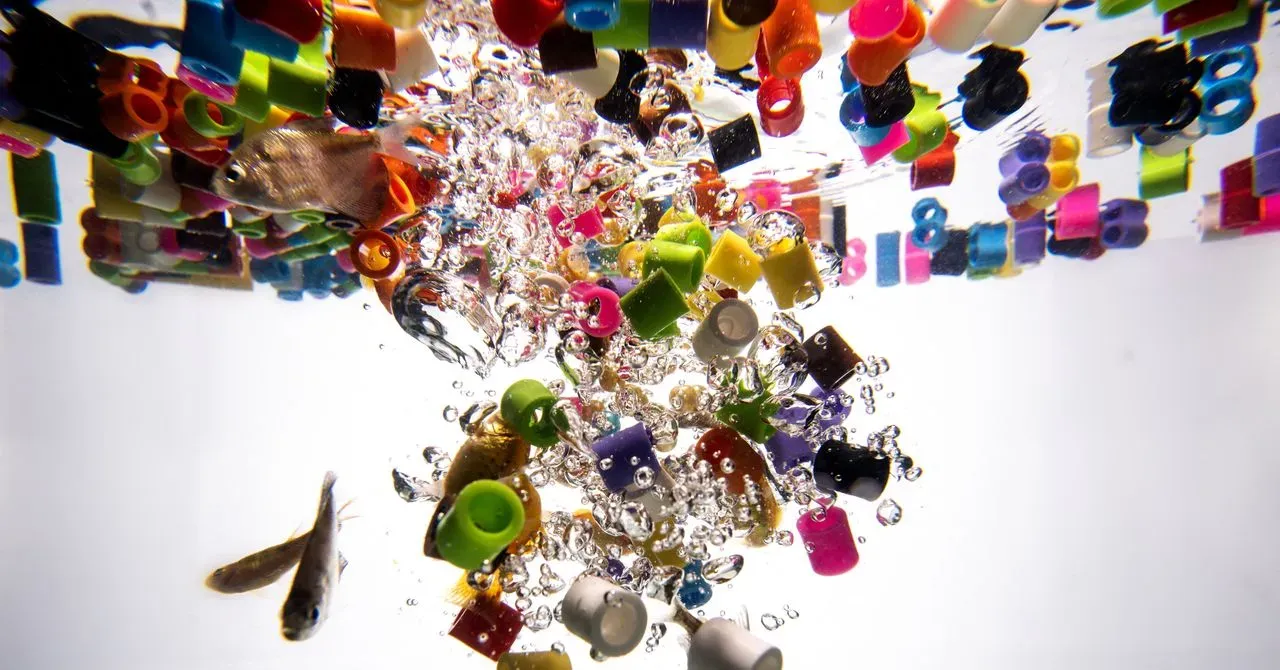
Microplastics have long been considered inert particles that can be found everywhere from oceans to soil and even in drinking water. However, a new study challenges this assumption by revealing that microplastics can react with water under normal environmental conditions.
According to researchers at Columbia University and UC Berkeley, the surfaces of microplastics become chemically active when exposed to water, triggering the formation of reactive compounds that can alter other molecules. This phenomenon is significant because it suggests that microplastics may pose a greater risk to living organisms than previously thought.
The scientists found that the increased surface area of microplastics allows for chemical reactions to occur more easily, leading to the production of reactive oxygen species. One such compound, hydroxyl radicals, has been identified as particularly hazardous due to its ability to damage cellular components and disrupt biological processes.
This discovery has important implications for our understanding of microplastic pollution and its effects on ecosystems. As plastic fragments into smaller particles, its surface area expands exponentially, potentially leading to a greater number of chemical reactions and the formation of reactive compounds.
The problem with microplastics is not just their presence, but also how they interact with our bodies. When these tiny particles break down into smaller fragments, their surface area increases exponentially, potentially leading to a greater number of chemical reactions and the formation of reactive compounds.
These reactive compounds can have devastating effects on cell membranes by snatching electrons from proteins and fats that make up their structure. This disruption can be particularly damaging because it is similar to the kind of damage caused by free radicals in our bodies.
Our bodies do have some natural defenses against this kind of damage, primarily in the form of antioxidants. These molecules neutralize reactive chemicals, but if there are too many reactive compounds and not enough antioxidants, this line of defense can be overwhelmed.
This imbalance can lead to oxidative stress, a scenario where cells are damaged due to an overabundance of free radicals. Previous research has already linked exposure to microplastics with oxidative stress in cells, although the exact mechanisms behind this damage remain unclear.
The study's findings indicate that microplastics can react with water in the body, potentially causing harm beyond what is already known about the pollutants they carry or release.
This reactivity can lead to damage even when microplastics are not physically interacting with other cells, but rather just being present in a bodily fluid. The researchers were specifically interested in how this could affect blood, which is mostly made up of water.
In experiments using mice red blood cells, the presence of certain types of microplastics caused the cells to become deformed and rupture, a phenomenon known as hemolysis.
The extent of this damage correlated with how reactive each type of microplastic was with water, suggesting that chemical interactions are indeed responsible for the cellular harm.
Facts based on reporting originally published by Wired.
You may republish this story, in full or in part, if you credit News Central Site and link to it (licence CC BY 4.0). Photos are not included.