Sheikh Zayed Road to be closed on Sunday for Dubai Run event
The Dubai Fitness Challenge has attracted over 16 million participants since its inception in 2017.
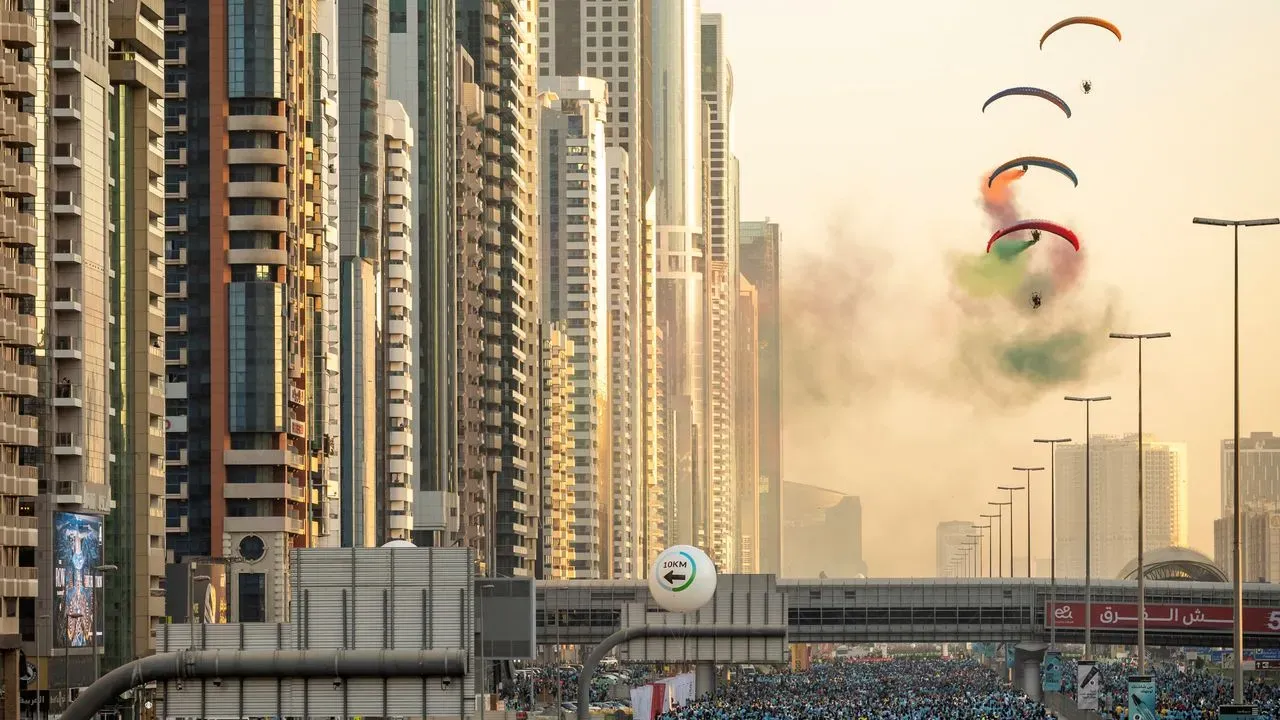
Dubai's iconic Sheikh Zayed Road will be temporarily closed to traffic on Sunday, November 22, as the city hosts its annual Dubai Run event. This massive community fun run is part of the Dubai Fitness Challenge (DFC), a program launched in 2017 with an ambitious goal: to turn Dubai into the world's fittest city.
The DFC has been incredibly successful since its inception, attracting over 16 million participants who have committed to 30 minutes of exercise every day for 30 days each November. The challenge is led by Dubai's Crown Prince Sheikh Hamdan bin Mohammed bin Rashid Al Maktoum, a passionate advocate for fitness and wellness.
Sheikh Hamdan has been instrumental in promoting the DFC, which has become one of the world's largest community fitness initiatives. He has also used his platform to inspire others, saying that "the people of Dubai have created an inspirational fitness movement" during a previous edition of the challenge.
The Crown Prince is himself an athlete who enjoys cycling, diving, and long-distance running. His involvement in the DFC reflects his commitment to promoting a healthy lifestyle among Dubai's residents and visitors alike. The program has been growing in popularity over the years, with thousands taking part each year.
To support the DFC, the city has transformed various public spaces into fitness hubs. For example, beaches, parks, shopping centers, and even major roads like Sheikh Zayed Road have been turned into places to exercise. This is made possible through a network of Community Fitness Hubs, Fitness Villages, and flagship events.
The 2026 calendar for the DFC includes four major events: Dubai Ride, which kicked off the challenge on November 1; Dubai Run, scheduled for Sunday, November 22; Dubai Stand-Up Paddle, a two-day festival taking place at Hatta Dam from November 7 to 8; and Dubai Yoga, returning for its second edition on November 29.
Each event offers something unique for participants. Dubai Ride saw thousands of cyclists take over Sheikh Zayed Road, while Dubai Run will bring tens of thousands together for a fun run along the same route. The DFC also includes smaller events and activities throughout the city, making it easy for people to get involved.
The Dubai Fitness Challenge has become an integral part of the city's annual calendar, with many residents looking forward to participating in the various events and activities. As the challenge continues to grow in popularity, it remains to be seen whether Dubai can indeed achieve its goal of becoming the world's fittest city.
Dubai's fitness initiative has expanded its reach through the establishment of several Fitness Villages across the city. These hubs offer a wide range of activities, including boxing and beach volleyball, as well as spin classes and meditation sessions, all available for free throughout the day.
The program has also seen the introduction of Community Hubs in over 30 neighborhoods, providing residents with convenient access to various fitness activities such as pop-up runs, rooftop yoga, skateboarding lessons, padel tournaments, and family-friendly bootcamps. This move aims to bring exercise closer to home for Dubai's residents.
In addition to these initiatives, the city is hosting a packed schedule of international sporting events this year. The Dubai Premier Padel P1, T100 Triathlon, DP World Tour Championship, and Emirates Dubai 7s are just some of the high-profile competitions taking place in the city.
The return of the Dubai Sail Grand Prix will also see high-speed catamarans racing off the coast of Dubai. Meanwhile, HYROX Dubai will challenge athletes to a grueling combination of running and functional fitness tasks. Other events include obstacle races, mountain trails in Hatta, and community running events across the city.
Dubai's Sports Council has been instrumental in driving this initiative forward. According to His Excellency Saeed Hareb, Secretary General of the Dubai Sports Council, the program has led to a lasting shift in the way residents view exercise.
The collaboration between government bodies, private businesses, and local communities has played a crucial role in making exercise more accessible across Dubai. The aim is for participants to develop healthier habits that extend beyond the 30-day challenge period itself.
The success of Dubai's fitness initiatives is evident in the staggering numbers of participants in recent years. In 2024 alone, over 307,000 people took part in the Dubai Run event, while 40,327 cyclists joined the Dubai Ride challenge.
Since its inception in 2017, the cumulative participation in these initiatives has exceeded 16 million, a remarkable achievement for an initiative that started with a simple invitation to exercise for half an hour a day. This impressive figure is a testament to the growing interest in fitness and well-being among Dubai's residents.
Ethan Matthews, Chief Operating Officer at Reset Fitness and a former professional rugby player and coach, attributes Dubai's success to its variety of world-class facilities. There are top-notch gyms, parks, cycling tracks, and sports complexes on every block, he notes. This abundance of options allows participants to try different activities and find what suits them best.
Matthews emphasizes the importance of finding a form of exercise that challenges individuals physically but also brings them joy. He recommends trying various team sports, group sessions, and individual training methods. By doing so, participants can discover new interests and meet like-minded people, which Matthews considers just as vital to success.
Anthony Lee, a personal trainer and owner of Activ8 Lifestyle & Fitness, believes that the timing of the challenge is key to its popularity. "It's clever, he says, describing the month-long initiative as a push that gets people back into routine. The challenge provides an opportunity for participants to sample new workouts without any financial or long-term commitment.
For visitors, the Dubai Fitness Challenge offers a unique way to experience the city during November, when hotels, cafes, and shopping centers adopt a sporty atmosphere. As Lee points out, You don't have to be an athlete to participate, making it accessible to people of all fitness levels.
Dubai's urban landscape is rapidly transforming to accommodate its fitness-conscious residents. The city has built over 557 kilometers of cycle tracks, aiming for a total of 1,000 kilometers by 2030. This extensive network of bike paths not only encourages cycling but also provides shaded walking routes that can be used year-round.
The city's design and demographics have created an environment where exercise is becoming increasingly integrated into daily life. Every new residential tower now comes equipped with a gym and a pool, making it easier for residents to stay active. This shift towards incorporating fitness facilities into everyday living spaces has contributed significantly to the city's growing interest in physical activity.
The personal trainer who spoke about Dubai's fitness drive noted that vanity is not the sole motivator behind this trend. Rather, it appears to be driven by a desire to live a healthier lifestyle and connect with others who share similar interests. With so many gyms and fitness facilities now available, residents can easily find opportunities to meet new people while staying active.
One of the most innovative initiatives in Dubai's fitness calendar is the Mallathon. Last summer, nine major malls were transformed into indoor running routes, attracting over 100,000 participants who took advantage of the cooler temperatures indoors. This creative solution allowed runners to enjoy their sport even during the hottest months of the year.
Dubai's hospitality industry is also starting to cater to its fitness-conscious visitors and residents. New-generation hotels are now marketing themselves as fitness and recovery" spaces, featuring in-room stretching areas, altitude chambers, and performance coaches. These amenities are designed to help guests recover from their workouts and maintain a healthy lifestyle while traveling.
As Dubai's energy continues to shift towards a more active and health-conscious culture, it will be interesting to see how this trend evolves over time. With its extensive network of cycle tracks, shaded walking routes, and innovative fitness initiatives, the city is well on its way to becoming one of the world's fittest cities.
In the Al Quoz district of Dubai, a unique social hub has emerged that combines padel courts, co-working space, and a cafe under one roof - Matcha Club. This innovative concept has become a hotspot for health-conscious individuals seeking a lively atmosphere to stay active.
Even traditional brunches in Dubai are undergoing a transformation, with restaurants like Eat Well now offering healthier options such as bowls, turmeric shots, and cold-brew coffee instead of the usual Champagne towers. This shift towards lighter fare reflects a broader change in attitudes towards fitness and wellness.
Matthews, who relocated to Dubai in 2017 when the city's first Dubai Fitness Challenge was launched, has witnessed a significant transformation in the way residents approach exercise. He attributes this shift in part to increased access to gyms, studios, and open-air facilities, as well as changing mindsets among the population.
The government has played a key role in promoting fitness through initiatives like 30x30, which aims to encourage citizens to engage in physical activity for at least 30 minutes daily. Matthews believes that accessibility is the driving force behind Dubai's fitness boom, enabling more people to prioritize their health and well-being.
Firouzjaei, a doctor with extensive experience in treating patients from diverse backgrounds, has observed a significant shift towards prioritizing overall wellness rather than just physical appearance. He attributes this change to the city's cosmopolitan nature, where residents from various regions bring with them their own wellness traditions and practices.
Dubai's urban agenda is closely tied to its fitness initiatives, as the emirate strives to become a '20-minute city' where residents can easily access work, shops, and recreational facilities on foot or by bike. This vision aims to combat public health concerns such as obesity and diabetes, which are prevalent in the Gulf region and affect nearly four-fifths of UAE children who fail to meet recommended daily activity levels.
Dubai's city officials believe that constructing parks, cycle paths, and open gyms will effectively shift public behavior towards a healthier lifestyle.
This vision seems to be yielding results, as park attendance has increased by 20% year-over-year, while corporate wellness programs have seen a 30% rise in participation. It is no longer unusual to see commuters jogging to metro stations, a sight that was once uncommon but is now becoming increasingly ordinary.
The Dubai Fitness Challenge app makes it easy for tourists and residents alike to find free events, classes, and pop-ups across the city, with most activities available daily. According to Matthews, taking part in these events can be a catalyst for lasting change, even if participation is limited to just one month.
Facts based on reporting originally published by Conde Nast Traveler.
You may republish this story, in full or in part, if you credit News Central Site and link to it (licence CC BY 4.0). Photos are not included.