Broad-headed snake rewilding program shows promise in Australia
A world-first conservation effort has been launched in Australia, aiming to revive a critically endangered species through captive-bred juveniles being released into the wild.
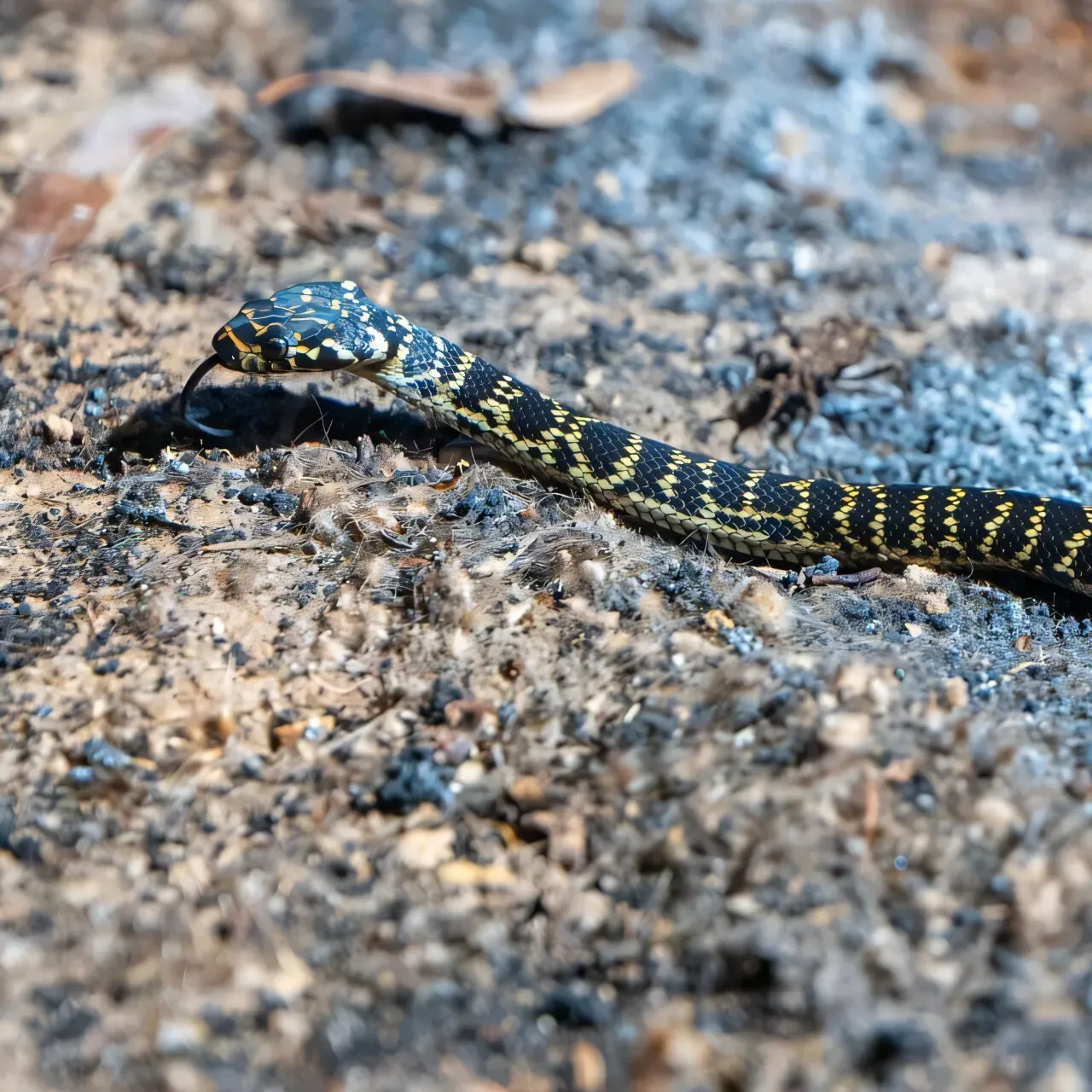
A world-first conservation effort has been launched in Australia, aiming to revive a critically endangered species. The broad-headed snake (Hoplocephalus bungaroides) is one of the country's most threatened snakes, and scientists are working tirelessly to give it a second chance.
At least four out of six captive-bred juveniles have survived their first few months in the wild as part of the rewilding program. The initiative is being led by Professor Jonathan Webb, a wildlife ecologist at the University of Technology Sydney (UTS), in partnership with Aussie Ark and local indigenous communities.
The reintroduction of this iconic species is still in its early stages, but initial results are promising. According to Webb, "the reintroduction of the broad-headed snake is a world first," and the pilot study will provide valuable insights for future conservation efforts.
Webb has spent over three decades studying a population of broad-headed snakes in Morton National Park, south of Sydney. He notes that these distinctive reptiles have a flattened head and grow up to 90 cm (35 inches) long, with a striking black body featuring mosaic-like yellow bands.
The broad-headed snake is found only within the rocky escarpment of the Sydney sandstone basin and surrounding ranges. Its unique habitat makes it vulnerable to threats from both native and invasive predators, which pose significant challenges for conservation efforts.
The researcher's fascination with snakes began at a young age, sparked by a childhood memory of being allowed to touch a green tree snake while sitting on his father's shoulder. This early interest eventually led him to pursue a career in snake conservation, focusing specifically on the broad-headed snake due to its unique situation as a once common species now struggling to survive.
Webb's research on the broad-headed snake began during his Ph.D. studies at the University of Sydney, where he sought to understand why this particular species was facing decline despite other snakes thriving in the same region. His investigation into the species' plight led him to question what factors were contributing to its rarity and how conservation efforts could be effectively implemented.
Upon completing his degree, Webb continued monitoring the population, driven by a desire to develop practical solutions for protecting endangered reptiles and mammals. Since joining the University of Technology Sydney in 2012, he has expanded his research focus to encompass broader conservation goals, including the long-term study of the broad-headed snake population.
Webb's prolonged involvement with the species has granted him valuable insights into its life cycle and the impact of environmental fluctuations on population numbers. His work involves studying the effects of droughts, fires, and rainfall patterns on the snake's survival, shedding light on the complex interplay between habitat conditions and species vulnerability.
The researcher's dedication to hands-on learning extends beyond his own research, as he incorporates internship students into his broad-headed snake surveys each year. These students gain valuable experience in real-world conservation efforts while contributing to the management of a threatened species, enriching their academic education with practical fieldwork experience.
The broad-headed snake's slow life cycle poses significant challenges for conservation efforts. It takes five years for these snakes to mature, and females typically reproduce every two or three years. As a result, any population decline can have long-lasting effects, taking decades to recover from.
A major threat to the species is habitat destruction due to human activities such as bush rock removal for landscaping. This practice not only eliminates shelter but also deprives juvenile snakes of food sources, as they primarily feed on small lizards like geckos and skinks that inhabit rocky areas.
The removal of bush rocks has been identified as a significant threat to native species, including reptiles, plants, and mammals. In 1999, the NSW government officially recognized this practice as a key threatening process. However, enforcing regulations to prevent such activities remains a challenge.
To address the issue, experts advocate for a permit system that requires individuals selling bush rocks to demonstrate that they have not removed rocks from areas where threatened species live. This measure aims to ensure that conservation efforts are effective and that habitats are protected.
The success of conservation initiatives relies on a combination of scientific research, community engagement, and policy implementation. Effective management strategies must consider the complex relationships between species, their habitats, and human activities to prevent further decline in broad-headed snake populations.
Removing rocks from their natural habitats is a lucrative business, with some boulders selling for as much as $450 each at local landscape suppliers. This has been identified as a significant issue in the conservation of the broad-headed snake.
The species' population had already suffered a decline during the 2017-19 drought, but the 2020 bushfires dealt another devastating blow, leading to a sharp drop in breeding over the following three years. By 2023, the population had declined by approximately 64%.
As part of efforts to conserve the broad-headed snake, eight individuals have been bred in captivity through the Aussie Ark program since its inception in October 2024. Two of these snakes were retained due to their valuable genetic makeup.
The remaining six captive-bred snakes were released into habitat restoration sites in mid-May 2026, where they were placed beneath specially designed artificial rocks that mimic the natural habitats of broad-headed snakes. These artificial rocks provide shelter and warmth for the juvenile snakes during the day.
The release of the endangered broad-headed snake has been hailed as a major conservation success, but for those involved in the project, it's about more than just saving a species.
For Indigenous ranger Ashley Thomas, the program is a labor of love that brings people together to care for Country and restore balance to the environment. "It's not a job for me, it's a passion of mine," he said, highlighting the importance of community-led conservation efforts.
Traditional owner Frank Connolly Jr. has welcomed the initiative as an opportunity for younger generations to connect with their culture and heritage. The broad-headed snake holds significant cultural value for his people, and its survival is crucial for preserving tradition.
The release of the juvenile snakes into the wild was a momentous occasion for everyone involved in the project, according to Aussie Ark founder Tim Faulkner. Years of hard work navigating bureaucratic hurdles had paid off, paving the way for a holistic conservation approach that could serve as a model for threatened species across Australia.
As the project moves forward, attention will shift from releasing captive-bred snakes to restoring habitats and expanding the program's reach. Conservation biologist Webb expressed optimism about the prospects for the broad-headed snake population, hoping to see numbers stabilize and eventually increase in the coming years.
Conservation efforts have paid off as a world-first successful wild release of endangered broad-headed snakes has been achieved.
The species, native to Australia, was previously considered critically endangered due to habitat loss and predation by introduced predators. However, conservationists have made significant progress in recent years through breeding programs and reintroduction initiatives. The released snakes are now settling into their new habitats, with some already exhibiting natural behaviors such as hunting and mating.
The success of this project is a testament to the dedication and hard work of conservation teams working tirelessly to protect vulnerable species.
Facts based on reporting originally published by Phys.org.
You may republish this story, in full or in part, if you credit News Central Site and link to it (licence CC BY 4.0). Photos are not included.