MapQuest Adds Feature to Show Location of Automatic License Plate Readers
The MapQuest app now displays locations of automatic license plate readers, providing users with transparency on surveillance devices.
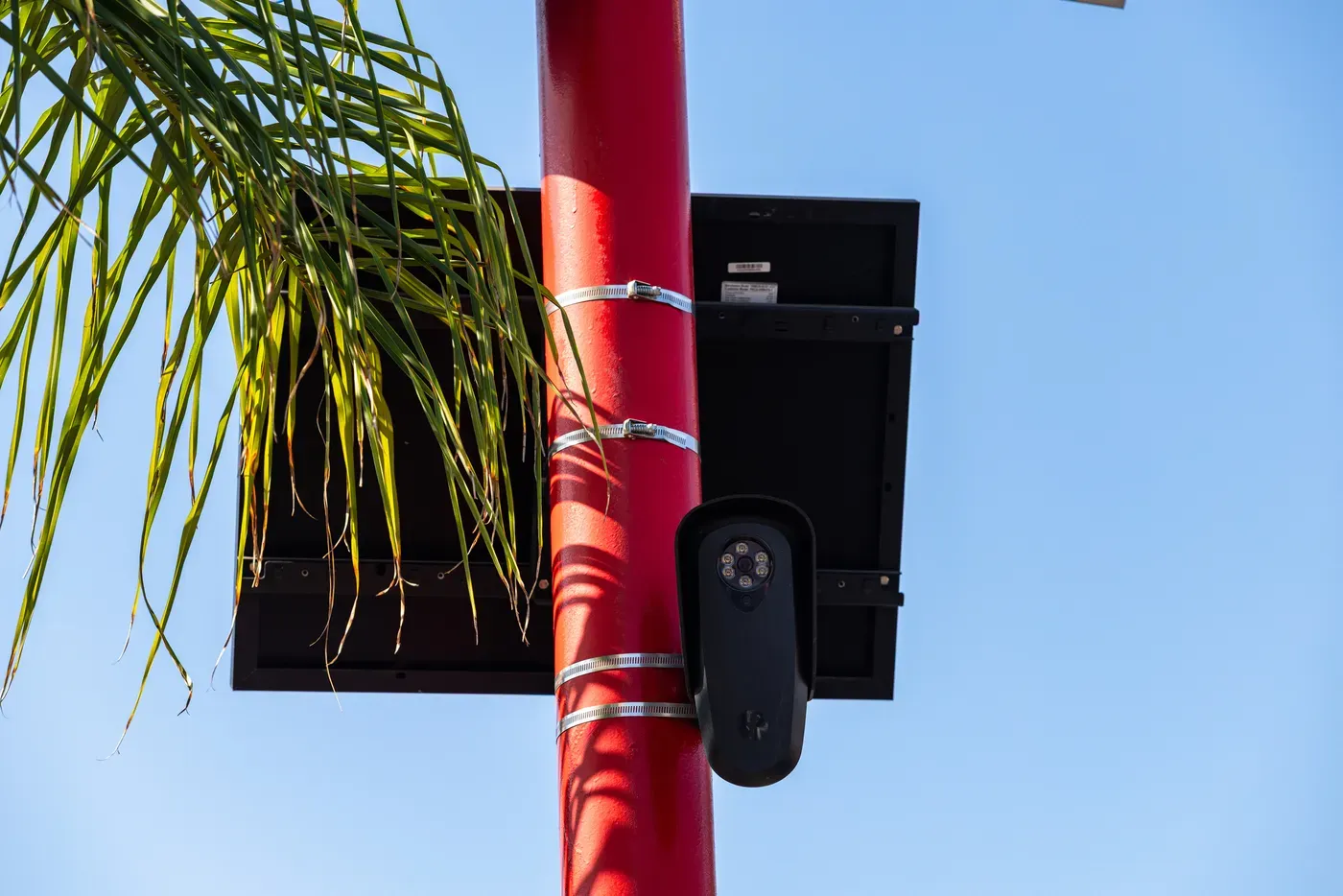
A new feature has been added to the MapQuest app that allows users to locate automatic license plate readers in their area and beyond. The navigational tool now shows where these surveillance devices are installed, providing a level of transparency previously unavailable.
The list of companies whose license plate reader locations are displayed on the map includes Flock, as well as several other major players in the industry such as Motorola Solutions (Vigilant), Genetec, Axis Communications, Axon, Leonardo (ELSAG) and Neology. Other companies with their devices shown on the map include Rekor, PlateSmart, Ubicquia and Verkada.
To access this feature, users must first open the MapQuest app and tap the Layers icon to activate the Surveillance option. Once enabled, tiny eyeballs will appear on the map, indicating the presence of license plate readers at specific locations. Clicking on these symbols will provide more detailed information about each device.
The addition of this feature comes as a part of MapQuest's ongoing effort to regain relevance in the navigation market. The company has faced stiff competition from major players like Google and Apple, but its recent moves have helped it carve out a niche for itself, such as refusing to comply with President Donald Trump's executive order on map labeling.
MapQuest has joined a growing list of apps that reveal locations of license plate readers in various areas. The company is not alone in this endeavor, as other apps such as DeFlock, FlockHopper, Pelican and LPR Maps have also taken on this role.
These apps often rely on crowdsourcing to gather information about the location of license plate readers. This means that drivers can notify the app when they believe they have spotted a reader, allowing the app to update its database with the new location. However, MapQuest has not disclosed how it acquires its data on license plate reader locations.
The proliferation of license plate readers has been met with significant criticism from civil liberties groups and others. With over 140,000 units in operation across the US, concerns have been raised about the potential for mass surveillance. These devices can collect a wealth of information about a vehicle, including its license plate number, make, model, color, and location.
The data collected by these cameras has also been subject to misuse, with instances of police officers using it to stalk ex-partners or wrongly accusing individuals of theft. This has further fueled concerns about the impact of license plate readers on individual privacy and civil liberties.
License plate readers are being used in a variety of settings beyond high-tech surveillance. They also play a role in more everyday operations such as electronic toll collection and parking enforcement. Additionally, these devices are utilized for traffic violation monitoring, vehicle repossessions, and granting access to restricted areas through parking gate activation.
To experience the MapQuest feature, I downloaded and installed the app on my phone since I'm more accustomed to using Google Maps. Upon opening the app, I located the Surveillance layer and activated it. The map in my city and county was suddenly filled with numerous icons representing license plate readers, giving me a visual representation of where these devices are situated.
While the feature provides insight into the presence of license plate readers, it falls short by not disclosing the names of the companies that own them.
Facts based on reporting originally published by CNET.
You may republish this story, in full or in part, if you credit News Central Site and link to it (licence CC BY 4.0). Photos are not included.