Maka Streaming App Launches with Ad-Free Content for Young Children
A new streaming app aimed at young children is launching today, offering ad-free content and strict evaluation of videos to ensure suitability for the age group.
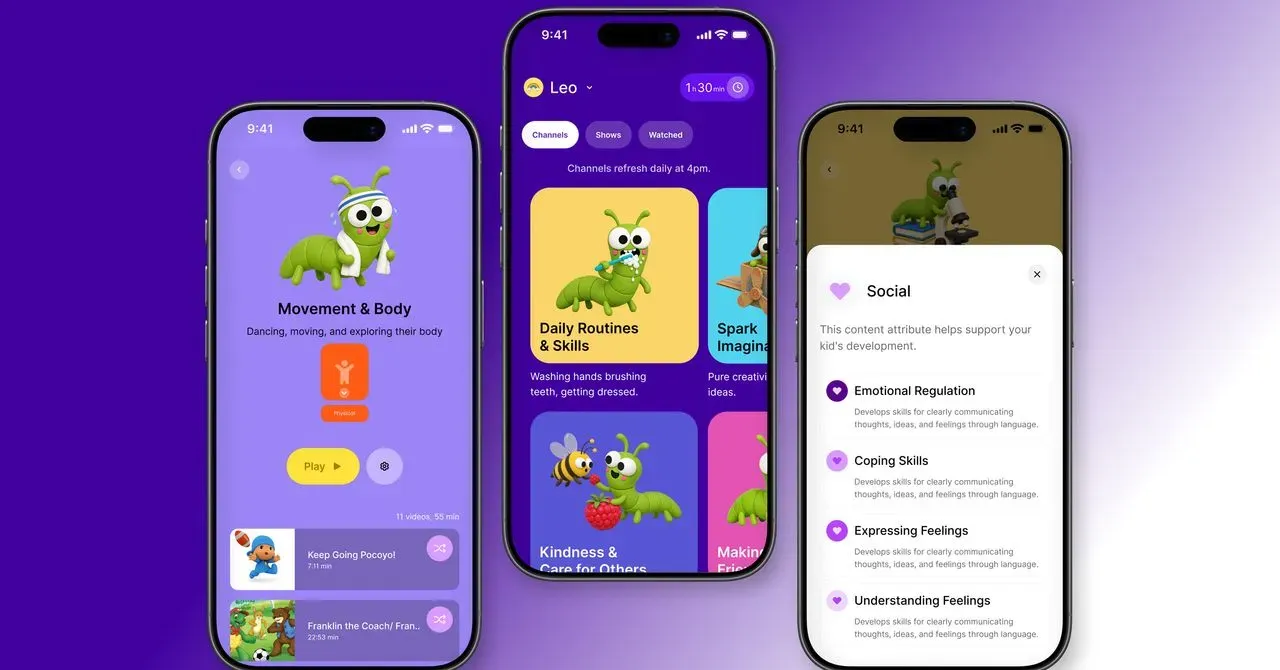
A new streaming app is launching today to provide a more suitable alternative for young children's entertainment. Maka is a platform designed specifically for kids aged 0 to 6, aiming to counterbalance the often-inappropriate content found on other video sharing platforms.
Videos targeted at this age group on rival platforms are frequently created using artificial intelligence and can be overwhelming or bizarre in nature. Moreover, not all of these videos are suitable for young children. To address these concerns, Maka has implemented several key features that set it apart from its competitors.
The platform is ad-free, which means users won't have to endure commercial breaks within their viewing experience. Additionally, videos do not autoplay, and endless scrolling is disabled. This approach prioritizes the user's control over what they watch.
Maka's subscription service offers two plans: a monthly option for $15 and an annual plan priced at $107.
A deep dive into the world of kids' media began for Maka's founders during the Covid pandemic. This was a time when many parents turned to online content to keep their children entertained, but the available options left much to be desired.
The platform evaluates every episode streamed on its site through Imprint, a framework developed with researchers at the Yale Child Study Center. This evaluation process assesses various aspects of each show, including scene cuts and pacing, against seven core domains related to adolescent development.
These domains include emotional regulation, kindness, and how child-caregiver relationships are portrayed in a story. The evaluations also consider whether content supports critical thinking or language development.
The issue of filtering content has become increasingly complex due to the lack of clear distinctions between educational and low-quality material on platforms like YouTube.
This ambiguity makes it difficult for parents to ensure their children are exposed only to high-quality content, as opposed to filler or advertisements.
Moreover, kids often end up watching ads and content intended for older audiences, which can be detrimental to their development.
As a result, many experts argue that the current system relies on a "not inappropriate standard, rather than actively promoting quality content.
Maka's platform has implemented stricter standards for content created for younger viewers, reflecting its commitment to quality and safety.
To achieve success, Maka's shows must strike a delicate balance between entertainment and education, while also gaining parents' trust in the brand.
According to Sheiman, Maka aims to provide parents with peace of mind by vetting all content through child development experts, ensuring that every show is suitable for children.
However, some experts warn that the increasing reliance on AI-driven content may be leaving behind the expertise of child development specialists who have traditionally played a crucial role in shaping kids' media.
As Maka's content wraps up, the platform's unique approach becomes apparent in features designed to help children disconnect from their devices.
This subtle yet effective distinction between capturing and earning a child's attention is what sets Maka apart from other kids' media platforms, according to its developers.
The ultimate goal of Maka is to fundamentally change how children perceive screens and technology, with the founders aiming to redefine the relationship between young users and digital content.
A key challenge in achieving this mission lies in rethinking the conventional wisdom that parents are judged harshly for relying on screen time as a solution.
A key challenge in implementing the new platform's mission lies in transitioning children away from existing screen-based solutions. YouTube is a particularly entrenched option, being both free and already accessible on many devices within households.
The difficulty of weaning families off established platforms has been acknowledged by Maka's cofounders, who note that TV itself was once seen as a revolutionary educational tool, with shows like Sesame Street helping to pave the way for future children's content. In contrast, some users have reported feeling overwhelmed by the sheer volume and low quality of content available on other platforms, likening it to a race to the bottom" in terms of their child's cognitive development.
Facts based on reporting originally published by Wired.
You may republish this story, in full or in part, if you credit News Central Site and link to it (licence CC BY 4.0). Photos are not included.