Fragment breaks away from northwestern Australia 150 million years ago
Researchers have found evidence that a fragment transported hundreds of flowering plant species across the prehistoric Tethys Ocean.
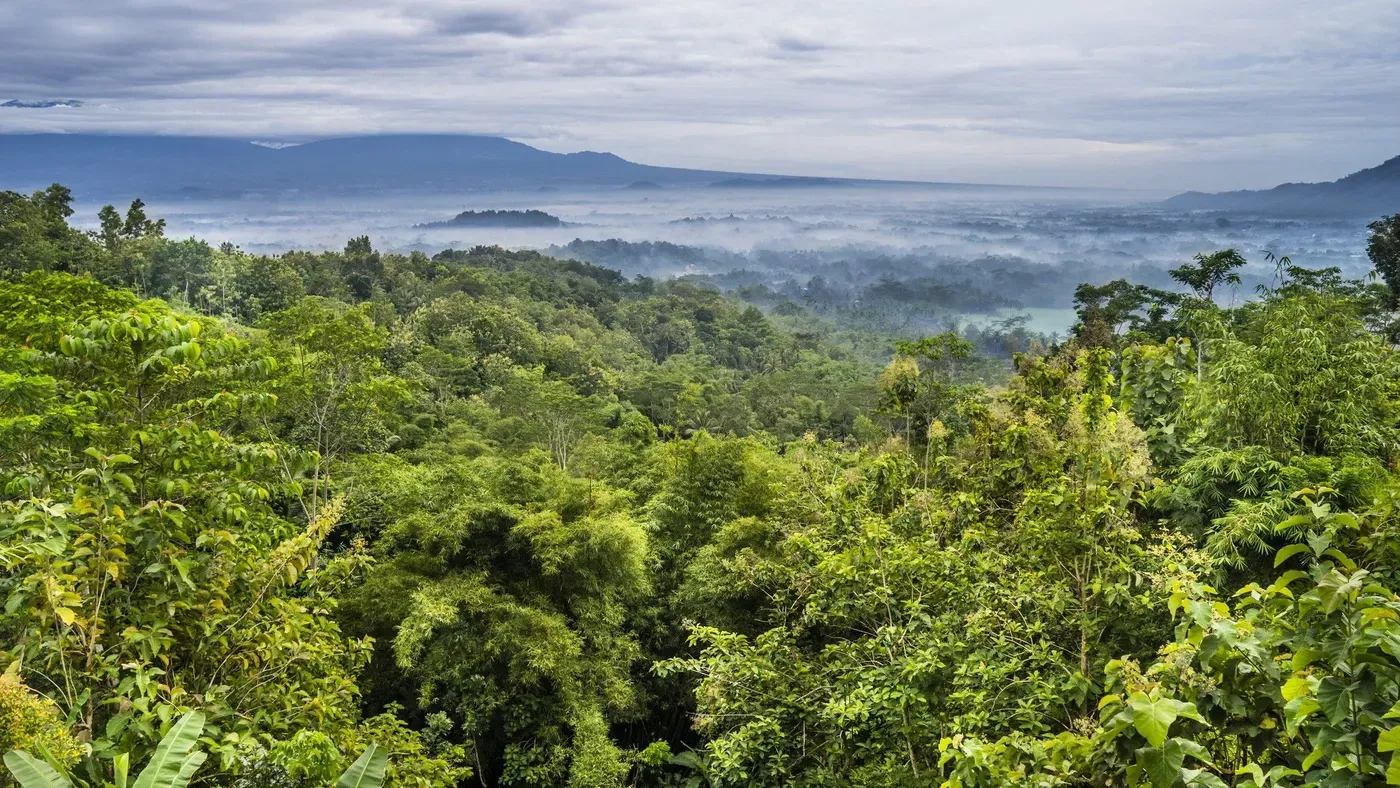
A small piece of land that broke away from what is now northwestern Australia around 150 million years ago has been identified as the source of Southeast Asia's rich tropical forests.
Researchers have found evidence that this fragment transported hundreds of flowering plant species and other ancient plants across the prehistoric Tethys Ocean to Southeast Asia, where they flourished. This discovery contradicts previous theories that suggested the fragment originated closer to what is now Southeast Asia and that the region's tropical forests developed after the dinosaurs went extinct around 66 million years ago.
At the time of its formation, Australia was connected to Antarctica and India as part of the ancient supercontinent Gondwana, which separated from Laurasia over the Tethys Ocean. The fragment drifted northward for about 100 million years before colliding with Southeast Asia, laying the foundation for the lush tropical ecosystems found in this region today.
According to Dr Byron Lamont, a co-author of the study and distinguished professor emeritus at Curtin University's School of Molecular and Life Sciences, the flora of Southeast Asia is not unique but rather owes much of its diversity to Gondwana.
The collision between the Indian subcontinent and the West Burma Block (WBB) in western Myanmar was a complex process that took millions of years to unfold. The WBB, also known as the Burma terrane, was not alone in its journey across the Tethys Ocean; it was accompanied by the Indian subcontinent, which was moving north at a rapid pace of 4 inches (10 centimeters) per year.
As the Indian Plate approached the WBB around 80 million years ago, the two tectonic plates collided, causing the WBB's orientation to shift. The Indian Plate continued its relentless push, forcing the WBB to grind to a halt in western Myanmar, where it created a deep valley between mountain ranges approximately 35 million years ago.
The collision was far from instantaneous; both the Indian Plate and the WBB "took some time to stop," according to Dr Byron Lamont's explanation. This protracted process allowed the microplate to hover near the equator for tens of millions of years, subjecting it to a humid and hot climate that persists today.
As the Indian subcontinent slid beneath the Eurasian Plate, it formed the Himalayas, while the WBB remained stationary to the west of present-day Myanmar. This pivotal moment in geological history had far-reaching consequences for the region's landscape and ecology, setting the stage for the evolution of Southeast Asia's tropical forests that would eventually flourish in the area.
The isolation provided by this climate allowed ancient plant lineages to survive and diversify, giving them a chance to flourish in a region that would eventually become Southeast Asia's tropical forests.
To understand the origins of these tropical forests, researchers examined over 3,000 plant fossils from Myanmar that were preserved in amber around 100 million years ago. The fossils included a diverse range of plant species, including flowers, leaves, fruits and seeds.
The study revealed that at least 392 types of flowering plants had reached Southeast Asia by floating on the WBB, as well as a vast array of conifers, ferns, mosses, cycads and liverworts. These ancient plant lineages likely came from other parts of the world via this water route.
Amber has been mined from the north end of the WBB valley for at least a century, providing access to these valuable fossils. The beautiful 3D preservation of the fossils has attracted interest from collectors and traders, particularly from Chinese sources.
The study's co-authors acquired chunks of amber from traders several years ago, which they have been studying ever since. In some cases, advice was sought from experts at other institutions around the world to help analyze the complex fossil record.
The discovery of plant fossils preserved in 100 million-year-old amber has shed light on the deep evolutionary roots of Southeast Asia's tropical forests.
These ancient fossils reveal that a tiny chunk of Australia seeded the region's tropical forests 50 million years ago, paving the way for the complex ecosystem that exists today. The presence of these fossils in amber suggests that many plants from this period still exist in modern-day Australia, particularly in its Northeast region which is characterized by hot and humid climates.
Despite being unable to determine what kinds of larger animals may have traveled through the Wallacea Biogeographic Barrier (WBB) with these plant species, researchers can confirm that small insects such as ants and mosquitoes were among those that made the journey.
Facts based on reporting originally published by Live Science.
You may republish this story, in full or in part, if you credit News Central Site and link to it (licence CC BY 4.0). Photos are not included.