Italy's parliament adopts anti-Semitism law with majority vote
The Italian parliament has approved a new bill aimed at combating anti-Semitism, but critics argue it could limit criticism of Israel.
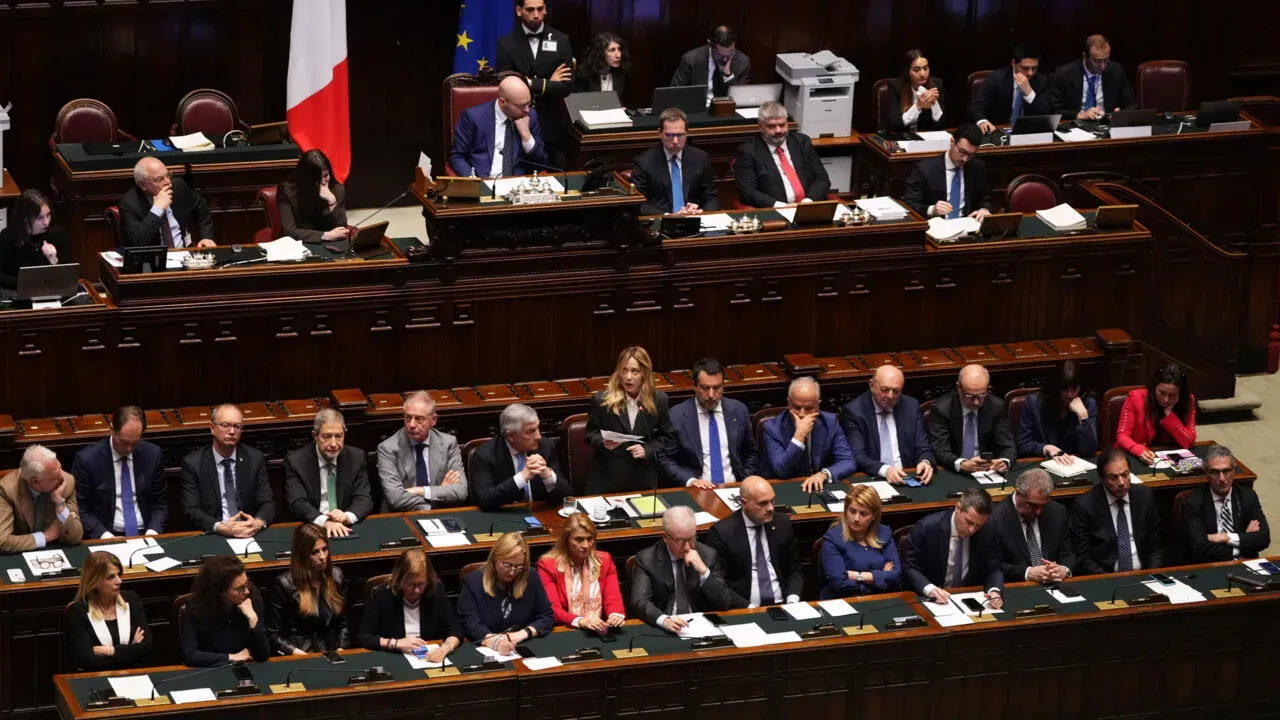
Italy's parliament has approved a new bill aimed at combating anti-Semitism, but its passage has sparked concerns over freedom of expression and advocacy for Palestinian rights. The law includes a definition of anti-Semitism that critics argue could limit criticism of Israel.
The contentious legislation was adopted by the lower house with a majority vote of 147 to 93 on Tuesday night. The measure enshrines the International Holocaust Remembrance Alliance's (IHRA) definition of anti-Semitism, which labels certain forms of criticism of Israel as examples of anti-Semitic conduct.
Opponents of the bill warn that its approval could have a chilling effect on advocacy for Palestinian rights and freedoms. Proponents, however, argue that the law is necessary to tackle violence and discrimination against Jews in Italy.
The approved legislation does not include any financial penalties or criminal sanctions for offenders, instead focusing on education and awareness-raising efforts to combat anti-Semitism.
Italy's anti-Semitism law has sparked intense debate, with some critics accusing the government of using it to stifle criticism.
The country has witnessed a significant increase in pro-Palestinian activism since hostilities broke out in Gaza on October 7, 2023, following Hamas-led attacks on Israel. This surge in activism has been met with varying degrees of support from Italy's left-wing parties, who have largely backed the movements. In contrast, Meloni's government has accused some protesters of inciting disorder.
Livia Ottolenghi, president of the Union of Italian Jewish Communities (UCEI), has welcomed the passage of the anti-Semitism law, which she believes will strengthen the democratic foundations of Italian civil society. She emphasized that combating anti-Semitism is not a partisan issue but rather a collective responsibility that transcends political affiliations.
The Democratic Party's decision to abstain from voting on the bill, despite their leadership's call to reject it, highlights internal divisions within the party. While the PD has condemned violence in Gaza, its stance on Israel's actions in the region has been less vocal than that of its allies, the Five Star Movement and AVS, who have accused Israel of genocide, a charge that Israel vehemently denies.
The Italian government has passed a law aimed at combatting anti-Semitism despite concerns from opposition parties that it could limit freedom of expression. The law defines anti-Semitism as including the denial of Israel's right to exist and other forms of criticism, sparking fears that legitimate debate on the Israeli-Palestinian conflict could be stifled.
Opposition parties had urged the government to revise the definition, but their calls were ignored. Government officials insisted that the measure would not restrict political criticism, with Paolo Emilio Russo from Forza Italia stating "no one has ever sought to limit freedom of expression and criticism, which is a cornerstone of our democracy."
Supporters of the law argue that it is necessary due to an alarming rise in anti-Semitic incidents since the start of the Gaza war. In 2025, Italy's Antisemitism Observatory recorded 963 cases nationwide, nearly four times the number reported in 2022. According to CDEC director Gadi Luzzatto Voghera, these incidents have included an increase in physical attacks, such as shoving, spitting and slapping.
Facts based on reporting originally published by France 24 English.
You may republish this story, in full or in part, if you credit News Central Site and link to it (licence CC BY 4.0). Photos are not included.