Cyberattack on French Supermarkets Causes Massive Food Spoilage
A recent wave of hacks has compromised key sectors in France, with hundreds of supermarkets affected by a cyberattack that caused food spoilage.
France has emerged as a prime target for cyberattacks in Europe, according to some analysts who point to a recent wave of major hacks that have compromised several key sectors.
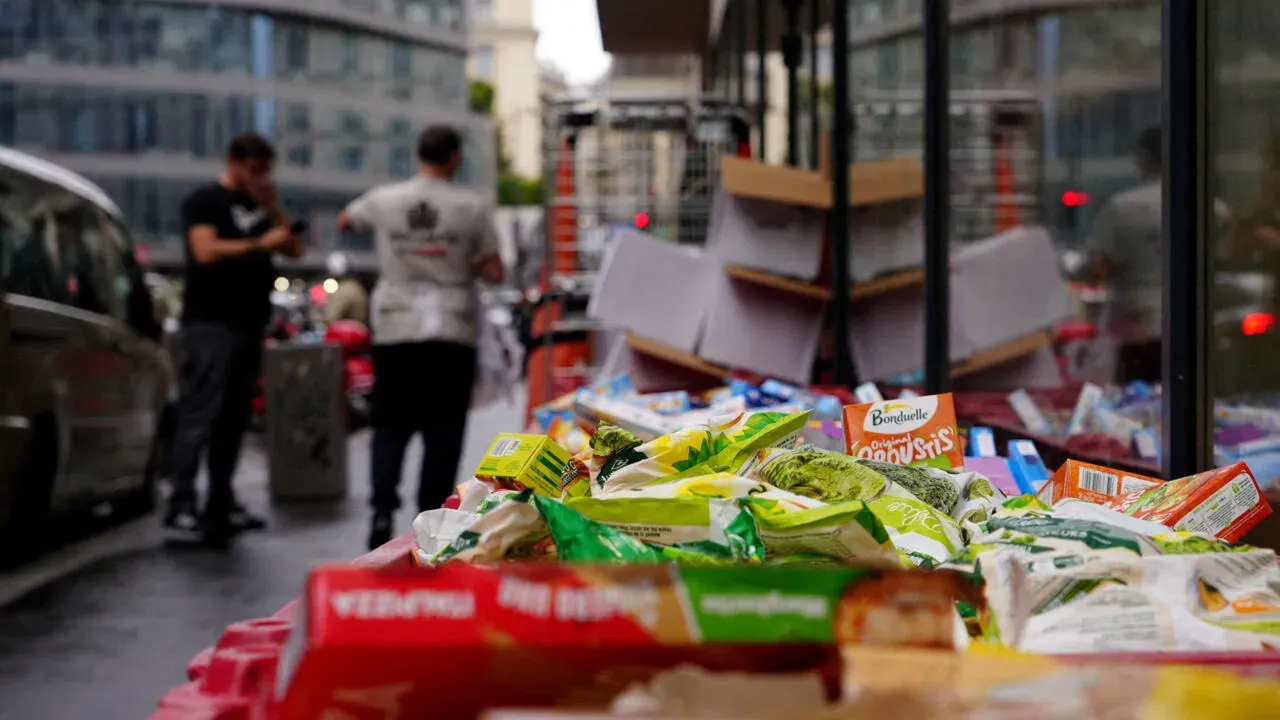
A particularly brazen incident occurred on October 12 when hundreds of supermarket workers in France discovered that their refrigerators and freezers had been hacked. Instead of being chilled, the equipment was emitting scorching hot air, rendering the stored food useless.
This hack affected an estimated 700 stores across the country, with temperature-control software exploited to crank up the thermostats as high as 80°C (176°F) overnight in some cases. The result was a massive loss of perishable goods, with tonnes of spoiled food discarded by workers at various supermarket chains.
The hack marked "the first large-scale cyberattack aimed at sabotage" on French territory, according to Foreign Minister Jean-Noël Barrot, who described the incident as an attack of "unprecedented scale. This high-profile breach has added to a growing list of major cyberattacks that have hit France in recent years.
These incidents include successful hacks targeting various government departments and public service providers, including the country's unemployment agency, immigration office, ministry of education, national agency for identity documents, and public hospitals, all within the past five years.
The French government has been hit by a significant data breach in recent months, affecting nearly 680,000 taxpayers who had their personal and tax information stolen and put up for sale online.
In addition to these high-profile hacks targeting the government, numerous French companies have also fallen victim to large-scale data theft. This includes major health insurers, banks, retail chains, mobile phone providers, and even the national airline AirFrance-KLM.
French companies have been hit hard by cyberattacks, with many suffering significant losses due to stolen customer data. The frequency and scale of these attacks have earned France a reputation as the most heavily breached large jurisdiction in Europe", according to cybersecurity firm UpGuard.
Experts point to several factors that make France an attractive target for hackers. As the country's economy is one of the largest in Europe, it offers a rich source of valuable data and financial information.
France's attribution of October's supermarket hack to an Iranian cyber unit affiliated with the Revolutionary Guards highlights a rare instance of state-linked hacking in the country.
This type of high-profile attack is distinct from the everyday threats faced by European organisations, such as ransomware, data theft, and fraud.
In November, French banking group Crédit Mutuel Arkéa suffered a significant loss when cybercriminals stole more than €100 million, demonstrating that France is not immune to these types of attacks.
The layered appeal of targeting France may bring hackers together to collaborate on sophisticated attacks, increasing their chances of success.
France's cyberattack woes may be partly due to its reputation as a target of choice for hackers, but it is not the only European country facing a significant threat.
In fact, Germany and Italy have been listed by ransomware groups more frequently than France over the past year, according to cybersecurity experts. This suggests that other countries in Europe are also vulnerable to cyberattacks.
Meanwhile, Ukraine has emerged as the European country where customers are most often impacted by cyber threats, according to Microsoft's 2026 Digital Defence Report. The report highlights the need for enhanced cybersecurity measures across the continent.
The threat of cyberattacks is not limited to France or even Europe. A large-scale attack on Poland's energy grid in December 2025 was attributed to Russia and prompted the EU and UK to impose their first joint cyber sanctions.
Cybersecurity experts warn that France's industrial control systems are particularly vulnerable, with thousands of insecure systems throughout the EU waiting to be exploited by hackers.
France's industrial control systems are particularly vulnerable to cyberattacks due to outdated services and zero-day vulnerabilities. Many of these vulnerabilities can be attributed to third-party suppliers, such as Danish engineering firm Danfoss, which provided refrigeration management systems to France's hacked supermarkets.
Danfoss has pointed out that most of the attacks targeted products that no longer receive software or security updates. The company advises its customers to keep their systems and products updated to prevent similar breaches in the future. This recommendation is crucial for companies and public authorities looking to avoid falling prey to cyberattacks.
The ease with which these vulnerabilities can be exploited has led cybersecurity experts to warn about the importance of basic cybersecurity measures. Kipker notes that many organisations are successfully attacked not because they have been specifically targeted, but due to a lack of robust security protocols in place.
To mitigate the increasing number of cyberattacks in France, it's essential for the country to accelerate its efforts in cybersecurity.
The EU's cybersecurity chief has recently highlighted that even home appliances could be vulnerable to attacks, following the recent hacking incidents involving refrigerators and other smart devices. This warning underscores the growing threat posed by advanced technologies used by hackers to scale up their operations.
Despite the escalating security challenges, experts emphasize that good cyber hygiene practices can still prevent a significant amount of opportunistic cybercrime, making it crucial for individuals and organizations alike to adopt robust security protocols.
Facts based on reporting originally published by France 24 English.
You may republish this story, in full or in part, if you credit News Central Site and link to it (licence CC BY 4.0). Photos are not included.