Groundbreaking Discovery Uncovered in Northern Mongolia Tomb
Archaeologists have unearthed a massive 2,000-year-old tomb belonging to an elite nomad from the Xiongnu Empire in Central Asia.
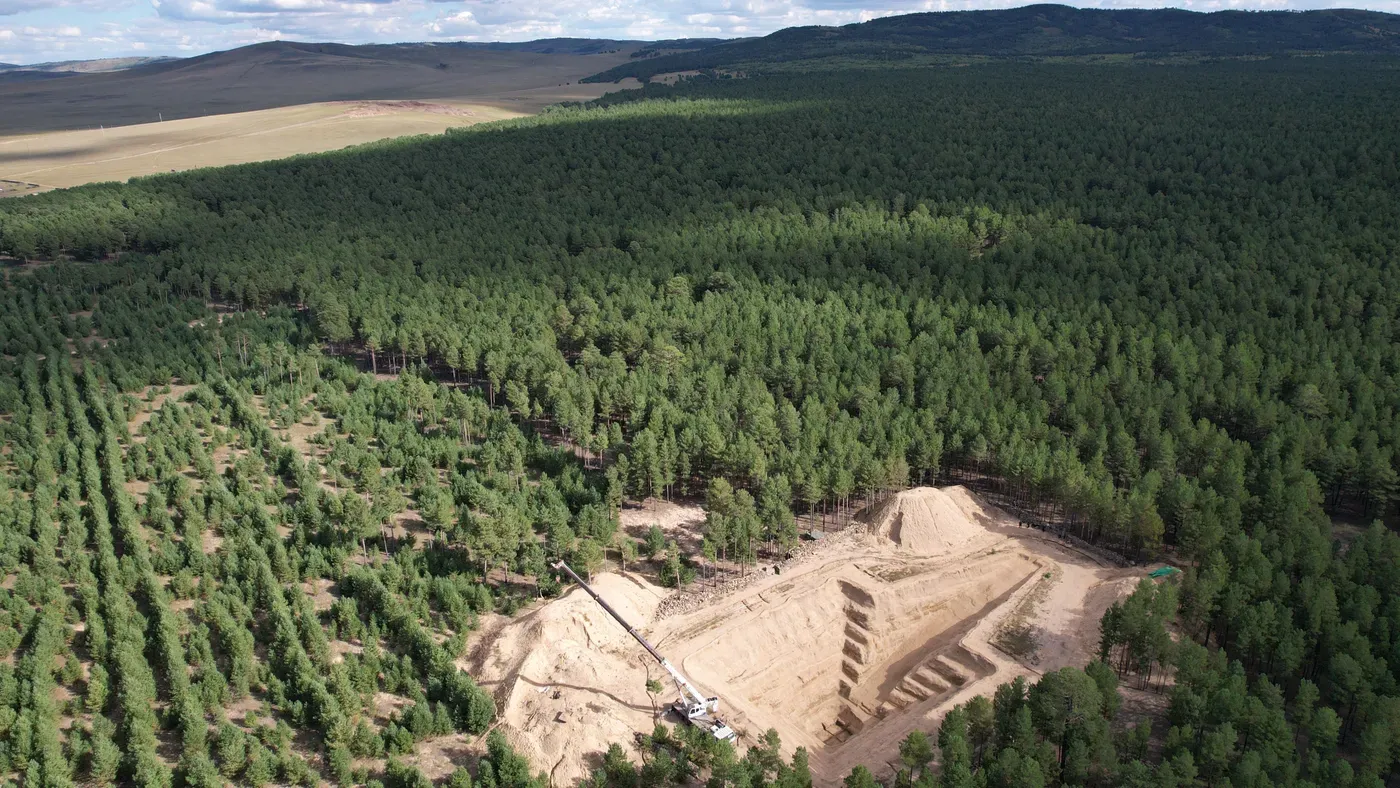
Archaeologists have made a groundbreaking discovery in northern Mongolia, unearthing a massive 2,000-year-old tomb belonging to an elite nomad from the Xiongnu Empire in Central Asia.
The tomb is the largest of its kind ever found in Mongolia and contains an impressive array of grave goods, with over 400 artifacts unearthed so far. According to researchers, the excavation at Duurlig Nars took four years to complete, involving a team from the National Museum of Korea working closely with local institutions.
Duurlig Nars itself is a significant archaeological site, boasting nearly 300 ancient burial mounds known as kurgans, making it the largest noble burial complex of the Xiongnu Empire.
The newly discovered tomb in Mongolia has shed light on the nomadic lifestyle and connections of the Xiongnu Empire, which flourished over 2,000 years ago. Archaeologists have found evidence that these skilled warriors were not only adept at horseback riding but also had extensive trade networks across Eurasia.
Measuring approximately 240 feet long and 73 meters in length, the tomb's dimensions are comparable to those of the Great Sphinx of Giza. The rectangular structure features a central passageway extending from it, creating an inverted pyramid-like shape that is roughly 5 meters deep. This unusual design suggests a blend of architectural styles.
The discovery of various artifacts within the tomb has provided valuable insights into the occupant's high social status and connections with other cultures. A wooden burial chamber containing a coffin was found in the central chamber, alongside silver-and-quartz horse decorations and a wheel from a lacquered horse-drawn carriage, indicating a luxurious lifestyle.
In the Xiongnu tomb, archaeologists discovered 15 flat, overlapping pieces of jade on the bottom of the wooden coffin. These jade fragments were unlike the typical circular "bi" used in Han dynasty burials, instead featuring irregular shapes and intricate designs.
Their findings suggest that the Xiongnu may have adopted some burial practices from the Han dynasty but put their own unique twist on them. This interpretation is based on the presence of irregularly shaped jade pieces with elaborate engravings.
The presence of a Roman glass cup in the 2,000-year-old Mongolian tomb suggests that its owner may have had international connections. The archaeologists are uncertain about the origins of the transparent glass cup, which features a handle and a distinctive shape.
Further analysis is needed to determine where the glass cup was manufactured, but DNA tests on the teeth and hair found in the coffin will help identify the individual buried there. These results will also reveal whether the person had any familial connections with others interred at the Duurlig Nars burial complex. Ultimately, this ancient tomb will provide a more nuanced understanding of Xiongnu society from two millennia ago.
Facts based on reporting originally published by Live Science.
You may republish this story, in full or in part, if you credit News Central Site and link to it (licence CC BY 4.0). Photos are not included.