Groundbreaking Discovery in Egypt Reveals New Insights into Ancient Mummification Practices
Researchers from Marburg University have made a groundbreaking discovery in Egypt by identifying plant-based substances used in ancient Egyptian mummification, shedding new light on this fascinating field.
Archaeologists have made a groundbreaking discovery in Egypt that sheds new light on the ancient art of mummification. A team of researchers from Marburg University has conducted an exhaustive study to identify the plant-based substances used by Egyptians thousands of years ago.
Their investigation involved combining modern analytical techniques with historical research, examining both the molecular composition of ancient embalming materials and written records from the time. This interdisciplinary approach allowed them to gather new evidence about the use of plant-based substances in Egyptian mummification. The study's findings are set to revolutionize our understanding of this fascinating field.
Previous chemical analyses have revealed that ancient Egyptians used a range of natural ingredients, including coniferous resins and tars, pistachio resins, plant oils, animal fats, beeswax and bitumen in their embalming mixtures. Researchers had also detected the presence of exotic plant resins such as elemi or dammar.
The team's focus was on a specific 2,700-year-old mummy head, which provided valuable insights into the composition of ancient Egyptian embalming materials.
The discovery of plant-derived compounds in mummy material used as medicine since the late Middle Ages has shed new light on ancient Egyptian embalming practices. The researchers analyzed 24 objects from university and museum collections to answer long-standing questions about which plant species were actually used in embalming.
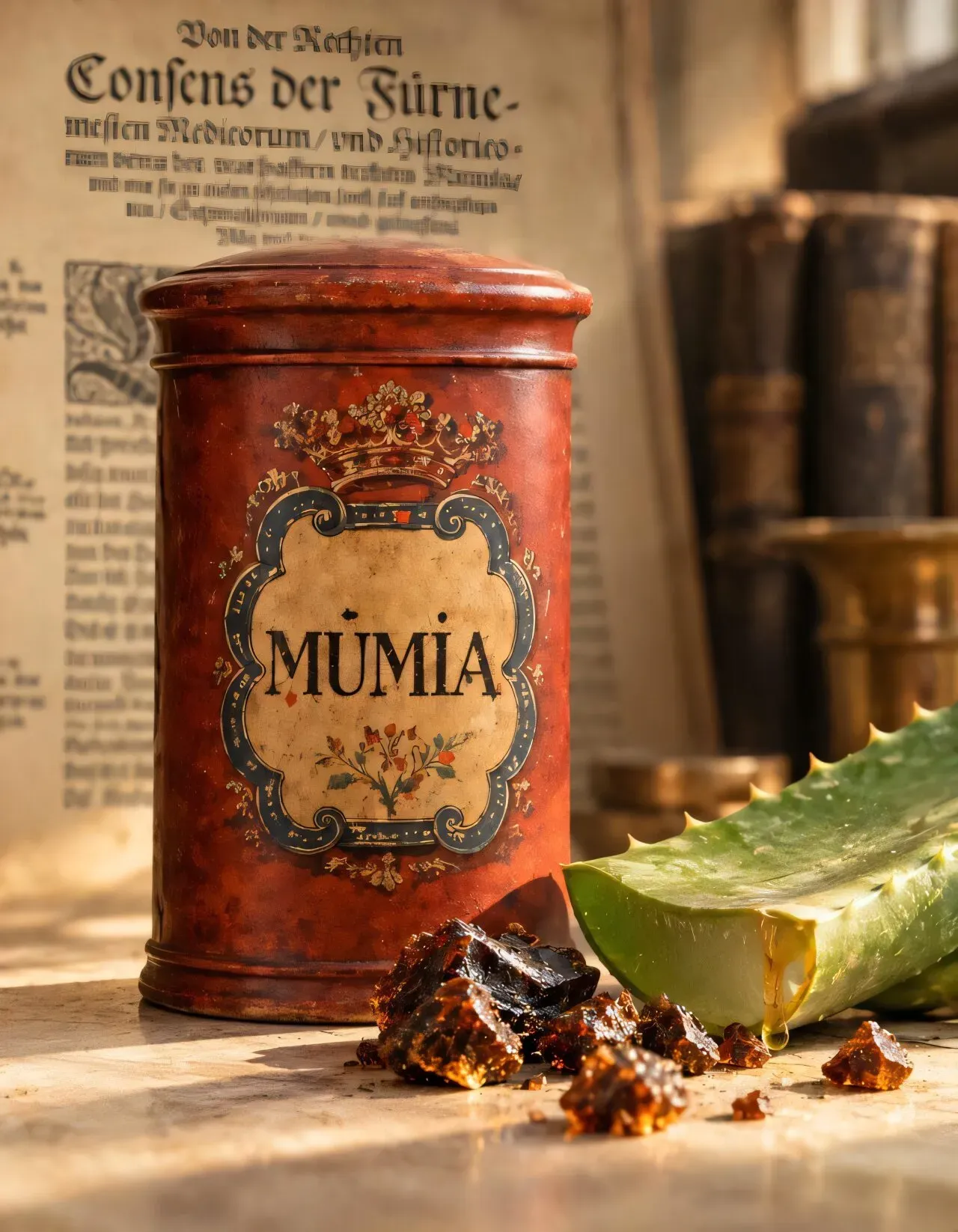
Among these objects was a mummified skull from the Zoological Collection of Marburg University, radiocarbon dated to the eighth century B.C. Chemical analysis revealed traces of several plant-derived compounds associated with aloe. A second sample, a historical preparation of the medicinal drug Mumia vera aegyptiaca from the 18th century, also yielded similar results.
The significance of this finding lies in its implications for research on ancient Egyptian embalming practices. Until now, molecular analysis had not linked aloe to these materials. Instead, it was only through medieval texts that a connection between aloe and mummy material used as medicine became apparent.
Dr. Tanja Pommerening, head of Germany's Institute for the History of Pharmacy and Medicine at Marburg University, notes that this discovery is significant for two reasons. Firstly, it provides molecular evidence of aloe in ancient Egyptian embalming materials. Secondly, it confirms the connection between aloe and mummy material used as medicine in later centuries.
The analysis of these samples has provided valuable insights into the composition of ancient Egyptian embalming materials, but further research is needed to understand how recipes differed across various periods, regions, and body parts.
The discovery of aloe compounds in ancient Egyptian mummy heads has provided new insights into the composition of embalming materials used over 2,700 years ago.
Historians had long assumed that texts describing the use of aloe in mummification were speculative and based on biblical references. However, the recent findings suggest that this association may have deeper historical roots.
In ancient Egyptian written sources, the term "ꜥnḫ-jm.j" is mentioned, with descriptions suggesting it could refer to aloe or an exudate derived from the plant. Researchers are still working to confirm whether this identification is accurate.
The presence of Aloe-associated compounds in only two out of 24 analyzed objects suggests that their use may have been limited to specific embalming practices, possibly dependent on the period or availability of raw materials.
Further research is needed to understand how recipes for mummification varied across different regions and time periods.
The study's researchers employed a technique called untargeted metabolomics to analyze various samples from the German Pharmacy Museum in Heidelberg. This approach allowed them to compare the chemical compositions of different objects and identify any potential connections.
Through computational and machine learning-assisted analytical methods, the team was able to annotate and compare characteristic molecular patterns. Their analysis revealed striking similarities between a mummified head and a powder sample that had been separately cataloged.
The findings suggest that these two objects may have shared a material or historical connection, despite no such association being documented in the surviving collection records. This raises new possibilities for understanding the provenance of artifacts in museum collections.
Historical collections often contain objects whose origins are unclear due to incomplete documentation. The study's use of chemical comparison methods could help reconstruct these connections retrospectively and provide new insights into the history of these objects.
The researchers also examined Mumia vera aegyptiaca, a medicinal substance used in Europe during the late Middle Ages and early modern period. This substance was obtained from mummy material or associated embalming substances, and its exact composition has been only partially understood until now.
The research team has been investigating not just the composition of the aloe-like substance found in ancient Egyptian mummies, but also its potential properties as an anti-infective agent.
In cell culture experiments, extracts from a historical preparation called Wigand Medicinal Collection showed some protection against influenza virus-induced damage. However, when scientists isolated and tested the main compound responsible for this effect, 7-oxodehydroabietic acid, it failed to reproduce the same level of protection.
The findings are significant because they do not provide conclusive evidence that the ancient remedy was effective in treating severe cold symptoms such as headaches and sore throats in humans. Textual sources suggest its use for these purposes, but more research is needed to confirm this claim.
The study highlights the importance of combining historical and scientific approaches to understanding ancient materials and their uses. By analyzing chemical findings alongside historical descriptions, researchers can gain a more nuanced understanding of how ancient cultures used plants for medicinal purposes.
Further investigations aim to identify additional plant-derived compounds that may have been used in embalming practices, and to confirm whether the indications of aloe in previous samples are accurate.
The study of a 2,700-year-old mummy head has uncovered new evidence linking aloe to ancient Egyptian embalming practices. The molecular analysis revealed residues of aloe vera on the mummy's skin, indicating that it was likely used in the preservation process.
Further investigations will aim to confirm these findings and identify other plant-derived compounds that may have been used in embalming procedures.
Facts based on reporting originally published by Phys.org.
You may republish this story, in full or in part, if you credit News Central Site and link to it (licence CC BY 4.0). Photos are not included.