Global warming surpasses 1.37°C above preindustrial temperatures
Two UN reports issued on Monday paint a dire picture of the consequences of exceeding 1.5°C of global warming for Earth's frozen regions, warning that even if the target remains relevant it is now considered too high.
Climate change warnings have been sounded by two UN reports, issued on Monday, which paint a dire picture of the consequences of exceeding 1.5°C of global warming for Earth's frozen regions.
The Paris Agreement, signed in 2015, sets a target of limiting warming to well below 2°C and pursuing efforts to hold it at 1.5°C to mitigate the worst effects of climate change.
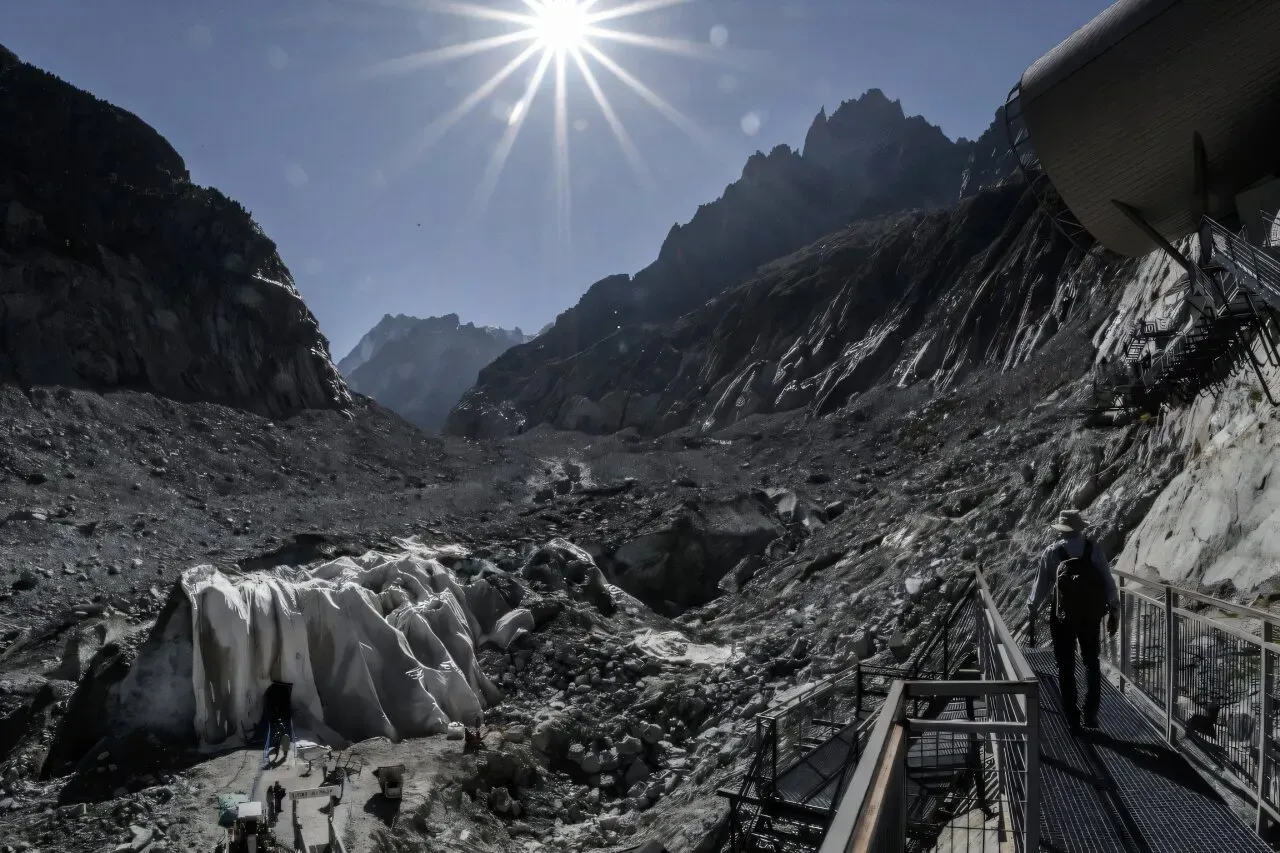
According to one report, overshooting the 1.5°C mark will have far-reaching consequences for the cryosphere, all forms of ice on Earth. Large-scale and often irreversible impacts are expected, including melting glaciers and sea ice, thawing permafrost, and rising sea levels that will lead to widespread flooding and water shortages.
The effects of climate change are already visible in some areas, such as the 20% loss in glacial mass observed in Switzerland. However, even if the 1.5°C target remains relevant, it is now considered too high for the cryosphere, with current levels of warming deemed "already unsafe for certain regions.
The UN warns that a truly safe temperature for Earth's ice would be closer to 1°C or below over coming centuries, regardless of whether the 1.5°C target is reached.
Global warming has reached a critical level, surpassing 1.37°C above preindustrial temperatures, and experts warn that exceeding the 1.5°C threshold could have far-reaching consequences.
Glaciologist James Kirkham, lead author of a report titled Overshoot and the Cryosphere, emphasizes that there are no good outcomes in exceeding this temperature limit. The report, written with 80 scientists, highlights the need to minimize overshoot to contain the damage from ice loss in polar and mountain regions.
The consequences of crossing certain tipping points are particularly alarming, according to experts. Even if temperatures were to return below the 1.5°C threshold, recovery would be a slow process that could take decades or even centuries.
Reducing warming to under 1.5°C or even 1°C could lead to some regeneration of glaciers and benefits for sea ice. However, this is not a guarantee of full recovery, as Matthew England, an oceanographer and climatologist at the University of New South Wales in Australia, notes that recovery times can be very long.
The second report, State of the Cryosphere 2026," paints a dire picture of what could happen if temperatures continue to rise. Exceeding 2.8°C into the next century would have significant consequences, including sea levels rising by up to five centimeters per year by 2150 and the release of massive amounts of carbon dioxide from thawing permafrost.
The world is hurtling toward catastrophic climate change consequences, including significant damage to Earth's ice reserves, even if countries meet their current climate commitments. A worst-case scenario suggests that global temperatures could rise by 2.6°C by the year 2100, despite efforts to curb emissions.
This alarming prediction underscores the urgent need for rapid action to transition away from fossil fuels and reach net zero carbon emissions by mid-century. By doing so, it may be possible to prevent or even reverse some of the cryosphere loss that is expected to occur as a result of climate change.
Facts based on reporting originally published by Phys.org.
You may republish this story, in full or in part, if you credit News Central Site and link to it (licence CC BY 4.0). Photos are not included.