Georgia Becomes Hub for International Surrogacy Services
The country has seen a significant surge in demand for surrogacy services since Russia's invasion of Ukraine in 2022.
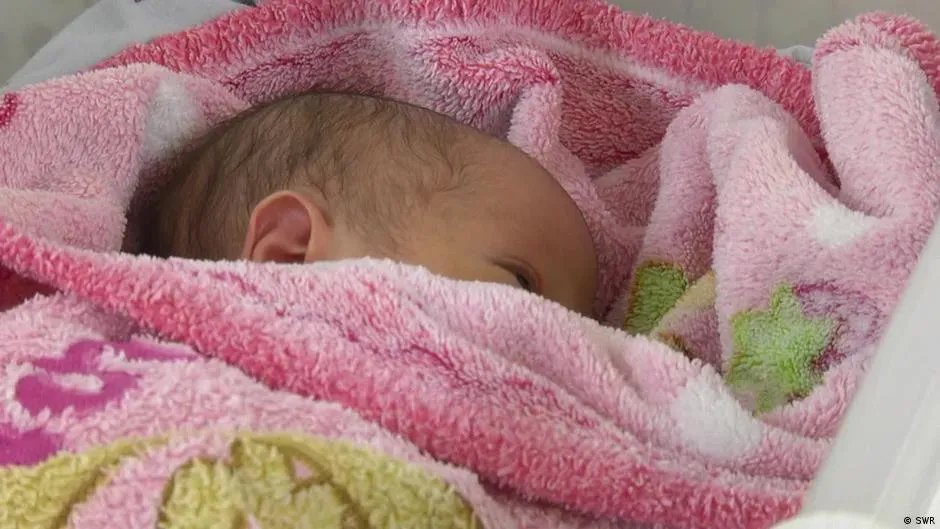
Couples seeking to start a family are increasingly turning to surrogacy agencies in Georgia without fully understanding the associated costs.
Olga and Daniel, both from Hamburg, Germany, made the decision to use a surrogate mother three years ago. However, due to the illegality of surrogacy in their home country, they had to navigate the complex process of obtaining legal recognition of their parenthood in German courts. The couple's situation is not unique; many international couples are now opting for Georgia as a destination for surrogacy services.
Since Russia's full-scale invasion of Ukraine in 2022, numerous surrogacy agencies that previously operated between surrogates and intended parents have relocated to Georgia. As a result, the country has become a hub for surrogacy, attracting women from around the world to work as surrogate mothers. According to official statistics, over 3,000 surrogate mothers were registered in Georgia in 2023.
The demand for surrogacy services in Georgia has seen a significant surge since the start of the conflict between Russia and Ukraine. In 2021, an estimated 300 children were born to surrogate mothers, but this number more than tripled by 2023, with over 1,100 births recorded. This exponential growth highlights the growing popularity of surrogacy as a means for international couples to build their families.
Anastasia, a 39-year-old Russian woman, has been working as a surrogate mother in Georgia since 2021. Having already completed three pregnancies through the program, she used her first experience to finance a property down payment. Her situation is not an isolated incident; many women like Anastasia are turning to surrogacy as a means of financial support.
Georgia has become a popular destination for couples seeking surrogacy services, but many surrogate mothers are left with significant financial burdens despite their high earnings potential. Anastasia, who has completed three surrogacies in Georgia, says she was fortunate to have had an easy experience, but others were not so lucky.
She recalled that after giving birth, some women had to wait a long time before receiving payment from the clinics or agencies involved. This situation is not unique to Anastasia's case; several other surrogate mothers who gave birth at Georgian clinics reported similar difficulties with compensation.
The cost of surrogacy services in Georgia is significantly lower than in other countries, with estimates suggesting that the average service costs around €45,000 to €55,000. This relatively low price point has made Georgia a sought-after destination for couples seeking surrogacy services.
Surrogate mothers in Georgian clinics can earn an average salary of between €18,000 and €28,000 per pregnancy, with additional premiums paid for complications such as twin births.
The process of selecting a surrogate mother can be lengthy and complex for couples seeking assistance through surrogacy agencies in Georgia. Daniel and Olga's experience highlights the difficulties they faced in finding reliable information about the health and background of potential surrogates.
During their search, the couple expressed concerns that not all agencies provided clear answers to their questions regarding the physical health and genetic disorders of some surrogate mothers. As professionals in the medical field, they may have been more inclined to scrutinize these details than others.
The agency ultimately introduced them to a 30-year-old Ukrainian woman who had previously served as a surrogate for another European couple. Despite having access to her profile and background information, the couple felt that a half-hour Zoom call was insufficient to make an informed decision about her suitability.
When meeting Elena in person, Daniel and Olga were initially hesitant due to some reluctance from the agency to facilitate their encounter. However, Elena made a positive impression on them, sharing stories about her children and expressing her desire to use her earnings for personal improvements.
The surrogacy arrangement between Olga and Daniel and Elena seemed straightforward at first, but it soon became clear that there were hidden costs and complications involved.
Elena's decision to return to Ukraine after the embryo was implanted added a new layer of complexity to the situation. The war in Ukraine had created a challenging environment for everyone, including surrogate mothers like Elena who needed to balance their personal circumstances with their responsibilities towards the intended parents.
Georgian laws governing surrogacy are limited and do not fully address the roles that agencies play in these arrangements. This lack of regulation creates an opportunity for exploitation by agencies that prioritize financial interests over the well-being of surrogate mothers.
The rights of surrogate mothers in Georgia are also restricted, with most concerns related to their pregnancy, medical care, or payment being addressed through contracts between the parties involved rather than national law. The state does not set minimum standards for social guarantees or contractual terms.
Surrogacy laws and practices vary widely across different countries, including those in Africa where there is a growing demand for surrogacy services. However, even in places with more established regulations, women's rights to reproductive self-determination are often compromised.
The motivations of surrogacy agencies have been questioned by experts who point out that their primary drive is financial rather than altruistic. This focus on profits can lead to exploitation of surrogate mothers and pressure on intended parents to accept unfavorable terms.
The pressure on intended parents to make quick decisions can be intense when working with surrogacy agencies in Georgia. Couples like Olga and Daniel from Hamburg report being constantly urged to decide quickly, often without fully understanding the terms of their contract.
One aspect that caused tension was the agency's claim to have paid out of pocket for bringing potential surrogate mothers to Georgia, despite this not being explicitly stated in the contract. This added a sense of urgency, as Olga recounts feeling emotionally manipulated by the representative's question about her willingness to remain childless.
The experience ultimately led Olga and Daniel to reconsider their decision to employ a surrogate mother, at least for now.
Facts based on reporting originally published by DW English.
You may republish this story, in full or in part, if you credit News Central Site and link to it (licence CC BY 4.0). Photos are not included.