Foundry Project Generates Hype and Concern at Palantir
The conversation between Alex Karp and Ted Mabrey led to a change in Karp's behavior regarding Foundry's prospects.
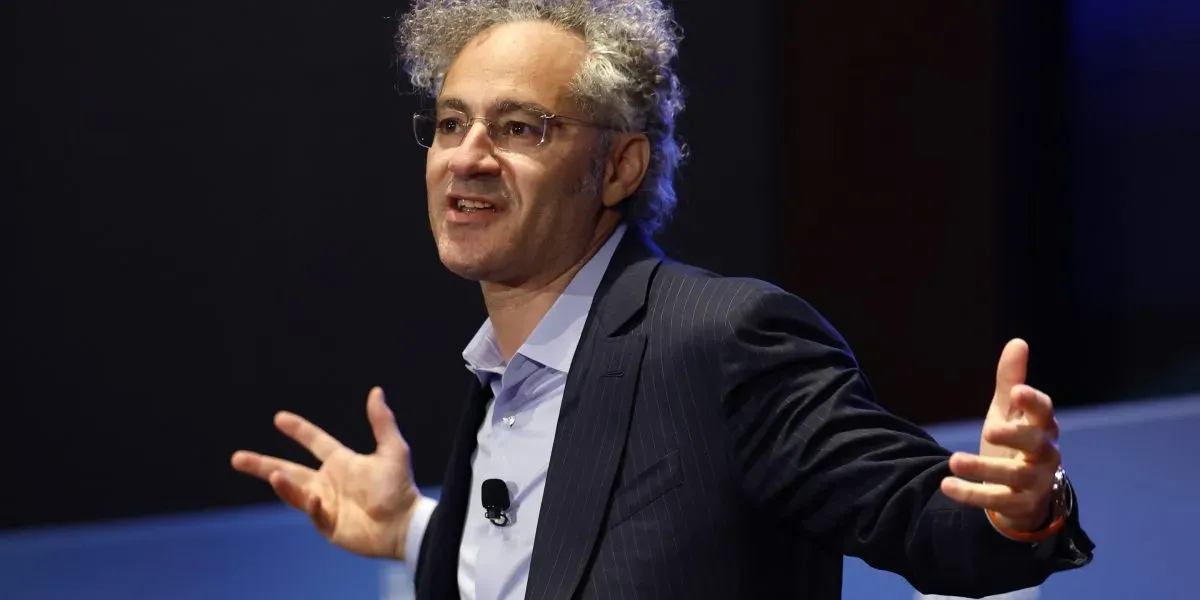
Palantir CEO Alex Karp revealed a candid conversation with one of his top executives that has stayed with him.
Ted Mabrey, who now oversees Palantir's commercial business, told Karp to stop talking about the potential size of Foundry, a project that had been generating significant hype within the company. According to Karp, Mabrey's words were tinged with concern that constant boasts about Foundry's prospects might be coming across as overly aggressive.
Karp spoke candidly about this conversation during an event at Zeta Global's annual AI marketing conference, where he was in conversation with Zeta CEO David Steinberg. The Palantir CEO acknowledged the impact of Mabrey's words on his behavior.
Mabrey's advice stuck for a brief period, with Karp saying that he stopped talking about Foundry to employees for around six months. However, it seems this self-imposed moratorium did not last long.
Karp also shared some insight into how he makes decisions as CEO, revealing an approach rooted in his own intuition and aesthetic sense of what works and what doesn't.
Palantir's Foundry platform has been a key driver of growth for the company, particularly in its U.S. commercial revenue. In the second quarter, this segment saw a significant increase, growing 149% year over year to $764 million.
According to Palantir's earnings release, U.S. commercial revenue is expected to continue growing at a rapid pace, with the company now forecasting more than $3.4 billion in full-year sales. This represents a growth rate of at least 134%.
Foundry has also attracted significant attention from other companies looking to build on its capabilities. One such firm is Zeta, which recently announced a seven-year partnership with Palantir. Under this agreement, Zeta's Data Cloud will be rebuilt on top of Foundry.
The partnership between Palantir and Zeta is expected to generate substantial revenue for both parties, with Steinberg estimating that it will bring in "over $100 million a year in sales" within the next year or so.
Palantir's forward-deployed engineering model has been met with skepticism in the past, but it has since become one of the fastest-growing jobs in Silicon Valley. This approach involves sending engineers to work directly within client companies, and it is a strategy that Zeta has reportedly adopted.
Zeta's Steinberg praised Palantir for this innovative approach, stating that his company had "pivoted a huge part of our business" to mirror Palantir's model due to its efficiency. He noted that his team found the concept so effective that they decided to replicate it in their own operations.
Palantir has faced criticism from investors and others who do not understand or appreciate its unique approach to data analysis. Karp has acknowledged this, saying that some people view Palantir as "not everyone's cup of tea." The company has a workforce of approximately 4,500 employees.
In a previous public address, Palantir CEO Alex Karp emphasized the transformative power of artificial intelligence and its impact on business operations. He argued that AI has changed the cost of poor execution for companies, suggesting that even a minor mistake can have far-reaching consequences in today's digital landscape.
Karp's comments about the potential risks of relying too heavily on software have been echoed by others who have spoken out against over-reliance on technology. His statements reflect a broader concern about the need for businesses to strike a balance between leveraging AI and maintaining human oversight and accountability.
The Palantir CEO Alex Karp used a military example to illustrate his point about AI's transformative power in business. He explained that even a mediocre German-made missile can become highly effective when paired with an advanced AI application layer.
In this context, the quality of the missile itself becomes less relevant, and its ability to hit targets against Russian weapons is what matters most. According to Karp, the same logic applies to every company, where the focus should be on identifying what sets them apart from competitors.
By leveraging AI to enhance their unique strengths, companies can outperform even those with superior products or services, as long as they maintain secrecy and prevent others from learning how it works.
Facts based on reporting originally published by Fortune.
You may republish this story, in full or in part, if you credit News Central Site and link to it (licence CC BY 4.0). Photos are not included.