EPA Regulations Spark Local Inquiry into PFAS Levels in Water Sources
A team of researchers from Cornell University has collected data on per- and polyfluoroalkyl substances (PFAS) in local water sources after residents sought information following EPA regulations.
Residents in the Ithaca area have been seeking information on the levels of per- and polyfluoroalkyl substances (PFAS) in local water sources since the Environmental Protection Agency (EPA) announced regulations to limit these chemicals in drinking water.
Professor Damian Helbling from Cornell University was at the forefront of this inquiry, with many residents contacting him directly. However, he initially found it challenging to provide accurate answers due to a lack of local data on PFAS levels. "Anybody in the public could just search online for 'PFAS' and 'Cornell,' and they would find me," Helbling said, but he had no way of addressing their questions.
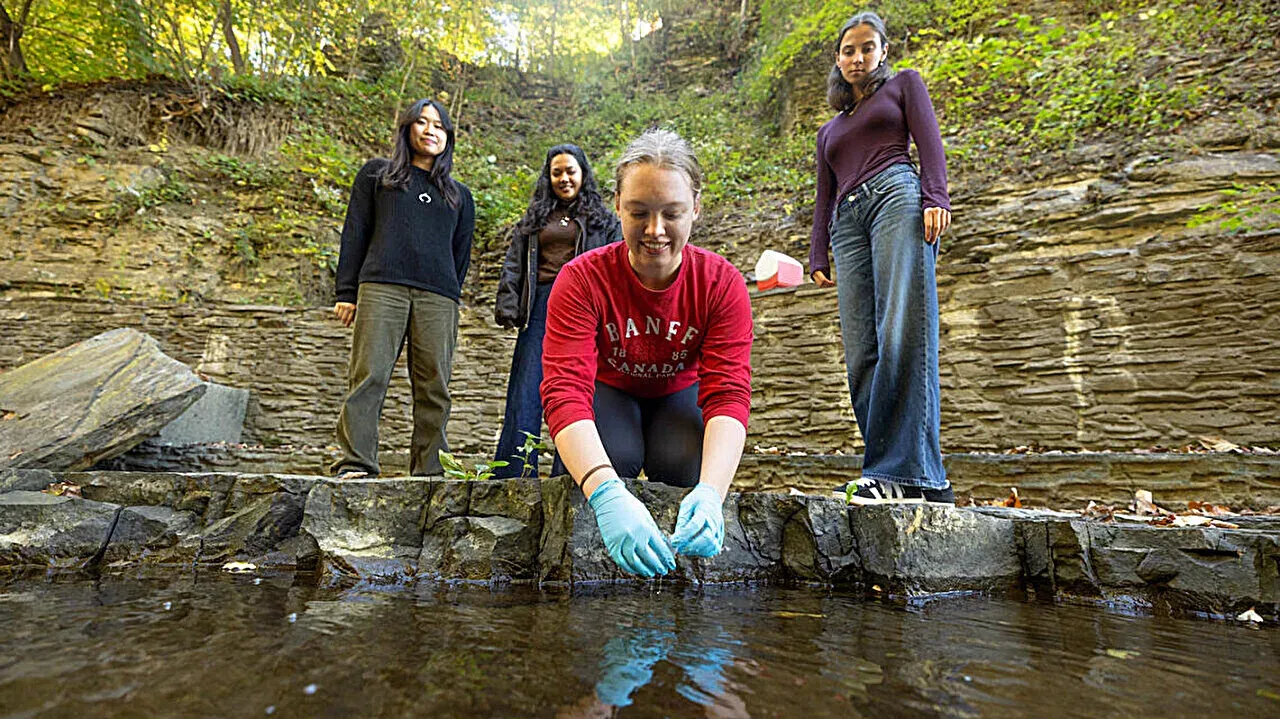
A team of undergraduate researchers from Helbling's group has since stepped in to fill this knowledge gap. They collected over 500 water samples across more than 300 bodies of water, including all 11 Finger Lakes and numerous tributaries, ponds, and puddles that persistently form after rain.
The sampling effort was extensive, covering a wide range of locations in the region. The researchers screened each sample for 24 common types of PFAS, providing valuable data on the presence and levels of these chemicals in local water sources.
Initial findings from this research suggest that overall concentrations of PFAS in the Finger Lakes are relatively low.
The relief was palpable when researchers first shared their findings on PFAS contamination in the Finger Lakes region. However, it didn't take long for concerns to surface that despite relatively low overall levels of these "forever chemicals, there are still pockets of contamination.
PFAS have been linked to a range of health issues, including lower fertility and hormone disruption, and it's estimated that nearly all Americans have PFAS in their blood. However, data on regional water contamination is often limited due to the small number of samples taken at long intervals. The Finger Lakes study stands out for its comprehensive approach, with a broad range of sites and samples collected over time.
One key finding was that surface water in the region seems to effectively dilute PFAS levels, keeping overall concentrations relatively low. However, there are areas where levels exceed safety guidelines set by New York state, particularly near airports and fire training stations.
These hotspots appear to be linked to deicing fluids for planes and fire-extinguishing foams, which contain known sources of PFAS. At these sites, PFAS levels spike before declining over time. Notably, these areas are often isolated from other waterways and do not serve as sources of drinking water, limiting their impact.
The presence of PFAS in these specific locations is likely due to the use of deicing fluids and fire-extinguishing foams, which are known sources of contamination. Further research will be needed to fully understand the extent of PFAS contamination in the region and to identify areas for improvement.
The student-led research team at Cornell University is now focusing on leveraging the data collected from their PFAS mapping project to inform future infrastructure projects in the Finger Lakes region.
The data will serve as a baseline for tracking changes in water quality over time, particularly with the establishment of new industries in the area. This will enable researchers and policymakers to compare current conditions with future readings, providing valuable insights into the effectiveness of any mitigation strategies implemented.
In addition to its practical applications, the project is also aimed at raising awareness about PFAS contamination in the region. The team hopes that their findings will educate local communities about the risks associated with these forever chemicals and encourage them to consider incorporating pollution-reducing infrastructure into new development projects.
The student researchers are committed to using their data to identify areas of high priority for further investigation, not just within the Finger Lakes region but also in other parts of New York State. This will involve analyzing the accumulated data from multiple sampling periods to pinpoint regions that require more targeted monitoring and intervention.
By combining spatial data with temporal analysis, the team aims to gain a deeper understanding of the complex relationships between PFAS contamination and environmental factors.
The team behind the Finger Lakes PFAS study has been dedicated to bridging the gap between research and its impact on local communities.
To achieve this goal, the researchers have focused on developing a clear and accessible way to communicate their findings to the public.
This approach is reflected in the creation of a publicly available map that showcases the extent of PFAS contamination in the region. The map was built by Van Den Hende before students even began collecting water samples in 2024.
The team has also engaged in extensive outreach efforts, presenting their work at numerous conferences and meetings with watershed groups and municipal organizations.
Students have played a crucial role in these presentations, learning how to effectively communicate complex scientific concepts to non-experts.
The project has not only provided valuable insights into the presence and behavior of forever chemicals" in the Finger Lakes region but also inspired a new generation of researchers. The students involved have gained hands-on experience in every stage of research, from collecting samples to communicating their findings.
This exposure has equipped them with the skills to tackle more complex questions in this field, allowing them to take on mentorship roles and teach others about the project's methods and discoveries.
Facts based on reporting originally published by Phys.org.
You may republish this story, in full or in part, if you credit News Central Site and link to it (licence CC BY 4.0). Photos are not included.