Ebola Outbreak in Democratic Republic of Congo Continues Despite Decades of Research
The Democratic Republic of Congo is experiencing its third major Ebola outbreak since 2007, with the Bundibugyo type of the virus being detected.
The Democratic Republic of Congo (DRC) is once again at the epicenter of a major Ebola outbreak, 50 years after the virus was first identified near the Ebola river in what was then known as Zaire.
This current outbreak involves the less common Bundibugyo type of the Orthoebolavirus genus, which was previously detected during an outbreak in Uganda in 2007. The DRC also experienced a major Ebola outbreak in 2012, raising questions about why a licensed vaccine or official treatment has yet to be developed.
Ebola research has been ongoing for decades, but despite this, there is still no effective countermeasure against the virus. Experts point out that the long history of Ebola outbreaks provides ample opportunity for developing vaccines and treatments.
According to Torsten Feldt, a doctor of tropical medicine at Düsseldorf's University Hospital, precious time has been lost in addressing the current outbreak. Feldt believes that researchers had enough time to develop vaccines and treatments after previous outbreaks in Uganda and the DRC.
Leonie Mayer from the German Center for Infection Research (DZIF) agrees with Feldt, noting that pre-clinical trials could have been conducted before the current outbreak began. However, she emphasizes that the effectiveness of any potential vaccine or treatment can only be confirmed during an actual outbreak.
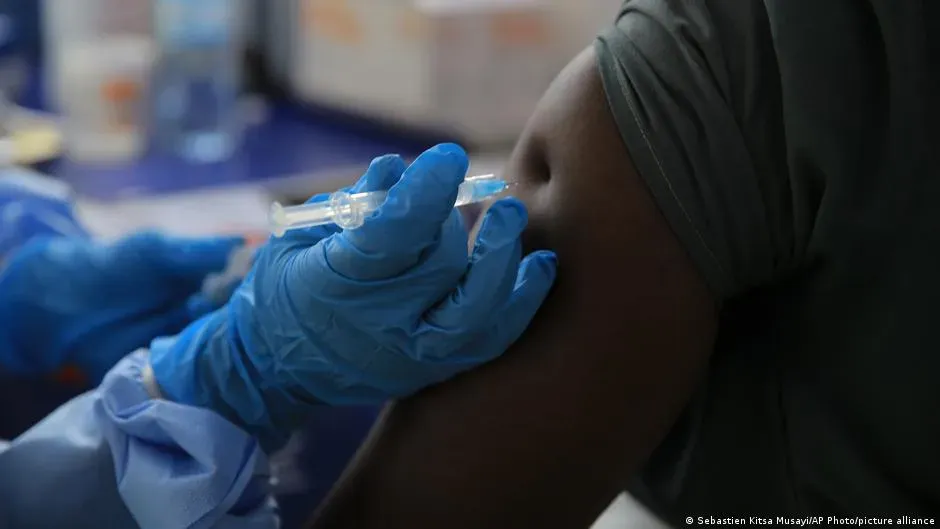
Researchers are examining whether an existing Ebola vaccine can be used against other types of the disease, including the Bundibugyo variant currently circulating in Congo.
From a scientific perspective, Ebola is considered a promising candidate for a vaccine due to its predictable nature compared to other viruses such as influenza and HIV.
Experts believe that developing a vaccine against the Bundibugyo strain could be relatively straightforward, but this contradicts the fact that there is still no licensed form of prevention against this specific variant.
The reason for this paradox lies in the limitations of vaccine development, where resources are often allocated to pathogens deemed more pressing or likely to cause outbreaks.
Ebola outbreaks are complex and multifaceted, making vaccine development a challenging task.
The Ebola virus is not a single entity but rather a group of viruses that belong to the orthoebolavirus family. The most deadly variants include the Zaire Ebola virus (ZEBOV), the Sudan virus (SUDV), and the Bundibugyo virus (BDBV). Each of these viruses has distinct characteristics, which complicates vaccine development.
The existing Ervebo vaccine was specifically designed to target the Zaire variant, leaving a significant gap in protection against other strains. This limitation is particularly concerning given that some Ebola outbreaks are caused by non-Zaire variants.
Research suggests that the Bundibugyo virus may be less aggressive than its Zaire counterpart, but this also poses challenges for containment efforts. Infected individuals tend to remain mobile for longer periods, increasing the likelihood of transmission without realizing it.
Scientists have been exploring whether existing vaccines can trigger cross-reactive immune responses against multiple Ebola variants. Recent studies indicate that the Ervebo vaccine can elicit an immune response not only against the Zaire variant but also against Bundibugyo and Sudan viruses to some extent.
The deployment of a vaccine during an ongoing epidemic raises complex questions about its efficacy and potential impact on the situation.
Mayer points out that deploying a vaccine without knowing its full extent of protection would not be ethical, as it could create false expectations among the public. This would also make it challenging to determine whether the reduction in cases is due to the vaccine or other factors such as changes in behavior or external circumstances.
Specialist Jürgen May at the Bernhard Nocht Institute echoes this sentiment, warning that mass vaccination without clear proof of efficacy could lead to a false sense of security and undermine trust in healthcare efforts. If the vaccine does not provide sufficient protection, it would also be difficult to conduct further research on its effectiveness.
The acceptance of a vaccine is crucial for its successful implementation. If people are vaccinated en masse only to find out later that the vaccine was not as effective as expected, it can create significant communication challenges when trying to convey this information to those who were already inoculated.
The complexities involved in containing an outbreak like Ebola also highlight the limitations of medical innovation alone in addressing public health crises. In addition to logistical and infrastructure challenges, conflicts, transportation issues, and attacks on healthcare facilities all contribute to making it harder to control the spread of the disease.
Identifying the Bundibugyo strain of Ebola is no longer a significant challenge in itself, according to Torsten Feldt. However, the practical availability of diagnostic tools often proves to be a limiting factor, particularly in remote or conflict-affected regions.
In these areas, samples may need to be transported over long distances before they can be tested, which further complicates the process. This is another paradox when it comes to Ebola: while diagnosing infections has become more efficient worldwide, containing outbreaks remains a persistent challenge due to slow reaction times.
Researchers believe that the ongoing crisis could also serve as an opportunity for progress in developing effective vaccines against the Bundibugyo strain. A study called Tumaini has been launched in the DRC to test different vaccine candidates, including Ervebo developed by Oxford University and a Moderna mRNA vaccine.
The study aims to provide reliable data on the efficacy of these vaccines against the Bundibugyo virus, but it's uncertain whether they will be able to help control the current outbreak. Experts estimate that widespread use of any successful vaccine is unlikely until mid-2027 at the earliest, several months from now.
Researchers are looking to develop a cross-reactive pan-Ebola vaccine that can target multiple strains of the virus at once. This would be a significant breakthrough in fighting the disease, as it could potentially provide protection against all forms of Ebola.
The focus for now remains on developing an effective vaccine specifically targeting the Bundibugyo variant of the virus. Widespread use of any successful vaccine is unlikely until mid-2027 at the earliest, several months from now.
Facts based on reporting originally published by DW English.
You may republish this story, in full or in part, if you credit News Central Site and link to it (licence CC BY 4.0). Photos are not included.