Early Findings Show Cholesterol-Linked Drugs Enhance Effectiveness of Gene-Targeting Therapies
A new class of cholesterol-linked drugs has shown promising results in enhancing the effectiveness of gene-targeting therapies, according to early findings.
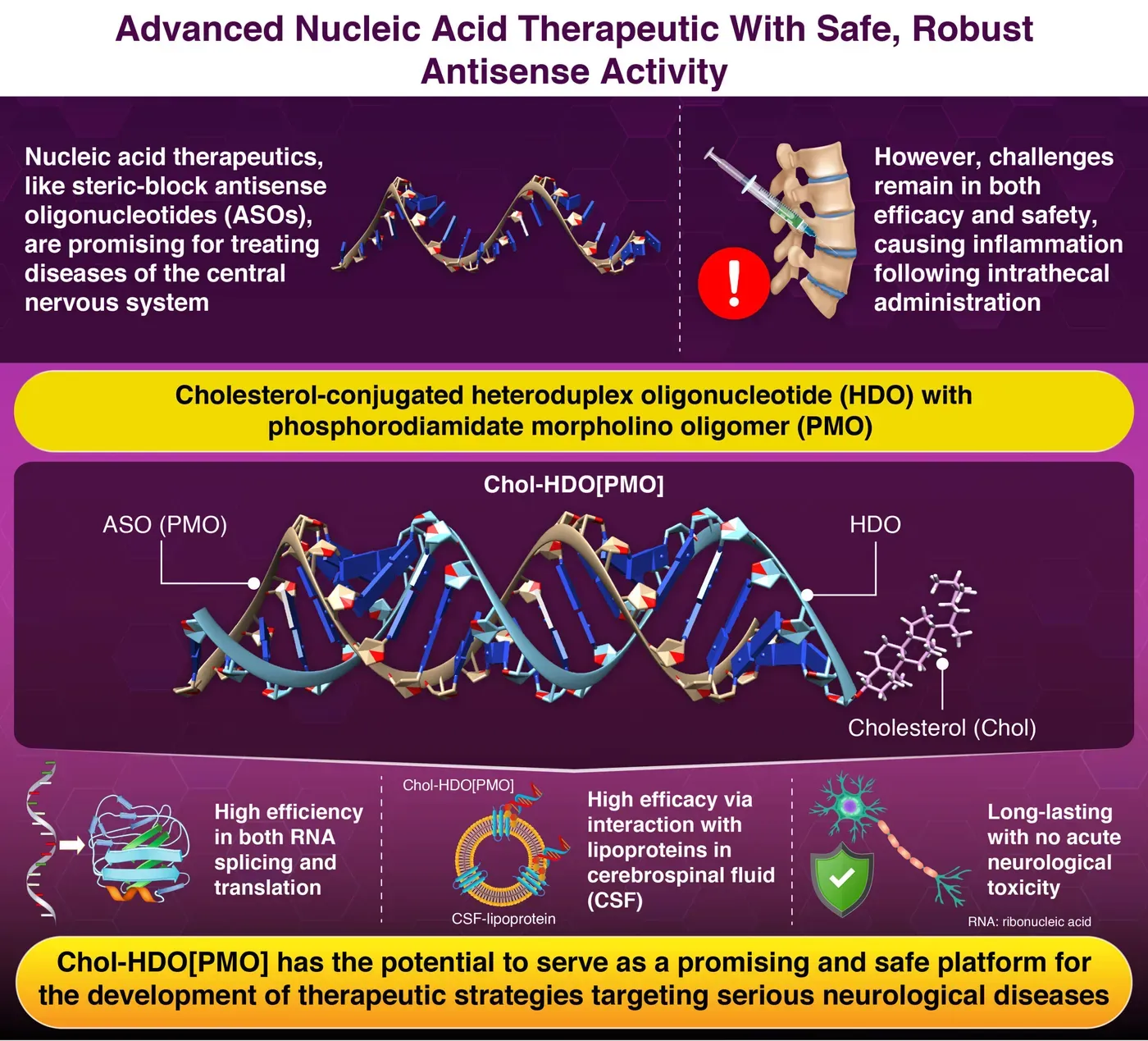
A new class of cholesterol-linked drugs has shown promising results in enhancing the effectiveness of gene-targeting therapies, according to early findings. These treatments, known as nucleic acid therapeutics, have been gaining attention for their potential in tackling previously hard-to-treat diseases, including neurological conditions.
One type of nucleic acid therapy is antisense oligonucleotides (ASOs), which have recently gained approval worldwide for treating hereditary amyotrophic lateral sclerosis and spinal muscular atrophy. ASOs are administered directly into the cerebrospinal fluid through a lumbar puncture, allowing them to reach the brain and spinal cord with greater precision.
Developed as short, synthetic strands of nucleic acids, ASOs bind specifically to RNA molecules in the body, preventing or reducing the production of disease-causing proteins. However, current ASO therapies face challenges related to both their effectiveness and safety profile.
The cholesterol-linked drugs being studied have been designed to improve the stability and cellular uptake of ASOs, which are typically chemically modified with a phosphorothioate (PS) backbone combined with a 2′-O-methoxyethyl (MOE) modification. This design enhancement can cause neurotoxic effects, including sedation following intrathecal administration.
The limitations of current treatments for Duchenne muscular dystrophy (DMD) have been well-documented, particularly when it comes to delivering gene-targeting therapies to the central nervous system. One of these challenges is the balance between efficacy and safety, with many existing treatments struggling to achieve this delicate balance.
A team of researchers from Japan's Institute of Science Tokyo has made significant strides in addressing these issues by developing a novel nucleic acid platform that combines the strengths of phosphorodiamidate morpholino oligomer (PMO) antisense oligonucleotides with cholesterol conjugation. This innovative design enhancement is aimed at improving the potency and safety of gene-targeting therapies.
The researchers' approach builds on their previous work in developing PMO-based heteroduplex oligonucleotides (HDOs), which have demonstrated efficacy throughout the body, including in skeletal and cardiac muscles, as well as in the central nervous system. By applying this technology to the central nervous system and incorporating intrathecal administration, the team has made significant progress in advancing the field.
The new platform, known as Chol-HDO[PMO], combines HDO with PMO and its complementary RNA, and further conjugates it with cholesterol. This design enhancement is expected to improve the efficacy of gene-targeting therapies while maintaining safety, but early findings suggest that there may be a risk of neurotoxic effects associated with intrathecal administration.
The researchers administered cholesterol-conjugated PMO/RNA HDO (Chol-HDO[PMO]) into the cerebrospinal fluid of mouse models to test its splicing and translation-blocking abilities.
The results showed that Chol-HDO[PMO] outperformed conventional antisense oligonucleotides with PS-MOE or PMO chemistries in both translation inhibition and splice modulation, achieving a significant increase in potency. Specifically, the therapeutic effects of Chol-HDO[PMO] were up to 16 times more potent than those of traditional ASOs.
In contrast to many current antisense drugs, Chol-HDO[PMO] did not cause noticeable side effects such as acute neurotoxicity, weight loss or immune reactions. This suggests that the cholesterol-conjugated PMO/RNA HDO has a safer profile compared to other antisense therapies.
Further refinements to the chemical structure of Chol-HDO[PMO] could potentially lead to even more effective and safer treatments. The researchers found that substituting the PMO strand with alternative chemical backbones within the same HDO architecture significantly altered efficacy, highlighting the importance of optimizing the design.
The improved potency of Chol-HDO[PMO] is thought to be due to its ability to bind to lipoproteins in the cerebrospinal fluid, leveraging them as efficient delivery vectors. This mechanism could hold the key to enhancing the delivery of therapeutic agents across the central nervous system and treating a wide range of genetic diseases affecting the brain.
Researchers have made significant strides in developing a novel therapeutic platform for treating neurological diseases, leveraging the potential of cholesterol-linked molecules to enhance gene-targeting potency.
This breakthrough could pave the way for safer and more effective treatments for a wide range of genetic brain disorders, offering new hope for patients with previously incurable conditions. The innovative approach combines cholesterol-linked molecules with nucleic acid therapeutics, demonstrating improved delivery and efficacy in preclinical studies. The findings suggest that this mechanism has the potential to revolutionize the treatment of neurological diseases.
Facts based on reporting originally published by Phys.org.
You may republish this story, in full or in part, if you credit News Central Site and link to it (licence CC BY 4.0). Photos are not included.