Power Strip Overloading Risks Highlighted by Experts
Plugging multiple power strips together can lead to increased risk of electrical overload, overheating, and even fires due to excessive heat generated from "resistive heating".
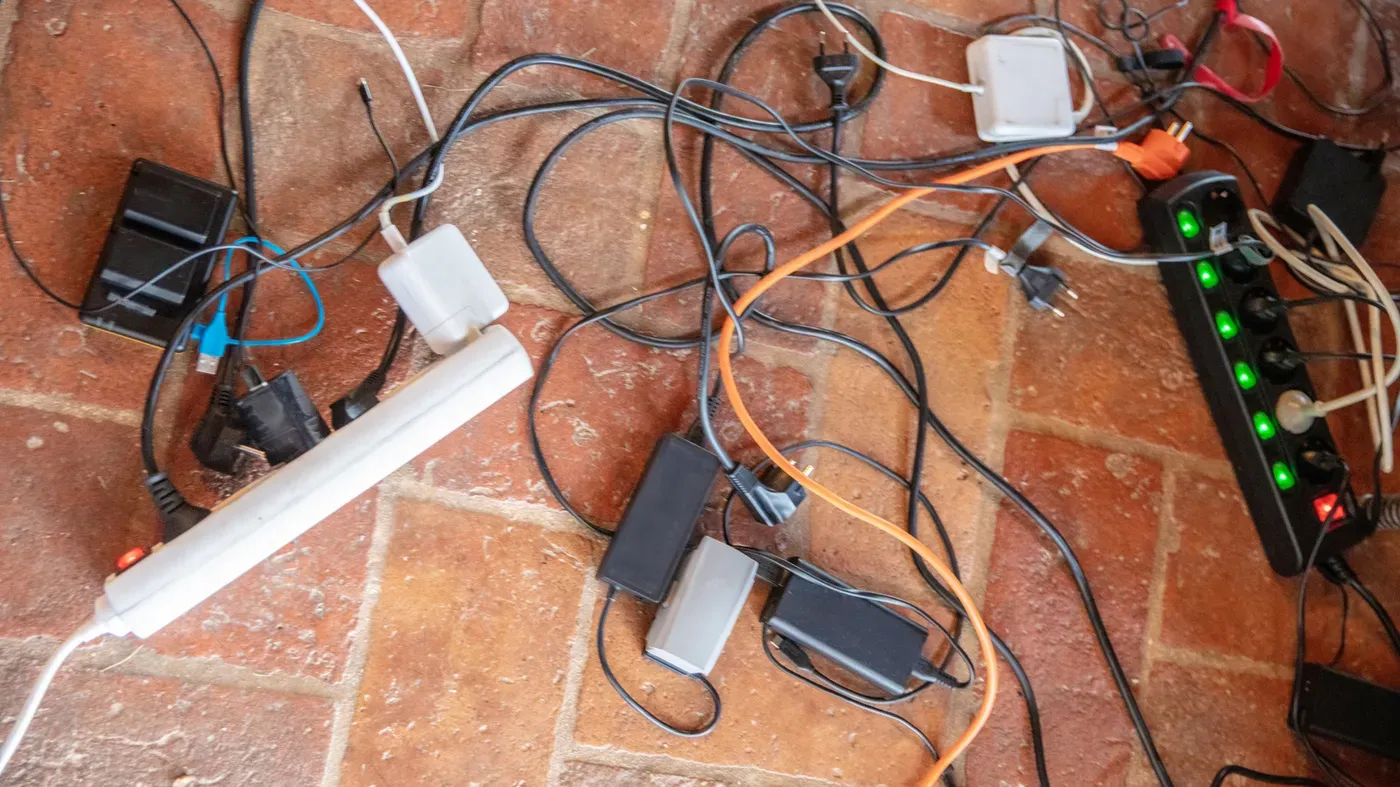
Running a home office or gaming area has become increasingly complex due to the numerous devices required for remote work and entertainment. The abundance of gadgets has led to a tangled web of cords, ports, and outlets, making it difficult to manage power consumption. To alleviate this issue, some individuals have resorted to plugging one power strip into another, creating a daisy-chain setup that appears to provide more outlets and organization.
However, this convenient solution poses significant risks. Plugging multiple strips together does not increase the electrical capacity of the primary outlet. Instead, it forces the first strip's internal components to carry the combined load of all devices connected to both strips. This can lead to a substantial strain on the first strip's capacity, potentially causing overheating and other issues.
The maximum rating of each power strip is typically expressed in amps, serving as a crucial safety feature that prevents overloading. When a second strip is plugged into the first, it may exceed the primary strip's maximum capacity, leading to an increased risk of electrical overload. This can result in tripped breakers or even more severe consequences.
When setting up power strips, it is essential to understand their limitations and avoid creating daisy-chain configurations. Power strips should be connected directly to a wall outlet, not another power strip, to ensure safe and efficient use.
The internal wiring and components of a power strip can overheat when too much current is pushed through them, causing "resistive heating". This excessive heat can eventually melt the casing and wire insulation, potentially leading to fires if nearby materials are flammable.
When more outlets or ports are needed, it's essential to choose a power strip that meets those specific requirements. A single power strip with a larger number of outlets can be a viable solution for low-power electronics, as long as the total load remains within the strip's rating.
However, having more outlets doesn't necessarily translate to greater electrical capacity. It's crucial to consider the power strip's overall specifications and ensure it can handle the total load of connected devices.
If distance is the issue, opting for a power strip with a longer cord can be a practical solution. Nevertheless, using an extension cord as a substitute should be avoided, according to safety guidelines from the NFPA, which advise against overloading extension cords with multiple devices plugged in at once.
Calculating the limitations of each component can help prevent overloading, but for most people, this mathematical exercise may not be feasible or even necessary.
Plugging a power strip into another power strip can be hazardous, and ignoring this warning sign is not advisable. If one power strip trips the breaker, it's a clear indication that something is amiss and needs to be addressed immediately.
High-power appliances such as space heaters, microwaves, and refrigerators should only be plugged directly into a wall outlet due to their substantial current draw. Using a power strip for these devices can lead to overloading and potentially cause electrical issues.
When using power strips, it's essential to match the devices with the strip's ratings to avoid overloading. This means checking the devices' power requirements against the strip's capabilities before plugging them in.
Using ordinary power strips with ordinary devices like PCs, printers, or phone chargers is a safer approach than relying on high-power appliances. Power strips are not all-purpose devices for whatever needs power at any given moment; their capacity should be respected and utilized accordingly.
The discussion on power strips highlights the importance of respecting their capacity limits. A surge protector, often seen as a safety device, does not alter this dynamic - it cannot create more energy capacity than what it is rated for.
This principle also applies to basic safety guidelines for surge protectors, which advise against connecting them in series. It's crucial to check the rating of any power strip or surge protector and ensure it can handle the load being plugged into it. If not, an additional outlet should be used or a separate power strip with its own wall socket is necessary.
Facts based on reporting originally published by Engadget.
You may republish this story, in full or in part, if you credit News Central Site and link to it (licence CC BY 4.0). Photos are not included.