Human Migration to Americas: New Controversy Surrounds Monte Verde Site
A renewed debate over who first inhabited the Americas has emerged surrounding the Monte Verde site in Chile, a long-standing archaeological site.
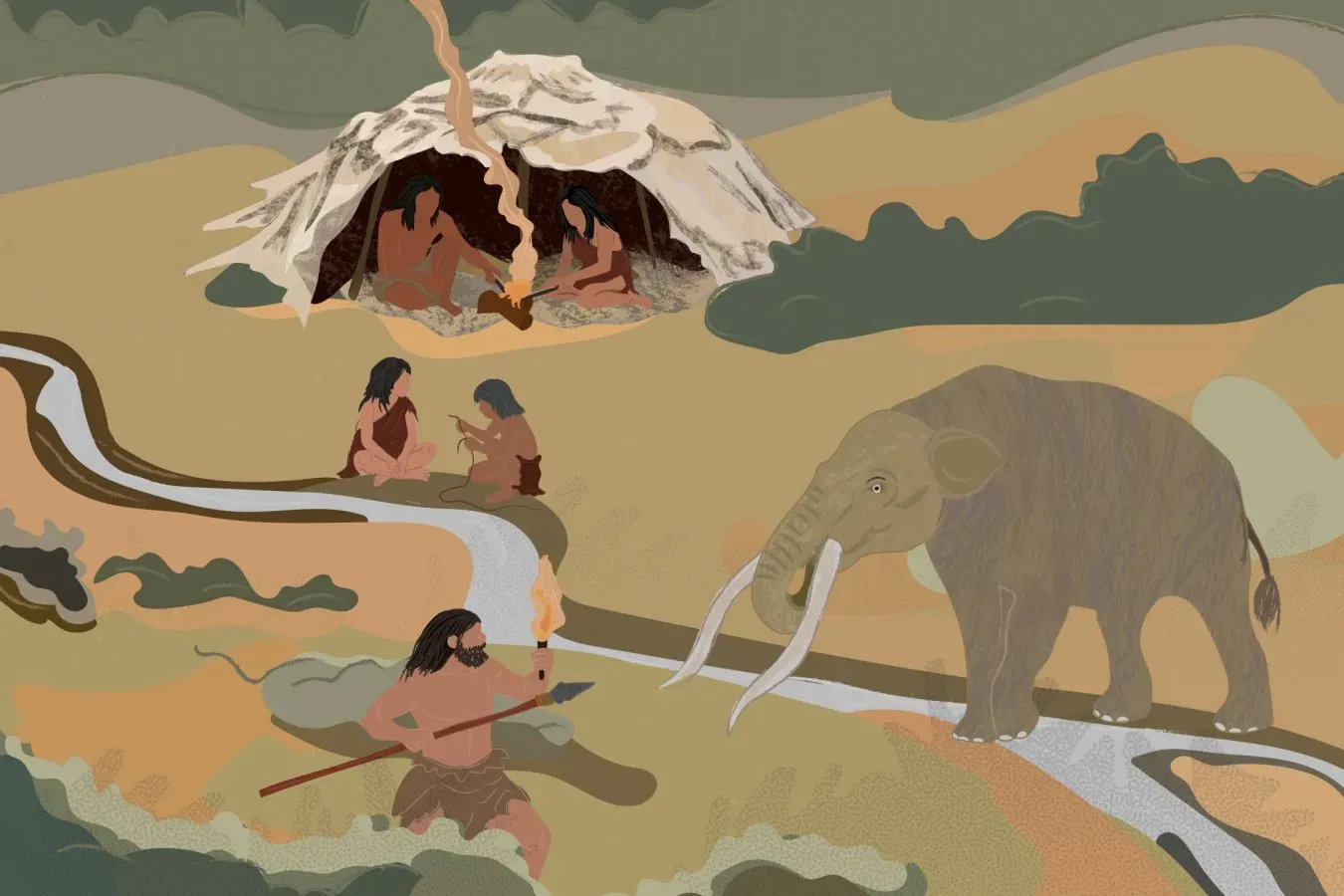
The debate over who first inhabited the Americas has taken a surprising turn with renewed controversy surrounding the Monte Verde site in Chile.
For half a century, this archaeological site has been a cornerstone of our understanding of how humans populated the New World.
However, after initially being at the center of a contentious story for two decades, its significance became more widely accepted. But now, as of this year, it's once again sparking heated debate among experts.
The intricacies of the new argument are complex and technical, making it difficult to summarize without oversimplifying the details.
At its core, though, the question remains straightforward: who were the first people to inhabit the Americas, and when did they arrive?
Contrary to what might be expected, the Americas were the last continents to be settled by humans.
The earliest human-like species, Homo erectus, reached what is now Georgia in Eurasia around 8 million years ago.
Over time, other hominins like Neanderthals and Denisovans spread throughout Eurasia, while our own species, Homo sapiens, emerged in Africa and migrated to various parts of the world.
Despite extensive travel over nearly 2 million years, none of these early humans seem to have reached the Americas until relatively recently.
The timing of this landfall is still disputed, with estimates suggesting it occurred at most within the last 35,000 years.
The Monte Verde archaeological site in southern Chile has been at the center of a long-standing debate about the timing of human migration to the Americas.
Located on the banks of Chinchihuapi Creek, a tributary of the Maullín river, Monte Verde is situated in a unique landscape where the coast of South America fractures into peninsulas and islands. The Andes mountain chain lies to the east, creating a diverse geography that has been shaped by geological forces over millions of years.
Archaeologists have been excavating the site since 1977, with Tom Dillehay at Vanderbilt University in Nashville, Tennessee, being one of the most prominent researchers involved. Over almost five decades, his team has uncovered two distinct areas: Monte Verde I and Monte Verde II.
Monte Verde I is a challenging site to interpret due to its burned areas and numerous putative stone artefacts, some of which may be natural stones rather than tools created by early humans. Early radiocarbon dating suggested that the site was 33,000 years old, but this estimate has never been widely accepted by the scientific community.
In a 2015 study, Dillehay's team revised the age of Monte Verde I to between 14,500 and 18,500 years ago, based on new radiocarbon dating of charcoal. However, due to the sparse human remains at the site, even this younger estimate is disputed, with some researchers questioning its validity.
Stronger evidence for early human presence in the Americas comes from Monte Verde II, where archaeologists have found artefacts made of stone, wood, and bone, as well as what appear to be the foundations for a structure. Directly above these layers is a layer of peat that was dated by Dillehay's team to 14,500 years ago.
The presence of peat at Monte Verde II provides a more secure dating for human activity in the area, suggesting that early Americans were present on the continent at least 14,500 years ago. However, the exact timing and nature of this migration remain topics of ongoing research and debate among archaeologists and anthropologists.
The Monte Verde controversy has been ongoing for decades, and recent discoveries have shed new light on its significance in the peopling of the Americas.
In 1997, a team of archaeologists gave Dillehay's analyses an official stamp of approval after visiting the site, solidifying its place as one of the oldest known human settlements in the Americas.
Since then, further evidence has confirmed the age of Monte Verde, including the identification of marine algae at Monte Verde II in 2008, which was directly dated to between 14,220 and 13,980 years ago.
Today, Dillehay asserts that the evidence for the site's age consists of over a thousand radiocarbon and luminescence dates, as well as intact chrono-stratigraphy and diagnostic stone tools found at other sites.
These finds have had far-reaching implications for our understanding of human migration to the Americas, effectively challenging long-held assumptions about how the continent was first populated.
For much of the 20th century, archaeologists believed that the Clovis culture, named after a site in New Mexico, was the first to inhabit the Americas, with distinctive pointed stone tools and sites dating back around 13,000 years.
The consensus around the Clovis First model was so strong that any pre-Clovis sites were subject to intense scrutiny, leading to numerous excavations at places like Cooper's Ferry, Buttermilk creek, and Paisley caves in North America.
The landscape around Chinchihuapi Creek has undergone significant changes over the past 20,000 years, shaped by the region's glacial history. During this period, the area was a plain with braided streams and an abundance of sand and gravel, formed as the outwash from a glacier extending down from the Andes.
As the climate warmed, the region transitioned into a forest, which eventually gave way to a wetland that was then buried, forming a layer of black peat. This transformation occurred sometime after the initial 20,000-year period.
Around 11,000 years ago, a major volcanic eruption took place at Michinmahuida, blanketing the area with a thick layer of ash known as the Lepué Tephra. This event had a profound impact on the region's ecosystem and geology.
The Chinchihuapi creek cut through all these layers, exposing a surface where human activity has been detected. Given this sequence of events, it is clear that Monte Verde II must be younger than the Lepué Tephra ash layer.
Dating of sands and gravels at the excavation sites suggests that Monte Verde II spans a period between 8200 and 4200 years ago. This timeframe has sparked controversy among researchers in the field.
The debate surrounding Monte Verde's age has led to a significant backlash, with several experts responding to the original claims through letters attached to a recent Science paper. These exchanges have highlighted the complexity of the issue at hand.
A key point of contention revolves around the fact that Surovell's team excavated near Monte Verde but not directly at the site itself, which makes it difficult to extrapolate their findings to the main excavation area.
The debate over the age of human habitation in the Americas continues to simmer, with one key point of contention being the interpretation of a peat layer at Monte Verde II.
Despite claims that the peat layer is evidence of early human presence, Thomas Dillehay argues that it cannot be used to determine the age of the site because there is no sign of the Lepué Tephra ash layer.
The absence of this crucial ash layer above or below the artefacts in question raises questions about its relevance and reliability as a dating tool.
Dillehay's concerns highlight the challenges of resolving disputed scientific claims, where every detail of an excavation can be scrutinized and debated.
In such cases, it becomes increasingly difficult to determine whether the results are accurate or if there has been a mistake in the experiment itself.
This is precisely what has happened with the Monte Verde controversy, where each side accuses the other of flaws in their research methods.
The discovery of pre-Clovis sites in the Americas has been a contentious issue, with new finds regularly challenging our understanding of human migration patterns.
Recent excavations at White Sands National Park in New Mexico have uncovered footprints and drag marks estimated to be around 22,000 years old, sparking debate about the timing of human arrival in the region.
Genetic studies of Indigenous Americans and their Asian relatives suggest that people began moving into the Americas approximately 15,000 years ago, a timeframe that could indicate multiple migrations occurred over thousands of years.
Some researchers interpret these findings as evidence of early wanderers who didn't survive, followed by at least one major migration event. This would imply that humans were present in the Americas before the Clovis era, regardless of the truth about Monte Verde.
However, not all experts agree on the significance of pre-Clovis sites. Some argue that the evidence is too poor in quality to be trusted, with many of these sites still being questioned by their peers.
In the midst of this ongoing debate, researchers continue to refine their methods and present new findings, which may ultimately shed more light on the complex history of human migration in the Americas, and settle once and for all who was first.
Facts based on reporting originally published by New Scientist.
You may republish this story, in full or in part, if you credit News Central Site and link to it (licence CC BY 4.0). Photos are not included.