Citadel founder pledges over $3 billion to Carnegie Mellon University
Citadel founder Ken Griffin has made history by pledging over $3 billion to Carnegie Mellon University, marking the largest individual gift in higher education's history. This staggering...
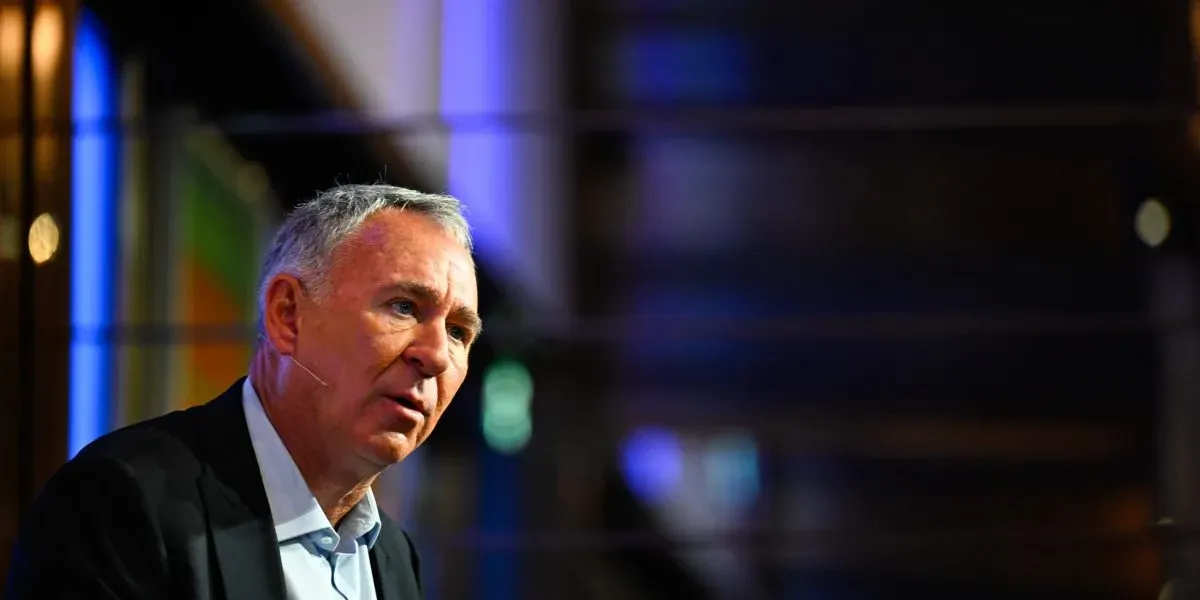
Citadel founder Ken Griffin has made history by pledging over $3 billion to Carnegie Mellon University, marking the largest individual gift in higher education's history. This staggering donation is earmarked for a new CMU campus in Miami's Wynwood neighborhood, with the first students expected to enroll as early as 2028, pending regulatory approval.
The significance of Griffin's contribution cannot be overstated, and his words offer valuable insight into the challenges facing universities today. According to Griffin, the key issue is how to reignite both the faith and understanding that the American dream is still attainable. His philanthropic gesture has sparked a crucial question about the role of stewardship in wealth creation.
While Griffin's gift is undoubtedly deserving of admiration, it also raises pressing concerns about whether stewardship should only begin once wealth has been accumulated or if it should play a guiding role from the outset. The answer to this query could hold significant implications for how we approach wealth and its impact on society.
The question of conscience in wealth creation has become increasingly relevant, yet we rarely challenge the invisible hand to perform a moral function that is beyond its original design. We expect an economic mechanism to provide a sense of responsibility and ethics, but this may be unrealistic given its inherent nature.
The concept of the invisible hand has had a lasting impact on my understanding of economics and the role of individual interests in shaping societal outcomes. This idea, first introduced by Adam Smith in his undergraduate class, suggests that individuals acting solely in their own self-interest can inadvertently contribute to the betterment of society as a whole.
Adam Smith's early work, The Theory of Moral Sentiments, highlights the importance of moral considerations in economic decision-making. In this book, he introduces the concept of the impartial spectator, an internal observer who evaluates our actions based on how a fair-minded stranger would judge them. This notion serves as a fundamental aspect of conscience.
The invisible hand's influence on markets is undeniable, but it does not account for the moral nuances that underpin economic transactions. Markets rely on trust and self-restraint, which are essential components of a well-functioning economy. Without these elements, the pursuit of individual interests can lead to exploitation and social harm.
While I firmly believe in the benefits of capitalism, its success relies on a delicate balance between personal gain and social responsibility. The defense of economic self-interest has often been accompanied by an implicit understanding that individuals must also consider the impact of their actions on others. This compromise allows for individual prosperity while promoting societal well-being.
The growing wealth gap between the rich and the poor in the US is a pressing concern. Federal Reserve data reveal that the top 10% of households hold nearly 69% of household wealth, while the bottom half own just over 2%. This stark disparity raises questions about the sustainability of the current economic system.
A recent Gallup survey highlights the public's waning trust in big business. Only 15% of Americans expressed a great deal or quite a lot of confidence in large corporations. This trend suggests that the social contract is under strain, and businesses are no longer seen as responsible stewards of society.
The foundation upon which successful businesses are built cannot be overstated. Every great company relies on public institutions such as schools, courts, roads, and networks to operate effectively. These resources are a shared inheritance, not created by individual entrepreneurs from scratch.
Philanthropy often follows wealth creation, but it is conscience that should guide business leaders throughout their journey. This means treating employees with fairness, sharing opportunities widely, making environmentally responsible decisions, and passing on values alongside financial assets.
Companies like Costco have successfully incorporated a sense of social responsibility into their business models. Despite earning a significant net income of $8.1 billion, Costco's hourly employees in the US reportedly receive an average wage of around $32, with benefits pushing that number up to approximately $46 per hour.
In contrast, Publix has taken a different approach by giving its employees a stake in the company they help build. Founded on this principle by George Jenkins, Publix remains the largest employee-owned business in the US today. This model not only fosters a sense of ownership and responsibility among employees but also contributes to the company's overall success.
The question of what drives successful individuals like those who accumulate vast wealth is complex. It extends beyond financial statements to encompass broader social and moral implications. Those who answer these questions thoughtfully recognize the significant power that comes with their wealth and seek to use it positively, improving the lives of others in the process.
Ultimately, this sense of purpose and responsibility cannot be imposed by governments or markets; it must arise from within individuals themselves. This is where Adam Smith's concept of an impartial spectator comes into play, a reminder that true success requires not just financial gains but also a commitment to doing good and leaving a lasting impact on society.
When making financial decisions, executives, founders, and investors should consider the broader impact on society. This involves asking a simple yet crucial question: who besides ourselves will benefit from this decision? The answer can help guide choices on compensation, capital allocation, investments, and employee benefits.
Capitalism is not inherently flawed for producing winners and losers. However, those who reap significant rewards from it should consider their social responsibility beyond mere economic gains. By doing so, they can make more informed decisions that balance self-interest with the greater good.
Ultimately, capitalism's invisible hand cannot dictate moral obligations or social conscience. It is up to individuals and organizations to prioritize the well-being of others alongside their own financial success, recognizing that true prosperity extends far beyond personal wealth.
Facts based on reporting originally published by Fortune.
You may republish this story, in full or in part, if you credit News Central Site and link to it (licence CC BY 4.0). Photos are not included.