Chinese Studio Develops First-Person Shooter Game Set in China During World War II
A new first-person shooter game called "The Defiant" is being developed by Hoothanes Technology and tells the story of Chinese forces fighting against the Japanese army during World War II.
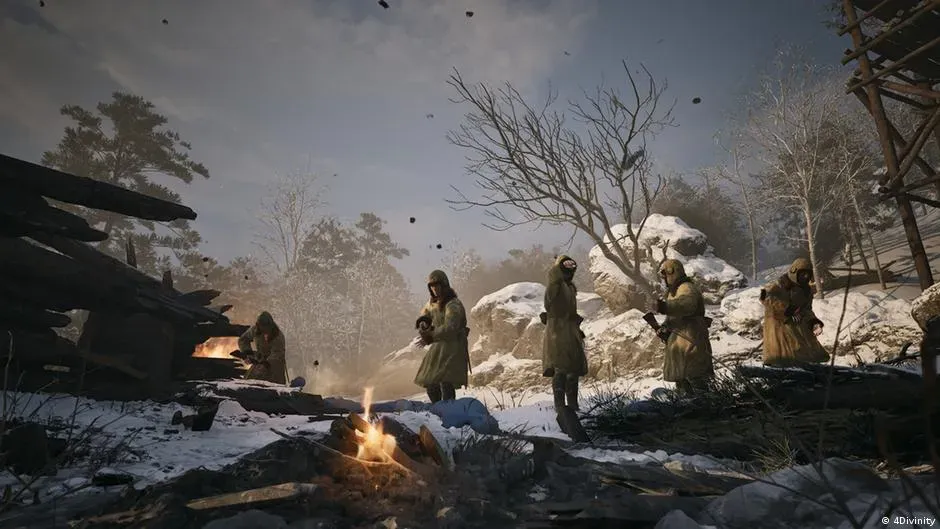
China's growing influence in the gaming industry is evident in its latest productions, which are gaining international attention.
In Hangzhou, a Chinese studio called Hoothanes Technology is currently developing "The Defiant, a first-person shooter game set in China during World War II. The game tells the story of Chinese forces fighting against the Japanese army in the 1930s and 1940s, a narrative that has never been told in a video game before.
According to developer Connor Xu, the weapons featured in The Defiant are unique to Asia and may be unfamiliar to Western players. The game's storyline is also distinct from typical war games, which often focus on European or American conflicts.
Hoothanes Technology's involvement in creating The Defiant highlights China's growing presence in the global gaming industry. In recent years, China has lifted its ban on video game consoles and relaxed regulations on online gaming, allowing Chinese developers to create games that can compete with international titles.
The Defiant is designed to appeal to an international audience, and its development marks a significant step forward for Chinese game developers who are seeking to break into the global market.
More than 700 million people in China engage regularly in video game playing, according to market research data from Newzoo. This staggering number indicates that gaming has become an integral part of many Chinese lives, with most players considering it a vital aspect of their leisure time.
Gaming developers in China are aware of the appeal of games among their audience, and they're designing titles accordingly. Xu, one such developer, notes that Games make life more interesting by allowing users to explore different roles, stories, and characters - an attractive feature for Chinese gamers seeking variety and escapism.
The majority of players in China use PCs or smartphones to access games, while console gaming remains relatively rare. This disparity can be attributed to the historical absence of consoles from the Chinese market between 2000 and 2014. During that period, authorities claimed restrictions were necessary to shield minors from potential addiction.
Chinese regulations also impose strict controls on online gaming for minors, limiting playtime to just three hours a week. Adults are not subject to these restrictions, but their gaming activities are still monitored by the state. To access games, players must register using their real names and personal identification numbers, allowing authorities to track their gaming habits.
This system of registration enables the government to monitor who plays what games, as well as whom they interact with online. The strict controls on gaming in China reflect concerns about addiction among minors, but also underscore the country's growing influence in the global gaming industry.
Chinese gamers are finding ways to circumvent the country's strict controls on gaming, particularly among minors. Some players use virtual private networks (VPNs) to access games not officially available in China, while others log in using their parents' accounts to bypass time limits.
The Chinese government's tolerance for these gray areas suggests that it is willing to allow some flexibility within its tightly controlled gaming environment. This approach contrasts with the country's general stance on video game addiction among minors, which has led to strict regulations and warnings from authorities.
China's growing influence in the global gaming industry is largely driven by its recognition of the enormous economic potential of video games. In the past, Chinese gamers often had access only to Western titles that were released after being heavily modified or localized for the local market.
The Chinese market operates under a unique licensing system, which requires all games to obtain official approval before they can be sold. This means that developers must navigate multiple layers of bureaucratic hurdles in order to release their games in China.
Games released in China must adhere to strict guidelines that prohibit content threatening national unity, sovereignty, or territorial integrity. Additionally, games are not allowed to contain explicit material, engage players in gambling, or promote crimes that compromise public security.
The ambiguity of these regulations creates uncertainty for developers, who must interpret the rules and make adjustments accordingly. Sometimes, this means altering a game even after its release, as seen with Wuchang: Fallen Feathers, an action role-playing game from 2025. In this case, enemies based on Chinese historical figures were modified to collapse instead of being killed.
The success of Black Myth: Wukong in 2024 has demonstrated that Chinese developers can create games appealing to a global audience. This achievement builds upon the growing recognition that Chinese culture can be successfully exported and appreciated internationally. The game's inspiration from the 16th-century classic Journey to the West" showcases the potential for cultural exchange through gaming.
Critics argue that state intervention in the gaming industry raises concerns about censorship and propaganda. However, some believe that gamers are generally able to distinguish between genuine content and manipulative attempts to influence their opinions. If the line between the two becomes too blurred, it may indeed undermine the credibility of a game.
The debate surrounding state involvement in the gaming industry highlights the delicate balance between cultural exchange and national interests. As Chinese developers continue to gain international recognition, questions persist about the extent to which the government influences the content of their games.
The licensing system in China requires Western developers to comply with government regulations if they want to sell their games in the country.
This can have significant implications for creative freedom, as developers may be forced to compromise on certain aspects of their games to appease Chinese authorities.
For example, Osborn suggests that self-censorship could become a major issue, leading developers to omit queer characters from their games, which would be a step backward in terms of representation and diversity.
In other countries, such as Germany, games are also modified to comply with national regulations, including restrictions on depictions of extreme violence and symbols that violate the country's constitution.
Xu's team is currently developing a war game in China, despite the fact that glorifying violence is prohibited. However, Xu argues that the focus of the game is not on violence itself but rather on telling historical events accurately.
The game's developers are dedicated to creating an authentic representation of historical events. Their commitment to accuracy is evident in every detail they include in the game.
Historians will ultimately decide whether the team has achieved its goal. The development process requires a delicate balance between artistic expression and factual correctness, a challenge that the team is determined to overcome successfully.
Facts based on reporting originally published by DW English.
You may republish this story, in full or in part, if you credit News Central Site and link to it (licence CC BY 4.0). Photos are not included.