Early Disruption of Polar Vortex Detected
Meteorologists have detected an unprecedented early disruption of the polar vortex, a vast region of cold air that normally circulates above the Arctic.
Meteorologists have detected an unprecedented early disruption of the polar vortex, a vast region of cold air that normally circulates above the Arctic.
The polar vortex typically strengthens through autumn and reaches its peak in January before weakening again in the second half of winter, usually between January and March.
However, scientists have observed that the vortex is already beginning to weaken in mid-November, weeks earlier than ever recorded.
According to European Centre for Medium-Range Weather Forecast principal scientists Tim Stockdale and Frederic Vitart, this disruption marks a significant departure from the usual pattern.
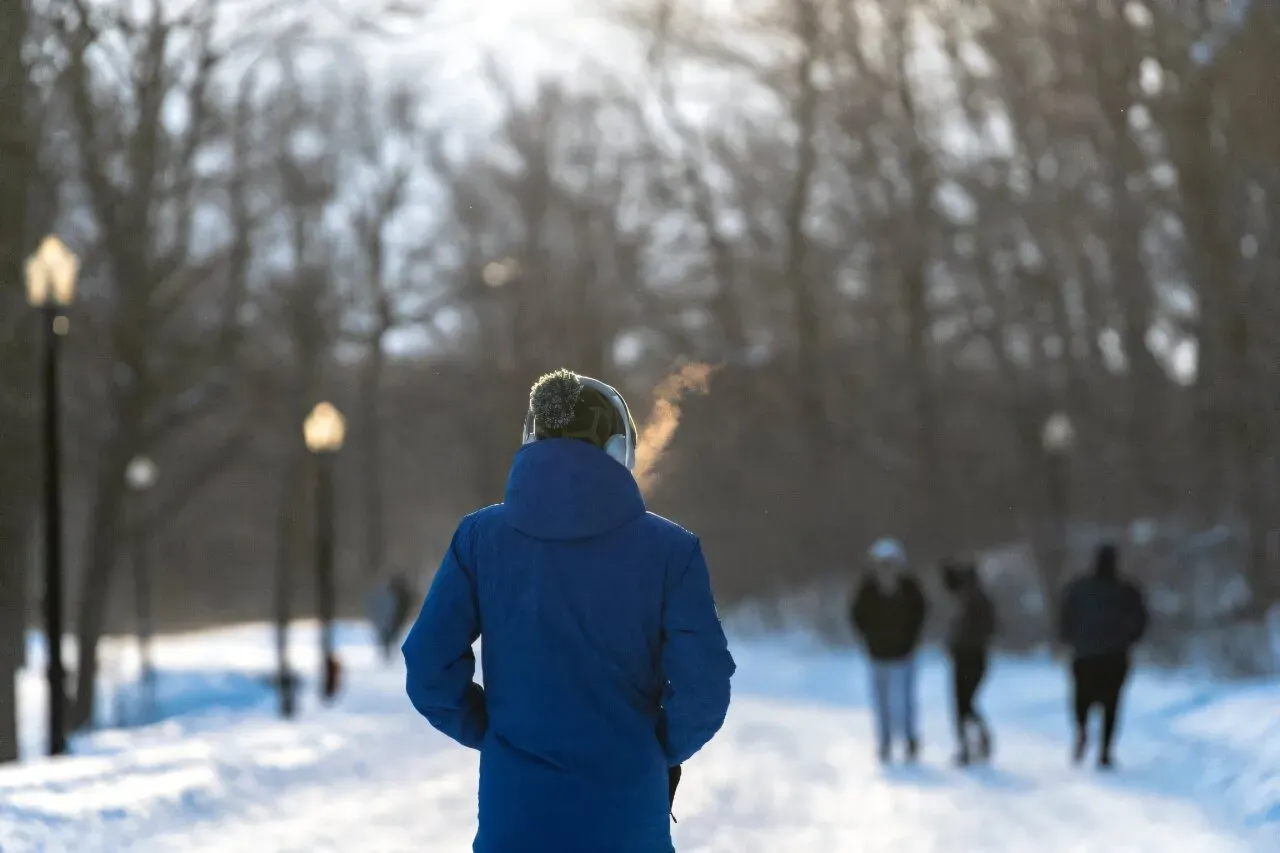
The weakening of the polar vortex raises concerns about potential cold snaps across the Northern Hemisphere.
The weakening of the polar vortex has significant implications for global weather patterns, particularly in densely populated regions of the Northern Hemisphere.
This phenomenon occurs when the west-to-east winds that typically maintain the vortex's structure weaken or even reverse direction, causing it to split apart and potentially spill southward into areas with high population density.
Experts warn that this development increases the likelihood of cold air outbreaks across major population centers in the US, Europe, and East Asia, putting millions of people at risk from harsh weather conditions.
The strong El Niño event currently underway in the Pacific may be amplifying atmospheric waves that contribute to the disruption, but its exact role is still uncertain.
A spokesperson for Britain's Met Office noted that this year's early disruption is likely linked to the exceptionally strong El Niño pattern, while another expert suggested a record-breaking high-pressure system over Scandinavia and northwestern Russia could also be a contributing factor.
The early disruption of the polar vortex is expected to lead to unpredictable cold snaps, and experts are still unsure about their severity.
Air temperatures over regions like Siberia or the Arctic are not as low as they typically would be at this time of year, which might result in less severe outbreaks, according to an expert. However, the situation is being described as "exceptional" but not necessarily cause for concern.
The influence of El Niño could also play a role in moderating the impacts of the disruption. While it tends to bring milder winters, its effects are still uncertain and may either mitigate or exacerbate the consequences.
Climate change might be contributing to the situation, although this is purely speculative and has yet to be confirmed by research. The contrast between rapidly warming Scandinavia due to sea ice loss and cooling East Asia due to increased snowfall could be amplifying temperature differences across Eurasia, making the polar vortex more susceptible to disruption.
Facts based on reporting originally published by Phys.org.
You may republish this story, in full or in part, if you credit News Central Site and link to it (licence CC BY 4.0). Photos are not included.