China's export numbers soar by 36.3% in September
China's customs agency reported a significant increase in exports, driven by high-tech goods such as semiconductors and autos.
China's export numbers are soaring, according to its customs agency, which reported a 36.3% increase in September compared to the same period last year.
This substantial growth in exports has brought China on track to exceed its record trade surplus from last year, a feat that is likely to put pressure on its trading partners to rebalance trade. The European Union and other countries have been pushing for a more balanced trade relationship with China, but the latest export numbers suggest this might be an uphill battle.
The surge in exports was driven by high-tech goods such as semiconductors and autos, which have seen significant increases in shipments overseas. This trend is expected to continue, with many economists predicting that China's trade surplus will surpass last year's record of $1.2 trillion.
For the first nine months of this year, China's trade surplus has reached a staggering $938 billion, fueled by strong exports and a relatively slower growth in imports. The latest import numbers show a 31% increase from September last year, which is slightly lower than the export growth rate but still significant.
The resilience of China's exports has been a key driver of its overall economic growth this year, particularly during a time when domestic consumption and investment have remained sluggish due to a prolonged downturn in the real estate sector.
China's trade surplus has been a major contributor to its economic growth this year, but the country is facing increasing pressure from its trading partners to rebalance its trade relationships. The US has launched an investigation into China's excess industrial capacity, which some experts believe could lead to further tariffs and trade restrictions.
The European Union (EU) is also struggling to reduce its massive trade deficit with China. According to recent figures, the EU's daily trade deficit with China exceeds $1.1 billion. This has put pressure on EU policymakers to reach a deal with Beijing that would help rebalance their trade relationship.
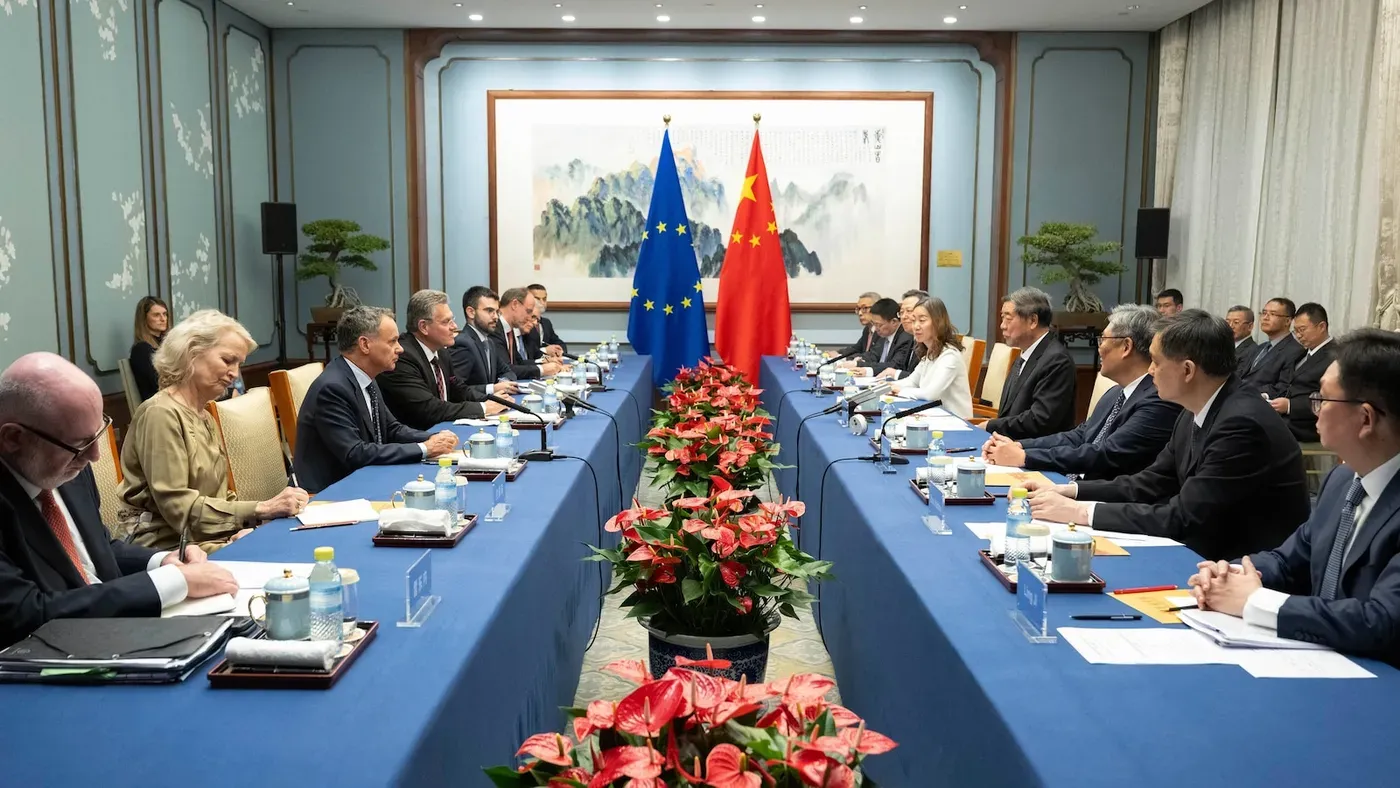
Following a visit to Beijing last week, EU Trade Chief Maroš Šefčovič announced that an agreement had been reached with China to reduce Chinese hybrid car imports into the EU over the next few years. This move is seen as a step towards reducing the EU's significant trade deficit with China.
Many of China's trading partners are concerned about their manufacturing industries being overwhelmed by cheap Chinese exports, said Eswar Prasad, an expert in economics and trade policy at Cornell University. He noted that weak growth prospects in these countries are exacerbating this problem.
The value of China's currency, the yuan, has been steadily declining against major currencies like the US dollar. This makes Chinese exports cheaper for foreign buyers, further contributing to trade imbalances. However, Beijing insists that its trade growth is driven by industrial competitiveness rather than currency devaluation.
China's trade surplus has reached a staggering $938 billion for the first nine months of the year, putting pressure on Beijing to rebalance its economy. This massive trade surplus is largely driven by China's reliance on high-tech exports, which could be threatened by growing concerns over artificial intelligence.
Some prominent U.S. technology industry leaders have called for a slowdown in AI development due to safety reasons, which could potentially harm China's export growth more than any trade restrictions imposed by other countries. Max Zenglein, Asia Pacific senior economist at The Conference Board, agrees that a global slowdown in AI investment could be more detrimental to China's exports.
As China sets its sights on an annual economic expansion target of 4.5%-5% for 2026, the International Monetary Fund has revised its forecast downward by 0.1 percentage point to 4.5%. The IMF warned that China's robust exports have not been enough to offset domestic weaknesses, highlighting the need for Beijing to bolster domestic demand.
Despite recent measures aimed at boosting the economy, including subsidies for homebuyers' mortgage interest payments, analysts believe that addressing domestic demand remains a low priority for this year.
Facts based on reporting originally published by ABC News International.
You may republish this story, in full or in part, if you credit News Central Site and link to it (licence CC BY 4.0). Photos are not included.