China Expands Military Presence in Southeast Asia with New Facility in Laos
China invited counterparts from several Southeast Asian nations for talks in Beijing, marking a significant development in its efforts to expand its military presence in the region.
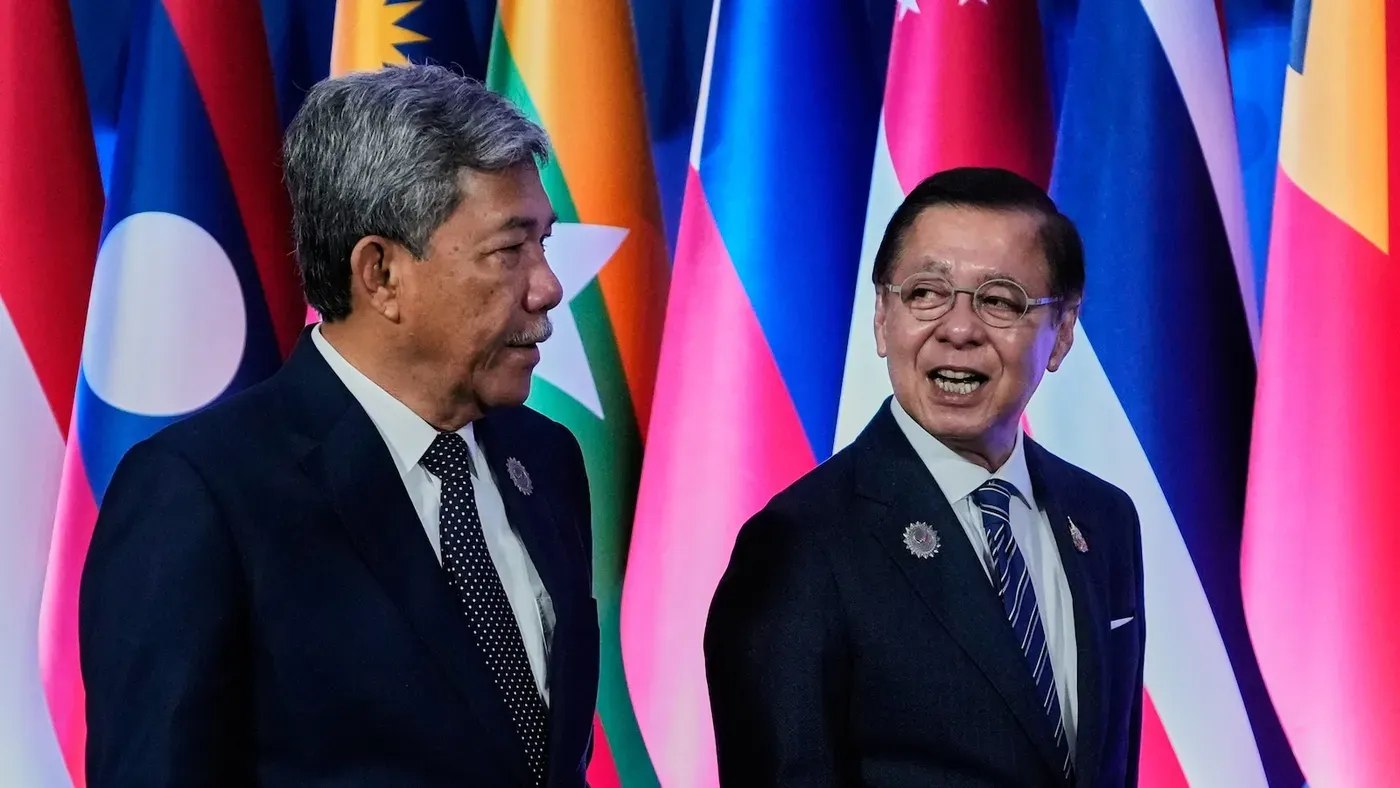
China's growing influence in Southeast Asia has been on full display in recent months, with the country making significant moves to strengthen its ties with neighboring countries. In a bid to foster closer economic and security cooperation, Foreign Minister Wang Yi invited counterparts from Laos, Cambodia, Vietnam, Thailand, and Myanmar to Beijing for talks in early November.
The meeting marked a significant development in China's efforts to expand its military presence in the region, which has been growing steadily over the past year. The country's increasing focus on military cooperation with Southeast Asian nations has raised eyebrows, particularly given its recent military buildup at key locations across the region.
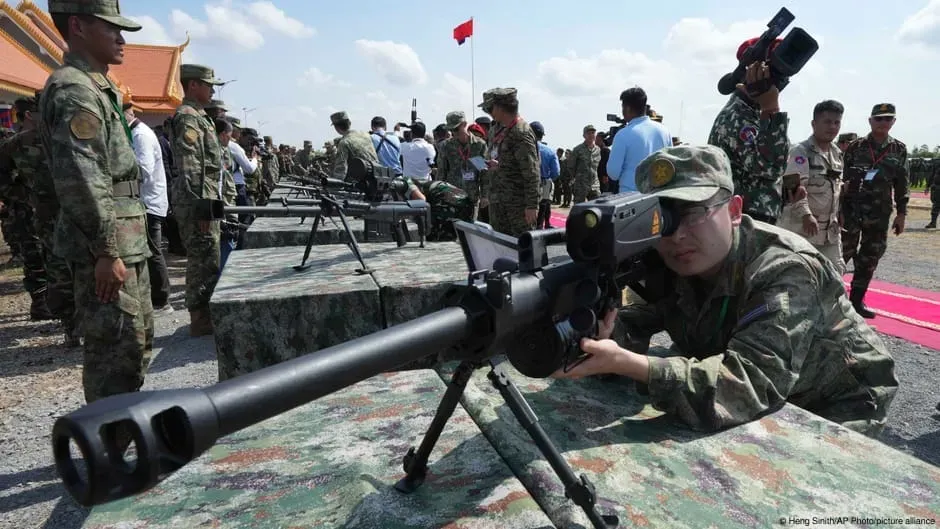
In September, China and Laos officially opened a joint military support and training center north of Vientiane, the Laotian capital. According to Chinese officials, the center will initially provide training facilities for Laotian air force pilots at the Ban Keun airfield.
The expansion of China's military presence in Southeast Asia is also evident at Cambodia's Ream naval base on the Gulf of Thailand. In 2025, China increased its footprint at the facility, which it uses for logistics and training purposes.
The recent construction of a new facility in Laos is being closely watched by observers for its implications on China's military presence in Southeast Asia. According to experts, this development could significantly enhance China's access to the region and potentially provide it with strategic depth.
Bünte, a professor at the University Erlangen Nuremberg in Germany, notes that Laos and Cambodia have long been close military partners of China, suggesting that the new facility is part of an ongoing effort to deepen cooperation between these nations. The China-Laos railway and other infrastructure projects have already strengthened economic ties between the two countries.
The construction of this facility has also raised concerns about China's growing influence in the region. Some experts warn that China's increasing presence could lead to a shift in the balance of power in Southeast Asia, potentially giving it better access to the South China Sea.
Fuhrmann, head of the Konrad Adenauer Foundation's Beijing office, emphasizes the need for careful distinction between training Laotian pilots and any potential use of the facilities by Chinese armed forces. He argues that China gains significant influence when it has a say in designing and operating such facilities over an extended period.
Laos' limited air force capabilities are a stark contrast to China's military might in the region.
The country's airbase at Ban Keun is home to just three light combat aircraft from Russia's Yakovlev works, with four more K-8s, Chinese two-seat intermediate jet trainers and light attack aircraft, reportedly stationed there. Satellite images analyzed by the Reuters news agency show eight K-8s at the base, but it's unclear whether they are permanently stationed or simply passing through.
Experts warn against jumping to conclusions about China's intentions based on these developments. "The idea of a Chinese air corridor is more of a future scenario than something that has already been proven," says one expert, cautioning against reading too much into the presence of Chinese aircraft in Laos.
China's military positioning in Southeast Asia is being closely watched by observers who note that the country's influence grows with each new facility it builds and operates over an extended period.
China's involvement in Southeast Asia is prompting varying reactions from surrounding countries, each with their own set of priorities and diplomatic considerations. In some nations, such as Laos and Cambodia, China's influence is already established, making them more inclined to welcome further engagement.
In contrast, other Southeast Asian nations are exercising caution, seeking to balance their relationships with both China and the US while maintaining economic ties with Western countries. This delicate balancing act allows them to explore options without alienating any of their key partners.
According to experts, these smaller Asian nations aim to keep as many doors open as possible in order to maximize their flexibility in an increasingly complex geopolitical landscape. By doing so, they can potentially capitalize on the opportunities presented by China's growing presence without sacrificing other important relationships.
The differing approaches of Southeast Asian countries are being closely watched by Vietnam and the Philippines, both of which have long-standing territorial disputes with China in the South China Sea.
Vietnam's government recently clarified that any military cooperation must contribute to regional peace and stability, referencing the ASEAN Treaty. This stance comes as China continues to expand its presence in Southeast Asia through infrastructure projects in Laos and Cambodia.
China's activities have raised concerns among Western nations, which are urging them to strengthen their partnerships with smaller countries in the region. Experts believe that individual steps taken by China may eventually lead to a broader military alliance if not addressed.
The expansion of China's military presence in Southeast Asia has significant implications for regional dynamics and global security. To counterbalance this influence, Western nations must make tangible contributions to support the interests of smaller countries in the area.
Facts based on reporting originally published by DW English.
You may republish this story, in full or in part, if you credit News Central Site and link to it (licence CC BY 4.0). Photos are not included.