Chemical fingerprints shed new light on origins of azurite mineral used by Ancestral Pueblo people
A study led by Assistant Professor Kari Schleher aimed to determine the geological sources of azurite, a copper-based mineral prized for its bright blue color.
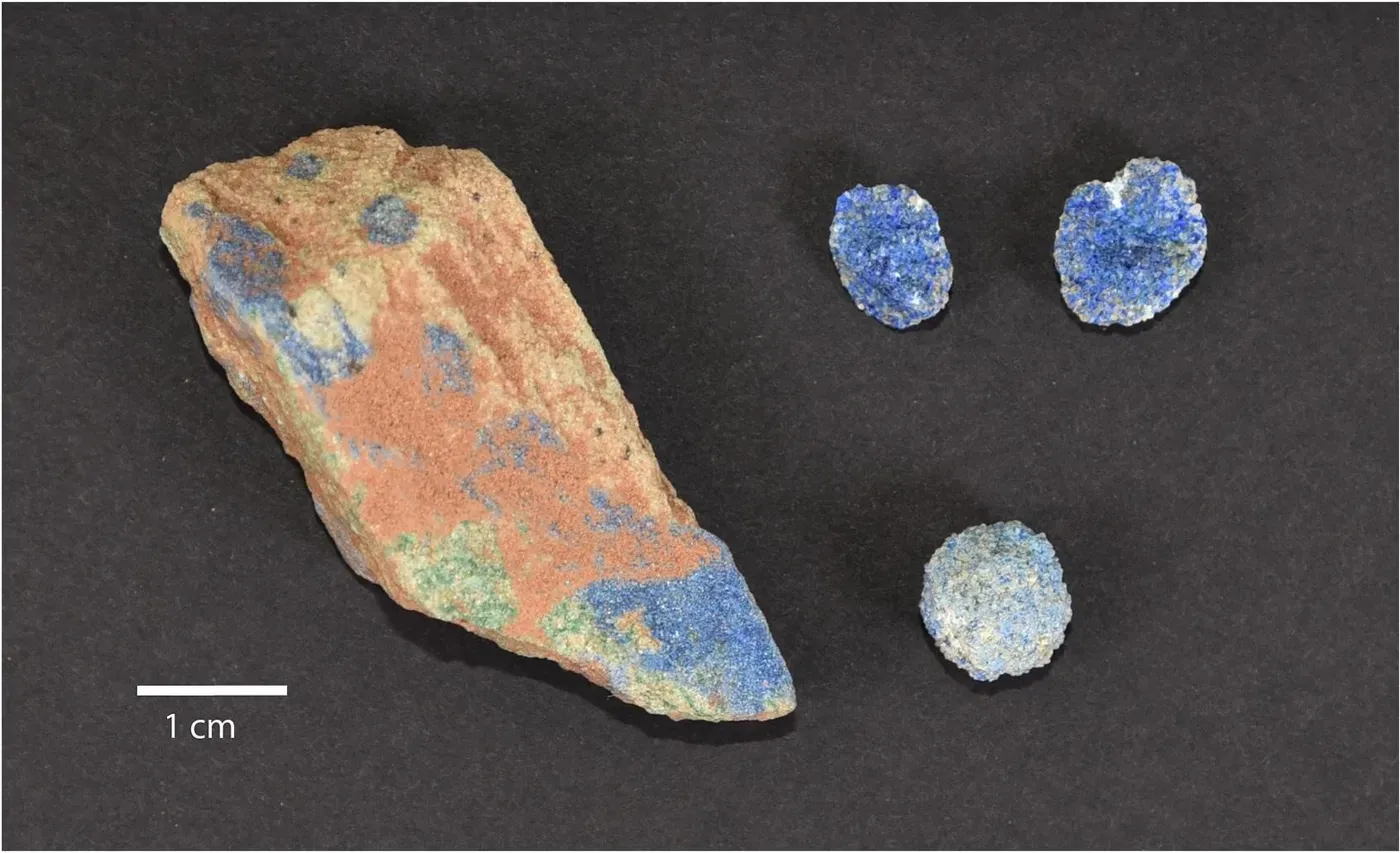
Chemical fingerprints have shed new light on the origins of a vibrant blue mineral used by the ancient Ancestral Pueblo people in their crafts.
The study, conducted by Assistant Professor Kari Schleher and her team from the University of New Mexico, aimed to determine the geological sources of azurite, a copper-based mineral that was highly prized for its bright blue color.
Schleher's research collaboration with Alyson Thibodeau from Dickinson College, Ryan Mathur from Juniata College, and Jonathan Till from the Edge of Cedars State Park Museum brought together diverse expertise in archaeology, geochemistry, and museum curation.
The team developed a novel approach to linking archaeological azurite specimens to their geological origins using chemical fingerprints. This innovative method combines traditional archaeological analysis with advanced geochemical techniques.
Schleher's research focuses on the pre-Columbian cultures of the US Southwest, particularly the Four Corners region, where she has worked extensively on pottery and collaborated with local communities.
Researchers are working to uncover the origins of ancient Pueblo communities' use of azurite as a pigment or paint in their daily lives.
Schleher's team aimed to determine how far these communities were traveling to obtain or exchange raw materials by developing a method to analyze the geological sources of archaeological azurite samples. This approach could provide new insights into how Ancestral Pueblo people utilized resources and moved across their territory.
The researchers obtained azurite samples from two key geological locations in New Mexico and Utah, both with evidence of past mining by Ancestral Pueblo communities. They collaborated with other archaeologists specializing in the Southwest to identify 12 archaeological azurite specimens from the Four Corners region that could be compared with samples from these geological source locations.
These comparisons were made possible through isotopic analyses of lead, strontium, and copper, which have been used successfully in prior research on other blue-green minerals such as turquoise. This analytical technique allowed the team to investigate the origin of the archaeological azurite specimens.
The team's findings revealed that isotopic measurements can accurately determine an azurite sample's original source location. By applying this method to their samples, they were able to pinpoint the origins of most of the azurite used by ancient Pueblo communities in Lisbon Valley, near present-day Moab, Utah.
Additionally, two of the archaeological specimens were found to have originated from a different geological site, the Zuni Mountains of New Mexico.
Excitement filled the air when researchers confirmed that their analysis could pinpoint the origin of azurite samples from ancient Pueblo sites.
This breakthrough discovery revealed a fascinating aspect of Ancestral Pueblo communities' lives - they traveled long distances to mine raw materials. The evidence suggests that by around A.D. 600, these communities were using azurite from two distinct locations: modern-day New Mexico and central Utah.
The study's findings highlighted the importance of lead and strontium isotopes in tracing the geological source of archaeological azurite. Surprisingly, copper isotopes proved ineffective in distinguishing between azurite specimens from different sources in this particular research.
Schleher and Thibodeau plan to build on their discovery by testing more samples to increase the sample size and expand their database of azurite sources. This expansion will enable them to compare archaeological samples with a wider range of geological samples, potentially uncovering even more insights into the lives of Ancestral Pueblo communities.
The researchers have also reached out to the New Mexico Mining Museum in an effort to acquire additional azurite samples from various geologic source locations. These new samples will provide valuable data points for comparison and further analysis, allowing the team to refine their understanding of the ancient trade routes and mining practices of Ancestral Pueblo communities.
The research team is looking forward to collaborating with tribal communities in the Southwest to learn more about their interests and priorities for future studies on azurite.
This collaboration could lead to a deeper understanding of the traditional territories and mining practices of Ancestral Pueblo communities by combining chemical analysis with oral histories. The researchers hope that this approach will provide valuable insights into the past, highlighting the long-term use of specific mines and the extent of ancestral territories.
The study's findings have significant implications for our understanding of ancient trade routes and mineral sourcing in the region, and further research is expected to shed more light on these important aspects of Ancestral Pueblo culture.
Facts based on reporting originally published by Phys.org.
You may republish this story, in full or in part, if you credit News Central Site and link to it (licence CC BY 4.0). Photos are not included.