California Condors Make Comeback After Decades of Conservation Efforts
A recent conservation success offers valuable lessons for the upcoming global biodiversity treaty negotiations.
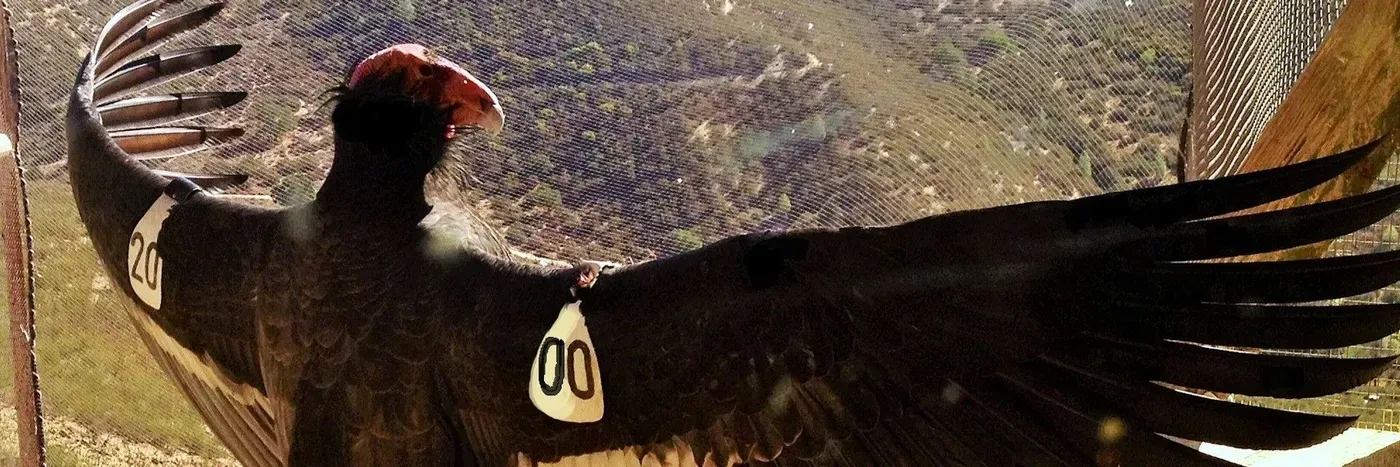
A global biodiversity treaty is set to be negotiated next year, and a recent conservation success offers valuable lessons for this ambitious undertaking. The California condor, once on the brink of extinction, has made a remarkable comeback after decades of captive breeding and reintroduction efforts.
More than 300 of these majestic birds have been restored to their natural habitat, but their recovery was not without controversy. Conservationists disagreed over the ethics of trapping every remaining bird, with some viewing it as a rescue effort while others saw it as a surrender. The decision sparked heated debates among stakeholders, including rural communities and hunting groups.
Critics also argued that the funds spent on condor conservation could have been better allocated to other threatened species. Hunting groups, such as the National Rifle Association, opposed bans on lead ammunition, which was identified as a leading cause of condor deaths. These disputes highlight the complex issues surrounding species conservation and the need for careful decision-making.
The California condor's story is set to feature prominently at the upcoming U.N. Convention on Biological Diversity conference in Yerevan, Armenia, next year. The event will bring together governments and conservation organizations to discuss pressing questions, including which species should be prioritized for funding and who bears the costs of conservation efforts.
As nations prepare to negotiate a global biodiversity treaty, they would do well to draw lessons from the condor's remarkable recovery. By examining the challenges faced by this iconic species, policymakers can better understand the complexities involved in species conservation and make more informed decisions about how to allocate resources.
The implementation of the Kunming-Montreal Global Biodiversity Framework has sparked debate about who should have a say in determining which species are prioritized for conservation efforts.
When it comes to saving a species like the California condor, local communities and businesses often find themselves at odds with the conservation goals. Their activities may be contributing to the decline of the species, yet they are frequently left out of discussions about recovery efforts.
The framework's rules aim to shape national conservation priorities and guide funding for conservation initiatives. However, this can create tension between those who prioritize species-level conservation and local stakeholders whose livelihoods may be impacted by protection measures.
As the world struggles to meet its biodiversity targets, conservationists must make difficult decisions about how to allocate limited resources. Should they focus on rescuing a single species on the brink of extinction or invest in interventions that could benefit multiple species simultaneously?
The value that species bring to humanity is a key factor in conservation efforts. Some species, like honeybees, contribute significantly to agriculture by pollinating crops, which can be worth billions of dollars annually. In addition, certain species hold cultural and spiritual importance for indigenous communities, such as the California condor's significance to the Yurok Tribe.
The idea that living species have an inherent right to exist regardless of their utility to humans is a concept widely debated among conservationists. This perspective argues that species should be protected based on their intrinsic value rather than solely on their ability to benefit human interests.
Species with charismatic appeal often receive more support for conservation efforts, making it easier to secure funding and resources. Campaigns like Greenpeace's "save the whales initiative or the World Wildlife Fund's panda logo leverage the public's emotional connection to certain species to raise awareness and funds for their protection.
This approach can have a broader impact on conservation, as protecting charismatic species can also safeguard their habitats and indirectly benefit other species living within those ecosystems. The financial support generated by campaigns like these can be substantial, potentially leading to more effective conservation outcomes.
A recent study analyzed data from over 14,000 species-focused conservation projects between 1992 and 2016, revealing a significant disparity in funding distribution. A small group of mammal species, including primates, carnivores, whales, elephants, and rhinos, received the majority of available funds, despite accounting for only one-third of threatened mammal projects.
The allocation of funds for conservation efforts is a pressing concern, with estimates suggesting that an additional $1.3 trillion annually is needed to stem biodiversity loss worldwide.
In addition to financial considerations, another crucial issue will be addressed at the 2026 biodiversity conference: how to balance conservation goals with local community needs when their interests conflict.
For instance, in Europe, the reintroduction of wolves over the past two decades has been hailed as a success story. However, some farmers have had to bear the costs of protecting their livestock from these predators, highlighting the need for more inclusive decision-making processes.
The Ngorongoro Conservation Area in Tanzania is another case in point, where the Maasai community has long resisted government-ordered evictions in the name of lion conservation. The recent recommendations by two presidential commissions to continue the evictions have been met with concerns from Indigenous peoples' advocates.
A more inclusive approach to decision-making may be on the horizon, as countries have established a permanent advisory body to incorporate local communities' knowledge and perspectives into the treaty's decisions.
The agreement on how the permanent advisory body will function must be finalized at this year's conference, known as COP17. This includes determining whether local communities have a formal role in decision-making processes. Guidelines for applying global conservation targets to Indigenous territories are also expected to be adopted.
The international treaty sets national conservation priorities and guides funding for conservation efforts, making its rules crucial on the ground. The debate over local consultation is central to the 2026 talks because effective conservation relies on building trust with local communities.
Indigenous peoples and local communities want a say in decisions affecting their territories, including how conservation programs are designed and resources allocated. Two key issues at the conference focus on guaranteeing community involvement in these areas.
A whole-of-society" approach to protecting nature is called for by the global biodiversity framework, recognizing that government action alone is insufficient. However, participation does not necessarily equate to decision-making power.
The treatment of Indigenous communities during conservation efforts has been criticized, with some arguing they are often consulted after priorities have been set rather than being involved in setting them. This raises questions about the authenticity of consultation when local input only comes after project approval.
The recovery of the California condor serves as a valuable lesson in species conservation efforts. While the birds' return to near-extinction levels is a remarkable achievement, their survival also relies on preserving the environmental conditions that support them.
Protecting these conditions requires more than just saving the species; it also means safeguarding the ecosystems and human communities that depend on them for sustainability.
Facts based on reporting originally published by Phys.org.
You may republish this story, in full or in part, if you credit News Central Site and link to it (licence CC BY 4.0). Photos are not included.