Bayeux Tapestry's Preservation Raises Questions About Artistic Integrity
The Bayeux Tapestry, a medieval art piece on display at the British Museum, has sparked discussions about its preservation and historical integrity.
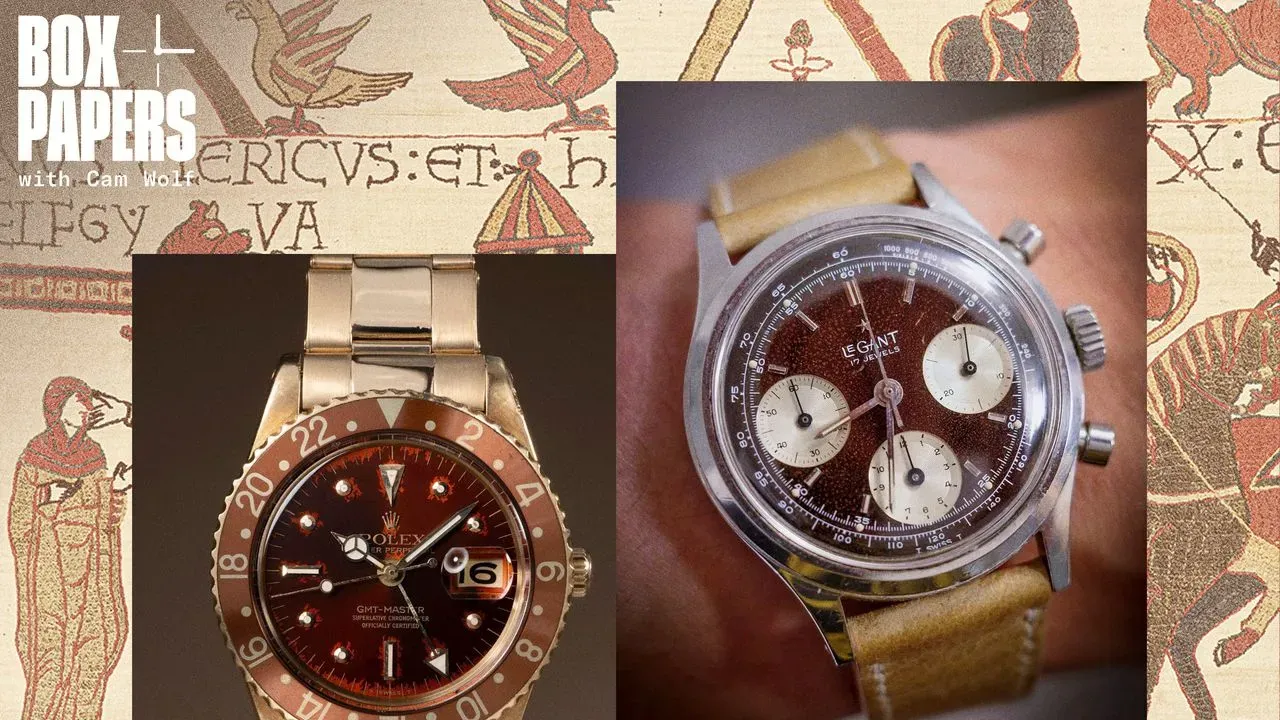
A special edition of our newsletter explores the intersection of art and timekeeping, focusing on watches as a form of artistic expression.
The world of horology has long been fascinated by the concept of capturing time in a tangible way, much like the Bayeux Tapestry's depiction of historical events. The 900-year-old tapestry, currently on display at the British Museum, is an impressive example of medieval artistry and storytelling. Its intricate panels illustrate the 1066 invasion of England with vivid detail, showcasing both the brutality and grandeur of the event.
The tapestry's age and craftsmanship have sparked a range of reactions, from awe to skepticism. Some see it as a masterpiece of historical preservation, while others view it as a relic of a bygone era. The way the tapestry has been preserved and presented is also worthy of note, with many experts arguing that conservation efforts in the past have altered its original appearance.
A closer examination of the tapestry reveals the complex history surrounding art and conservation. In the 19th century, conservationists sought to restore old artworks to their perceived former glory, often removing or altering original elements in the process. This approach has been criticized for being overly zealous, with some arguing that it compromises the artwork's historical integrity.
The parallels between the Bayeux Tapestry and the world of watches are intriguing, with both involving a deep connection to time and history. As we delve deeper into this special edition, we'll explore how watches have become a canvas for artistic expression, blurring the lines between functionality and artistry.
Vintage watches are highly prized for their unique patina, which develops over time due to exposure to sunlight and oxidation.
The golden stain that results from this process has become a highly sought-after feature among collectors, who are willing to pay a premium for these timepieces.
In fact, auction houses and dealers have had to be cautious about selling watches with artificially aged dials, as the demand for genuine patina is so high.
This phenomenon is reminiscent of the debates that took place in the 19th century among art critics, such as John Ruskin, who believed that artworks should not be restored or altered over time.
For watch enthusiasts, a "tropical dial refers to the brown hue that develops on certain vintage watches due to age and exposure to sunlight.
The concept of a tropical dial has been debated among watch enthusiasts, who initially suspected that these brown-hued timepieces had been artificially modified.
This theory was first discussed on online forums before the term gained widespread acceptance in the watch community.
William Massena, founder of Massena Lab, recalled that he and his fellow forum regulars thought the brown-dial watches might be altered, but later realized it was a natural effect of aging.
The descriptor tropical" is often associated with vintage watches that have developed this distinctive coloration over time due to exposure to sunlight.
In some cases, the random effects of oxidation can transform a mass-produced watch into a unique piece of art.
A similar phenomenon can be observed in other artifacts, such as the Bayeux Tapestry, which has been found to have numerous stains, wrinkles, holes, and tears.
The tapestry's condition is not seen as detracting from its value or artistic merit, but rather as evidence of its age and history.
This perspective on aging as a desirable quality can be applied to watches, allowing them to transcend their mass-produced origins and take on the characteristics of individual works of art.
The environment itself can be considered the artist behind these transformations, much like an avant-garde artist might see the natural world as their canvas.
Marco's fascination with watches began 12 years ago when his coworker at Apple wore one to lunch, featuring a unique dial that caught his eye.
He was determined to own one like it and started scouring eBay auctions, eventually striking a deal with an Italian dealer for the watch now in his collection after a decade of searching.
A glance through Marco's Instagram account reveals that nearly every watch in his collection shares this distinctive chocolate-brown hue on its dial.
For Marco, good aging is defined by authenticity, with natural wear and tear being perfectly acceptable but any artificial enhancement or tampering deemed unacceptable.
Not everyone shares the same opinion when it comes to tropical dials, as one person's damaged watch can be another's prized collector's item.
The art world has long blurred the lines between creativity and commerce, but a new series from artist Dax Martin takes this concept to a whole new level. His latest creations are wearable art pieces that resemble Brutalist sculptures more than traditional timepieces.
These unconventional watches borrow elements from modern technology, such as circuit boards from Apple TV devices, and combine them with raw materials like concrete and metal. The result is a unique fusion of form and function that challenges the conventional notion of what constitutes a watch.
Martin's artistic vision is driven by his desire to experiment with design possibilities, pushing the boundaries of what can be achieved with technology and raw materials. He envisions a range of styles, from sleek and elegant to completely unhinged and impractical designs.
The artist plans to produce small quantities of these pieces and sell them through platforms like Kickstarter, which would bring an unconventional vibe to the watch market. Interestingly, some collectors have already expressed interest in acquiring Martin's wearable art pieces.
Martin's work raises questions about the nature of art and its relationship with commerce. When does a watch stop being a functional timepiece and become a piece of art? This query is particularly relevant when considering his latest creations, which blur the lines between technology and sculpture.
The fact that some collectors are willing to acquire these unconventional watches suggests that there may be a market for them. However, it remains to be seen whether Martin's wearable art pieces will find a place in the world of high-end watch collecting or if they will forge their own path as unique collector's items.
The notion of watches as art continues to spark debate among collectors and enthusiasts. Some argue that a watch's value lies not just in its functionality but also in its aesthetic appeal and craftsmanship. This perspective is echoed by artists who see potential for watches to be transformed into wearable works of art.
Michael McGregor, a Los Angeles-based artist, has been exploring this concept through his reinterpretations of famous timepieces. His renderings of iconic models like the Rolex Daytona and Cartier Crash showcase the beauty and character of these mass-produced items. By reimagining them as art pieces, McGregor highlights their potential for appreciation beyond mere utility.
While some may see watches as purely functional objects, others recognize the emotional value they hold. Kozubek, a collector, speaks fondly of his tropical-dial pieces, noting that their evolution and degradation over time mirror the human experience. He sees these dials as symbols of our own finite journey through life, marked by moments of beauty and impermanence.
Ultimately, whether or not watches qualify as art is a matter of personal interpretation. As McGregor's reinterpretations demonstrate, there is indeed a blurred line between functionality and aesthetics in the world of timepieces.
Facts based on reporting originally published by GQ.
You may republish this story, in full or in part, if you credit News Central Site and link to it (licence CC BY 4.0). Photos are not included.