Ancient Roman settlement yields rare leprosy strain discovery
Archaeologists have identified a rare strain of leprosy in one man's remains at an ancient Roman settlement in northwestern Germany, suggesting he may have traveled extensively throughout the Roman Empire.
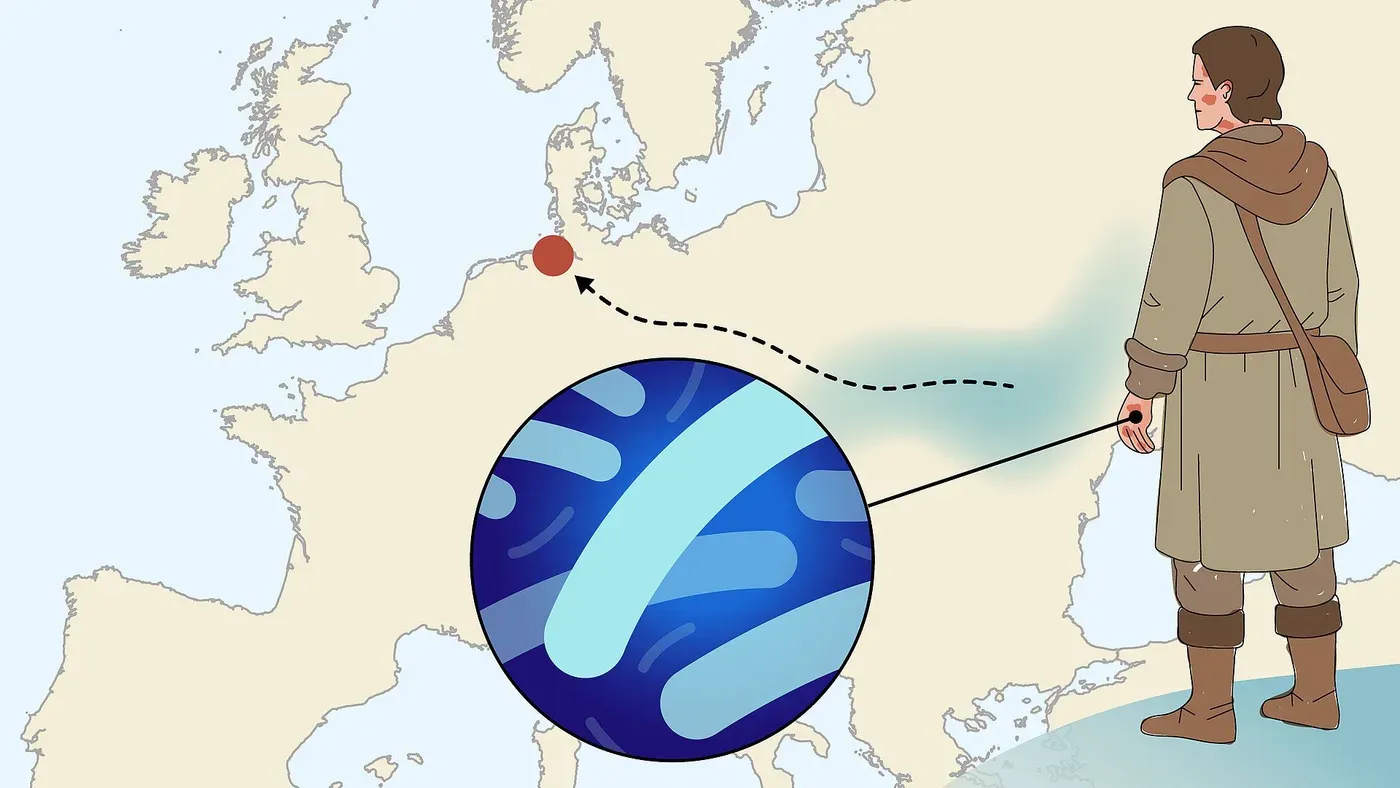
Archaeologists have made an intriguing discovery while analyzing the remains of individuals buried at an ancient Roman settlement in northwestern Germany. A team of researchers has identified a rare strain of leprosy in one man's remains, which is significant because this particular type of bacteria had not been found in Europe before.
The presence of this specific strain suggests that the individual may have traveled extensively throughout the Roman Empire and interacted with people from various regions. This inference is based on the fact that the rare strain of leprosy is typically associated with different parts of the world, implying that the man's exposure to it was likely acquired during his travels.
The man in question was buried in a wooden boat surrounded by unusual objects, indicating a high social status. This unique burial site provides valuable insights into the life and position of the individual within ancient Roman society.
Further analysis of the genomes of individuals buried at the coastal settlement of Fallward has provided significant information about the lives of people living there nearly 1,600 years ago. The study's findings have shed light on the daily lives and interactions of these ancient inhabitants, offering a glimpse into their social structures and cultural practices.
The oak boat used for burial was a significant structure, measuring over 13 feet in length and sealed with a roof-like design. This unique vessel provides valuable insights into the funerary practices of ancient inhabitants.
His grave goods included an intricately carved alder wood chair or throne, a bronze basin, a maple stool adorned with a hunting scene and runic inscription, and a small box shaped like a water bird. These items suggest that the deceased was someone of importance.
The combination of maritime artifacts and robust upper arm bones implies that the man may have been a fisherman or boatman in his lifetime. This profession would have required significant physical strength and endurance.
A study co-author, Hauke Jöns, noted that the grave goods were particularly noteworthy due to their unique design and cultural significance.
The analysis of the DNA extracted from the burial site revealed that the individual had originated from the Danube region. This information was confirmed by genetic studies conducted by researchers at the Institute for Molecular Biology (IKMB). The results suggest that the man's ancestry is tied to a specific geographic location, providing valuable insight into his past.
Further examination of the remains uncovered evidence of the bacterium M.leprae in one of the teeth and a foot bone. This discovery allowed the researchers to identify the strain of leprosy that had infected the individual. The strain, C., was found to be particularly rare in Central and Northern Europe, making this finding significant.
Interestingly, despite being infected with leprosy, there were no visible signs of lesions on the man's skeleton. Leprosy typically affects the nerves and skin, and can eventually cause damage to bones, particularly those in the face, hands, and feet. However, in this case, the disease did not seem to have progressed beyond its initial stages.
Leprosy is a chronic condition that requires ongoing medical attention. The researchers noted that their findings highlight the unique characteristics of the strain involved in this particular case, which has never been detected before in this region.
The unique characteristics of the strain involved in this case have shed new light on the man's life and death. The researchers suggest that he may have been a high-status individual who was honored with an alder-wood "throne" in his burial, indicating a strong connection to the community.
The presence of a Roman belt among the grave goods also suggests that northwest Germany had long-distance connections in Europe even after the fall of the Roman Empire. This is further supported by the fact that the man's skeleton and burial site indicate a high level of wealth and status.
Despite being infected with a rare strain of leprosy, the man's remains suggest that he lived a relatively comfortable life, possibly as a retired mercenary or member of the local community. The findings provide valuable insights into the history of northwest Germany during this period.
Facts based on reporting originally published by Live Science.
You may republish this story, in full or in part, if you credit News Central Site and link to it (licence CC BY 4.0). Photos are not included.