World's First Human Spinal Cord Transplant Performed in Russia
A groundbreaking medical procedure has been carried out in Russia, marking the world's first human spinal cord transplant.
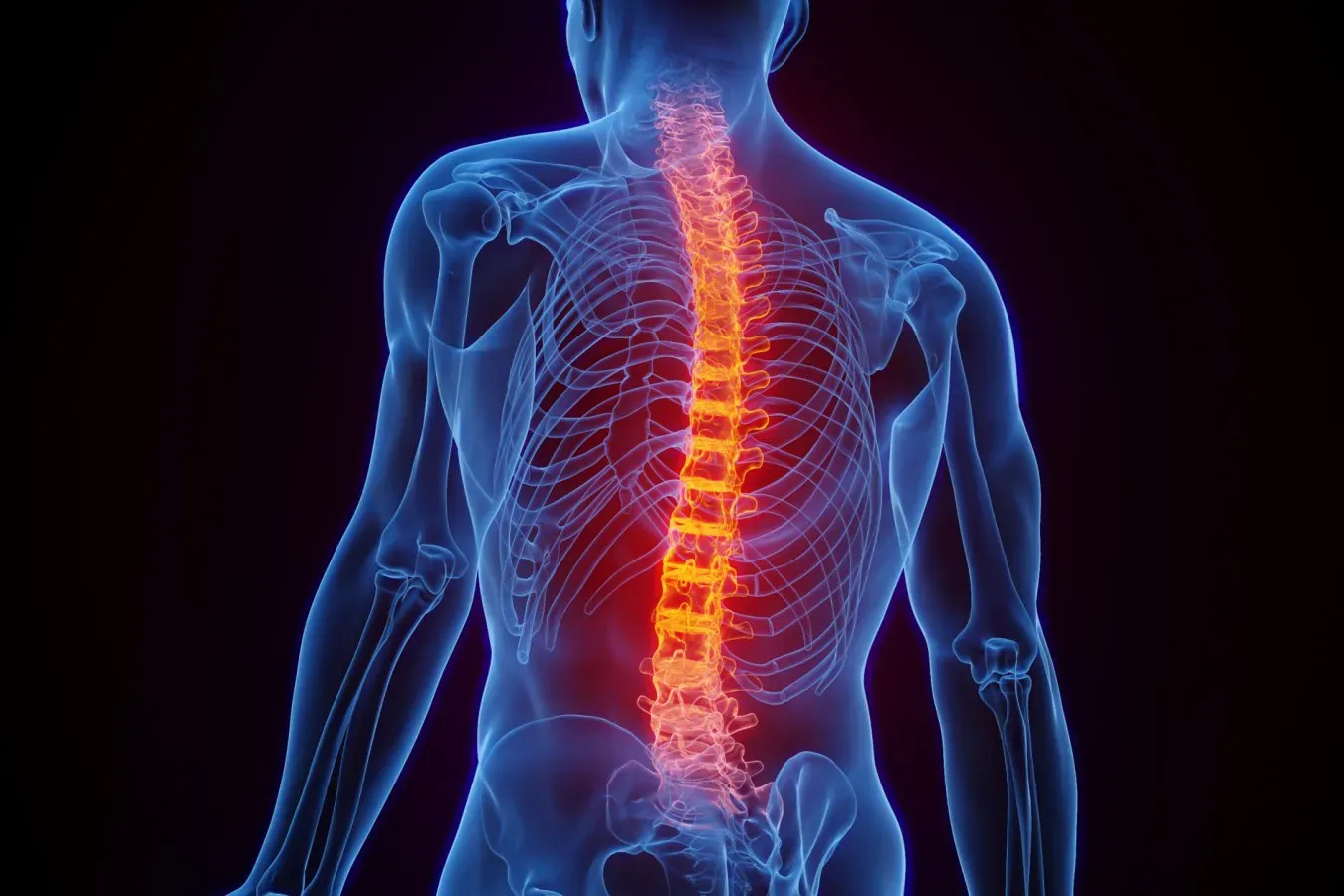
A groundbreaking medical procedure has been carried out in Russia, marking the world's first human spinal cord transplant. The operation involved removing a damaged section of the patient's spinal cord and replacing it with a segment from a brain-dead donor.
The recipient had suffered a complete spinal cord injury three years prior to the surgery, resulting in paralysis below the site of the injury. This type of injury typically causes loss of physical sensation as well as mobility issues.
The transplant was performed using microsurgical techniques and a special "biological glue called polyethylene glycol (PEG) to fuse the donor segment to the recipient's spinal cord. The surgery took place at the Sklifosovsky Institute for Emergency Medicine in Moscow, led by Dr Xiaoping Ren from China.
Dr Ren reports that the recipient is currently doing well following the operation, although more time will be needed to assess its long-term success. However, not all experts are convinced of the procedure's potential, with some expressing concerns about its efficacy and potential risks.
The Russian medical team responsible for the procedure is keeping a close eye on the patient's condition, which has been deemed good so far. Ren, one of the lead researchers involved in the project, has assured that all potential risks and outcomes have been thoroughly explained to the patient. The operation marks a significant breakthrough in the field of spinal cord injury treatment, with many experts hailing it as a major advancement.
Sergio Canavero, a renowned expert in the field, has described the procedure as a Sputnik moment for spinal cord injuries. He has previously collaborated with Ren on research papers exploring the potential benefits of spinal cord transplants. However, not everyone shares his optimism. Some experts have raised concerns about the potential risks and outcomes of the operation.
One such expert is Melissa Andrews from the University of Southampton, who has expressed reservations about the patient's safety following the procedure. She believes that the individual may suffer significant harm due to the substantial nature of the surgery, with limited benefits to show for it. Additionally, she warns of a high risk of infection associated with the operation.
The challenge in treating spinal cord injuries lies in re-establishing communication between the brain and neural circuits below the injury site. Spinal cord cells do not have the ability to divide or regrow, making repair extremely difficult. The procedure developed by Ren, Canavero, and their team aims to overcome this hurdle by using a substance called PEG to fuse spinal cord fibers together, effectively bridging the gap between damaged areas.
The fusion" approach used in the transplant is based on joining nerves together, rather than generating new nerve cells or encouraging fibers to grow across a lesion. This method has been explored by researchers in various animal models, including pigs, with some promising results.
In these experiments, movement recovery was observed in mice, dogs, and pigs using this technique. However, it's essential to note that reconnecting a freshly severed spinal cord is distinct from repairing an injury that occurred years prior or integrating a donated segment of spinal cord. The complexity of the transplant procedure necessitates careful consideration of various factors.
Some research protocols involve adding drugs to reduce inflammation or support nerve health, while others employ electrical stimulation of spinal circuits to enhance recovery. However, even with these measures in place, the surgery must also address other critical aspects, such as promoting tissue healing and neutralizing molecules that inhibit nerve growth.
Andrews emphasizes that for a transplant to functionally integrate, it would require specific molecules to facilitate healing and stimulate growth between the donor tissue and the recipient's spinal cord. This involves a delicate balance of factors that support nerve regeneration and integration, without which the transplant may not achieve its full potential.
The world's first spinal cord transplant has been performed in Russia, but experts have expressed doubts about its chances of success.
Some researchers question the animal evidence that underpins this surgery, suggesting it may not be sufficient to guarantee positive outcomes. Andrew Jackson from Newcastle University in the UK agrees that there is some data showing that PEG can aid in rejoining severed spinal nerves, and he believes a transplanted segment of spinal cord tissue could provide growth factors to support nerve regeneration.
However, Jackson also notes that encouraging nerve fibre growth using stem cells has traditionally been more effective than trying to join two adult pieces of nervous system together. He hopes that supporting evidence for the surgery will be made available for peer review as soon as possible.
Facts based on reporting originally published by New Scientist.
You may republish this story, in full or in part, if you credit News Central Site and link to it (licence CC BY 4.0). Photos are not included.