Wildfires ravage through Peru's Cusco Region
Dozens of wildfires have swept across tens of thousands of acres of land in Peru's Cusco Region in recent weeks, claiming at least five lives.
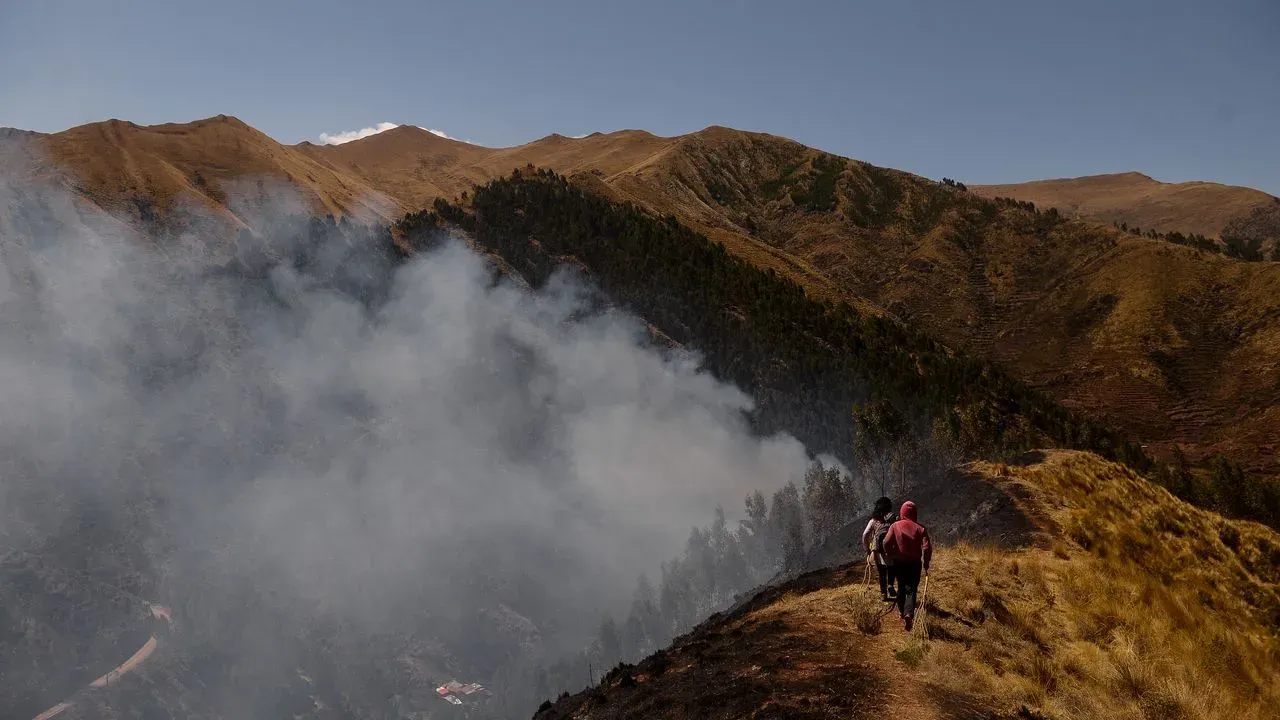
Wildfires are ravaging through Peru's Cusco Region, leaving a trail of destruction and death in their wake. In the past few weeks, dozens of wildfires have swept across tens of thousands of acres of land, claiming at least five lives.
The region has experienced regular wildfires in the past, but this year's blazes have been particularly intense and unpredictable. According to Pedro Barraza, managing director of South America at andBeyond, strong winds can cause fires to spread beyond control when farmers clear their land for planting. This has become a recurring issue in the Cusco region.
The wildfires are being fueled by higher-than-normal temperatures and drier conditions brought on by El Niño, which is expected to have a significant impact on seasonal wildfires in Peru's Andean highlands. Barraza notes that these unusual weather patterns have shifted "the timing and behavior of seasonal wildfires," making them more difficult to control than usual.
Local authorities are scrambling to contain the spreading flames, deploying firefighters, army personnel, and a specialized water plane to the affected areas. However, residents and social media users claim that the response has been slow, with many expressing concerns about the safety of tourists in the region.
The ongoing wildfires in Peru's Cusco region have raised concerns about their impact on tourist areas. However, officials claim that major sites like Machu Picchu remain unaffected by the fires.
While significant fires have ravaged remote highland areas over the past month, resulting in casualties, nearby popular attractions are still open to visitors and operating as usual. The Cusco region is vast, with many different areas, and the presence of a wildfire in one location does not necessarily mean that other tourist destinations will be affected.
Marisol Mosquera, founder of Aracari, notes that the fires have not spread to Machu Picchu or any other major tourist sites in the Sacred Valley. Fires did occur in higher mountain areas within the Sacred Valley, but they were isolated and did not impact hotels or attractions.
As a result, access to the region remains open for tourists, with tourism activities continuing as usual, according to Mosquera. Visitors can still take treks and visit the area, provided they exercise basic precautions.
Travelers visiting Cusco's traditional tourist circuit can still enjoy their trip without worrying about the ongoing wildfires in the area. However, it's essential to avoid exploring higher areas of the Sacred Valley as they are more prone to smoke and ash.
Air quality in parts of Cusco has been rated "poor" by Accuweather, which means that individuals with sensitive health conditions may experience difficulties. Visitors should be mindful of their exposure to poor air quality and take necessary precautions to minimize risks.
If you start experiencing symptoms such as difficulty breathing or throat irritation, it's advisable to reduce your time spent outside to alleviate the issue. Travelers who are part of sensitive groups can also consult with their travel providers for guidance on navigating the situation.
Local tourism experts emphasize that there is no need to cancel travel plans solely due to the wildfires, provided conditions remain stable. Your hotel concierge or travel specialist can keep you informed about any developments, and local news outlets like El Comercio can provide updates while you're on the ground.
Firefighting efforts have been ongoing for weeks in Peru's Cusco Region, yet multiple fires continue to burn and spread through the area.
Local authorities and volunteer firefighters are actively working to contain the blazes, according to Almario. The local community is also showing its support by donating food and essential supplies to those directly involved in firefighting efforts.
Organizations such as Peru Pendiente are collecting monetary donations for relief efforts, while the Servicio Nacional Forestal y de Fauna Silvestre (SERFOR) is gathering essential items like clothing, unopened hygiene products, and non-perishables. These collections can be found at designated locations in Lima and Cusco.
Tourism remains a vital part of the local economy, with trips to the region continuing to bring in much-needed revenue that supports thousands of families, small businesses, guides, drivers, artisans, and hospitality providers throughout the Cusco area.
Facts based on reporting originally published by Conde Nast Traveler.
You may republish this story, in full or in part, if you credit News Central Site and link to it (licence CC BY 4.0). Photos are not included.