Venezuelans in Madrid form largest diaspora outside Americas
Venezuelans in Madrid form a large community of nearly 700,000 people, making it the largest Venezuelan diaspora outside of the Americas. This significant population has been shaped by the...
Venezuelans in Madrid form a large community of nearly 700,000 people, making it the largest Venezuelan diaspora outside of the Americas. This significant population has been shaped by the economic and political instability that followed Hugo Chavez's Bolivarian Revolution and continued under Nicolás Maduro's rule.
As I wander through the Mercado de Las Maravillas in Madrid, a bustling marketplace filled with vendors selling everything from fresh produce to yellow, blue, and red flags. The digital billboards display congratulations for the recent Venezuelan team's World Baseball Classic win, adding to the vibrant atmosphere.
The sound of Venezuelan Spanish fills the air as I make my way through the market, passing by greengrocers piled high with yuca and plantains. Nearby, vendors advertise remittance services to Latin America, catering to the needs of the large Venezuelan community in Madrid.
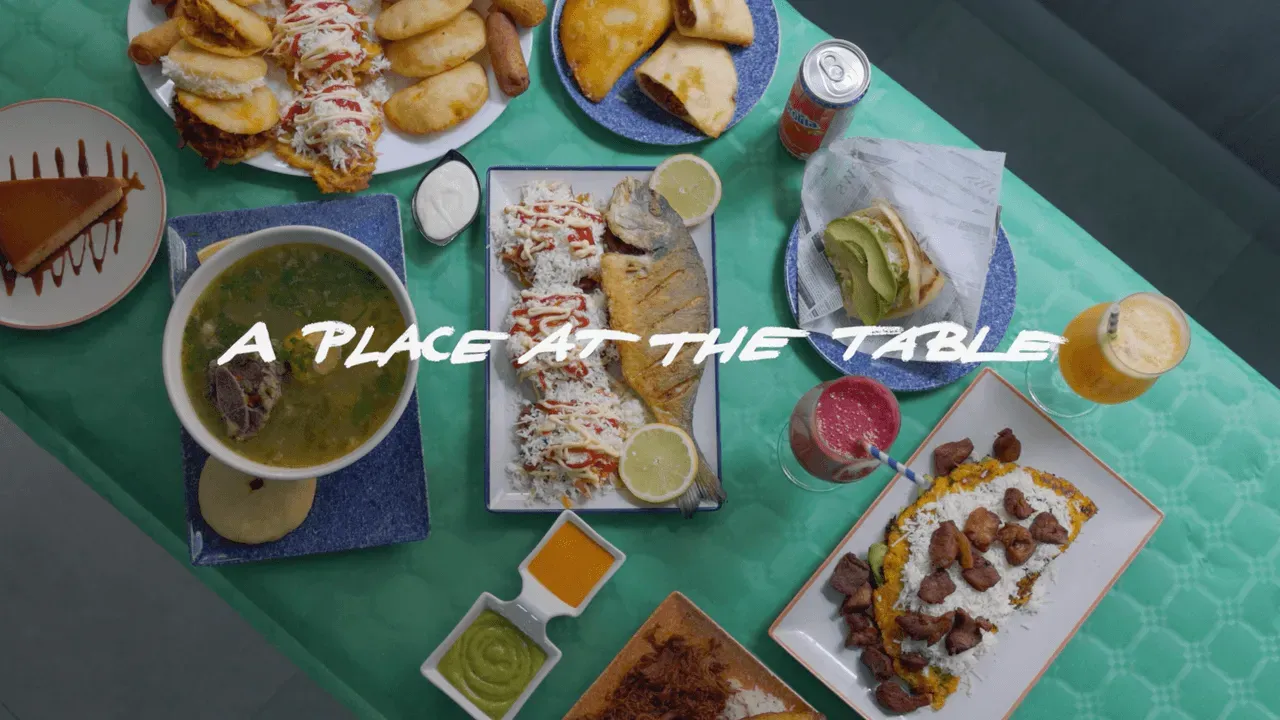
In the prepared-food stalls aisle, I'm drawn in by the warm welcome from Buda Bar Delicias Venezolanas. The woman behind the counter greets me with a smile, asking what I'd like to order as if we were old friends. Guests seated at the stainless-steel bar enjoy empanadas de carne mechada with green, herby salsa guasacaca.
Conversations among Venezuelan diners in Madrid often touch on the frustrations back home, as one diner mentions to a friend over lunch. These discussions are not uncommon among the community of nearly 130,000 Venezuelans living in Spain's capital city.
The Venezuelan community in Madrid is a diverse group, scattered throughout the city rather than concentrated in one area. This dispersal reflects the socioeconomic range of its members, who include everything from delivery drivers to financiers and even political exiles.
As a result, the city's food scene mirrors this diversity, with a variety of Venezuelan eateries spread across different neighborhoods. One such establishment is El Empanadazo, opened by Manuel Pérez Álvarez and his wife Maira María Gómez nearly a decade ago.
Pérez Álvarez, a natural entrepreneur who moved to Spain in 1997, had an epiphany when he and his wife waited 45 minutes for Venezuelan empanadas at one of the few spots in town. This experience sparked the idea to open their own restaurant, serving authentic Venezuelan cuisine to the expat community.
The couple chose to set up shop in the Mercado de Las Maravillas, a location Pérez Álvarez describes as the epicenter of Venezuelanism in Madrid. It was here that they began serving popular dishes such as pabellon criollo and cachapas, attracting a loyal customer base craving a taste of home.
The restaurant became a go-to spot for Venezuelans seeking comfort food in Madrid's bustling streets. It was there that Pérez recalls seeing people overcome with emotion, their eyes brimming with tears as they savored familiar dishes. At the time, Venezuelan cuisine was scarce and people would often go out of their way to find it. This scarcity only added to the allure of this small eatery.
The restaurant's owner attributes its success to being pioneers in bringing authentic Venezuelan food to Madrid's culinary scene. Pérez reflects on how far they've come, noting that just a short while ago, finding arepas or cachitas was a challenge. Today, with the rise of delivery apps, a quick search for "arepa yields hundreds of options.
The city is now home to numerous eateries serving Venezuelan cuisine. From Arepa's Coffee Shop in the heart of Moncloa to La Arepera's four locations and El Chino Venezolano's Instagram fame, the country's gastronomic presence continues to grow. Guasacaca, a relatively new addition, has been gaining popularity among locals.
The March 2026 Arepa Fest brought together over 5,000 people from Madrid's north edges for an immersive experience of Venezuelan and Colombian culture. The event featured live music alternating between Merengue and reggaeton beats. As attendees indulged in the region's signature arepas, it was clear that this celebration of food and culture had struck a chord.
In Madrid's neighborhoods, places like Panadería Torrerí have become havens for those seeking authentic Venezuelan flavors. By mid-morning, the bakery is replenishing its glass case with fresh cachitos and golfeados. The team carefully prepares these baked goods, often filled with ham and cheese or cheese alone, and brushed with panela and anise.
The aroma of freshly baked goods wafts through the upscale neighborhood of Barrio de Salamanca in Madrid, drawing in customers from all walks of life to Panadería Torrerí.
Azuaje's bakery has become a hub for Venezuelans and non-Venezuelans alike, offering traditional pastries that evoke a sense of home. The bakery's popularity is a testament to Azuaje's perseverance and dedication to her craft.
After years of working odd jobs to save up enough money, Azuaje finally opened Panadería Torrerí in 2024. Her grandmother's influence can be seen in the bakery's offerings, with traditional Venezuelan pastries like arepas and cachitos taking center stage.
The neighborhood has a reputation for being home to many Venezuelans who have made Madrid their adopted city, earning it the nickname Little Caracas. Azuaje understands what her customers are looking for - a taste of home in a foreign land.
Azuaje's own journey to opening her bakery was marked by hard work and determination. She spent years working as a delivery driver, taking care of children, and cleaning homes, all while saving up enough money to pursue her dream. Her grandmother's lessons about the importance of learning an oficio - a craft - stayed with her throughout her life.
Other Venezuelan restaurant owners in the area have also found success by blending traditional flavors with international influences. At Cafetín, the menu showcases this fusion, with dishes like arepas with chia seeds and shredded chicken, or creamed curry soup, that pay homage to Venezuela while also reflecting the couple's experiences in other parts of the world.
The couple's decision to leave Venezuela was not taken lightly. Fossa recalls the growing unease in 2007 as Chávez continued to consolidate his power. By 2007 Chávez just kept winning and winning, and things were getting worse and worse," he says. The atmosphere was tense, with many fearing for their future.
When the bank where Fossa worked offered him a job in Zurich, they didn't hesitate. It was a move that would lead to years of living abroad, but it also gave them the opportunity to settle down and build a new life. Their clientele reflects this sense of global experience, comprising Venezuelans who have arrived directly from Caracas as well as those who have made their way here via various routes.
These routes are not just geographical; they also reflect the diverse experiences of Venezuela's diaspora community. Some have come from universities in Boston or lived for years in Miami, New York, or London before settling in Madrid. Cafetín is a hub where these individuals intersect and form connections with one another.
A casual encounter over a college sweatshirt sparked a conversation and forged an unexpected bond between two individuals at Cafetín, a hub where Venezuelans intersect and form connections in Madrid.
The scene is familiar to Rebeksa Mouzaber, owner of Buda Bar at the Mercado de Las Maravillas, who observes how customers from Venezuela feel at home not only in the dishes but also in the way they are treated. As she expertly prepares a sweet-corn cachapa on her griddle, Mouzaber notes that Venezuelans appreciate being asked for their preferences and feeling part of the community.
Facts based on reporting originally published by Conde Nast Traveler.
You may republish this story, in full or in part, if you credit News Central Site and link to it (licence CC BY 4.0). Photos are not included.