Methane outburst from Ethiopian volcano sparks scientific interest
Satellite observations revealed massive methane emissions from Fentale Volcano in Ethiopia, despite no eruption.
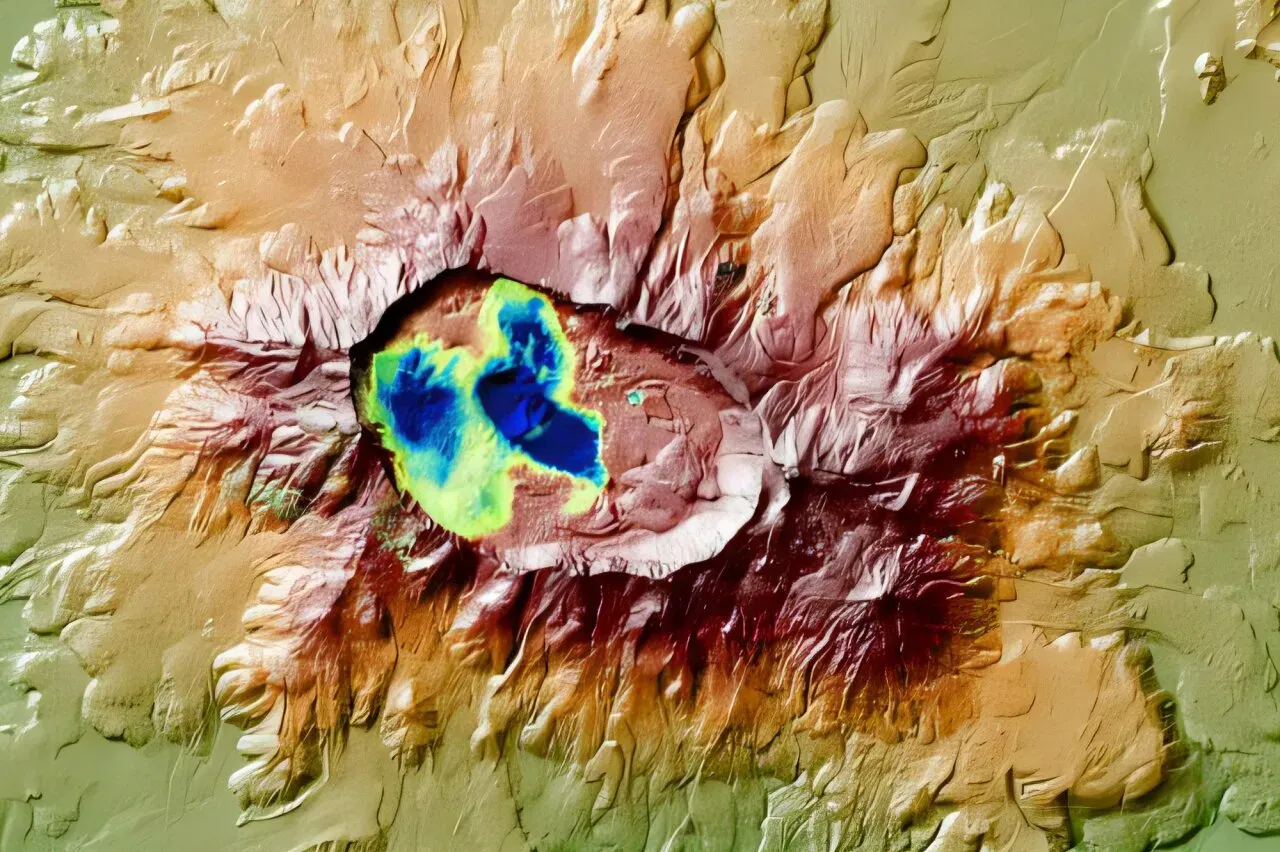
Ethiopian volcano's methane outburst sparks scientific interest after satellite observations revealed massive emissions despite no eruption. Researchers from the University of Bristol have been investigating this phenomenon and believe they may have found an explanation for the high levels of methane detected.
Satellite data collected between December 2024 and March 2025 showed that Fentale Volcano in Ethiopia released at least 38 kilotonnes of methane over a period of approximately three months. This significant release is the first confirmed instance of such magnitude from a volcano, leaving scientists puzzled about its cause.
A team of researchers has proposed that a massive injection of magma into the Earth's crust may have triggered the methane outburst. This phenomenon, known as a mega-dike intrusion, occurs when a sheet of molten rock forces its way through fractures in the crust, potentially disrupting impermeable barriers that trap methane beneath them.
According to the study published on November 19, the methane release was equivalent to a major industrial spill and significantly higher than rates observed at other volcanoes.
The Fentale volcano in Ethiopia has long been of interest to researchers due to its unique geology. When seismic unrest was detected, scientists were already on site monitoring the volcano's activity, thanks to a collaborative effort between local and international teams.
Satellite observations from GHGSAT and Space Research Organisation Netherlands (SRON) provided crucial data on the sudden release of methane from the volcano. This unexpected event sparked a flurry of scientific investigation, with researchers racing to understand its causes and implications.
The fact that only a small amount of methane was released is reassuring in terms of its potential impact on modern climate change. However, this anomaly highlights a previously unknown mechanism for natural methane emissions, which could have significant consequences when studied in the context of past geological events.
Researchers are now eager to explore the link between magma movement and greenhouse gas releases during periods of continental rifting. This new understanding may shed light on the role played by such events in driving rapid climate change in the distant past.
Researchers have been studying a mysterious methane outburst from Ethiopia's Fentale volcano, and they believe they may be closing in on an explanation for this phenomenon.
The team has access to a unique dataset of remote sensing observations that include thermal, optical, SAR, and gas measurements, which are allowing them to reconstruct the sequence of events surrounding the methane release. This data is crucial in understanding what happens beneath the surface before such outbursts occur.
In contrast to most volcanoes, Fentale's emissions of methane were unusually high; previous measurements indicate that background levels of methane in the East African Rift are significantly higher than those found at other volcanic sites worldwide.
The researchers' findings suggest that this elevated methane release may be linked to large igneous provinces (LIPs), massive volcanic events from Earth's past that released enormous amounts of greenhouse gases into the atmosphere, and whose impact on climate change is still not fully understood.
The Fentale volcano's outburst of carbon dioxide over a three-month period was also notable, with at least 2.9 megatonnes released during this time. This is unusual as most volcanic emissions consist primarily of common gases like carbon dioxide.
This phenomenon highlights the complex and often unpredictable nature of volcanic activity, where seemingly unrelated events can have profound effects on the environment.
Researchers have identified a possible cause for the mysterious methane outburst at Ethiopia's Fentale Volcano, which was detected by satellite last year. The study suggests that magma-sediment interactions may be responsible for the emission of large amounts of greenhouse gases.
The discovery highlights the complexity and unpredictability of volcanic activity, where seemingly unrelated events can have significant effects on the environment. It also underscores the need for continued research into this phenomenon to better understand its implications for climate models and natural atmospheric methane budgets. The findings emphasize the importance of ongoing monitoring and study of rift volcanoes like Fentale.
Facts based on reporting originally published by Phys.org.
You may republish this story, in full or in part, if you credit News Central Site and link to it (licence CC BY 4.0). Photos are not included.