US Army Plans Lead Azide Detonation in Iowa
The US Army plans to detonate 9,500 pounds of lead azide in Iowa without providing details about timing or safety measures.
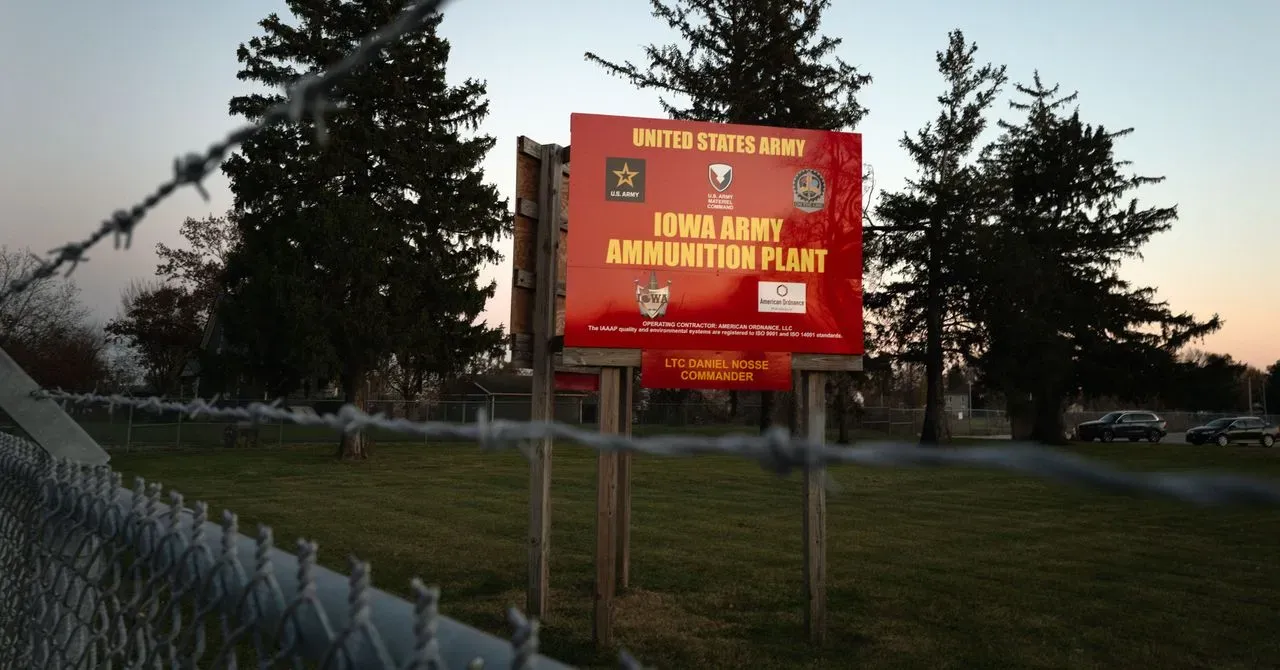
Iowans were left scrambling for information when the US Army announced plans to detonate a massive amount of lead azide in the state without providing any details about the event.
The Army's email to local officials requesting environmental testing on public lands before and after the explosion contained no specifics about timing, scale, or safety measures.
Public officials in Mediapolis were taken aback when they received the email, but they decided to grant the Army's request for testing during a November 2 meeting.
As it turned out, the Army would soon publish a press release announcing plans to blow up 9,500 pounds of lead azide with little notice.
The public was not informed about the potential risks associated with the explosion, which included toxic fallout that could affect residents in Mediapolis and surrounding areas.
The uncertainty surrounding the planned detonation of lead azide at the Middletown site in Iowa continues to cause concern among locals. With a court order blocking the initial plan, the Army announced on Sunday night that it intends to proceed with the explosion on Wednesday.
As the deadline draws near, residents are struggling to make sense of the situation and plan their holiday travel accordingly. The unofficial state subreddit is filled with posts from individuals seeking information on how to navigate the potential fallout, which has been a source of anxiety for many families.
One local official, who wishes to remain anonymous, has taken steps to ensure her safety by leaving the area and staying at a hotel with her immunocompromised child. Her decision reflects the growing concern among those in close proximity to the Middletown site.
The University of Iowa's Peter Thorne, an expert in environmental health, reports that his laboratory has been inundated with queries from concerned individuals, including pediatricians, parents, and business owners who are worried about staff exposure to lead. Like many Iowans, Thorne learned about the planned detonation through the Army's press release.
The 68 barrels of degraded lead azide at the Middletown site have been a persistent problem for over two decades, with efforts to dispose of them gaining momentum in March when they were officially classified as hazardous waste.
The Army has deemed it necessary to invoke emergency powers due to an "immediate risk" of the lead azide exploding on its own when temperatures drop below 30 degrees Fahrenheit.
This decision was made after officials determined that a controlled detonation is safer than allowing the material to deteriorate further and potentially cause an uncontrolled explosion. The filing highlights the risks associated with this explosive material, which has been a persistent problem for years.
A private company had been contracted in late March to handle cleaning up the chemicals onsite, but the contract was unexpectedly pulled two months later without explanation from the Army. According to the company, the Army did not cite any issues with their science as the reason for canceling the deal.
The EPA Region 7 administrator recently informed Governor Reynolds that her agency only learned about the hazardous state of the material in March, highlighting a lack of communication and transparency surrounding this issue.
The Army had considered multiple strategies to deal with the lead contamination at the Iowa site, including chemical cleanup, which posed its own explosion risk.
While the Army has experience blowing up expired munitions, this planned detonation in Iowa is on a much larger scale than previous incidents.
According to Thorne, any potential exposure to lead from the blast would be significantly lower compared to communities dealing with legacy pollution sources.
However, he emphasized that there is no safe level of lead exposure, especially for young children.
The federal government's decision to dispose of tons of lead has left residents in Iowa uncertain about the risks involved. In an effort to address these concerns, officials are making available extensive Q&A and FAQs sections on their website, providing detailed information on the plans and potential consequences. These resources aim to alleviate fears by presenting a clear picture of what will happen during the disposal process.
Mediapolis Mayor Messner has acknowledged that his town's residents were understandably alarmed when they saw a map showing a large cloud of lead particles drifting over their homes. He believes this visual representation contributed significantly to the public's anxiety, although he notes it was not intended to be a dramatic or alarming depiction. To mitigate these concerns, local authorities are taking standard precautions and following the Army's guidelines for public health.
The disposal process is now underway, with officials emphasizing that while some risks cannot be eliminated entirely, they can minimize them by taking necessary measures. Despite the initial shock and uncertainty, residents are being reassured that their safety will be ensured throughout the operation.
Facts based on reporting originally published by Wired.
You may republish this story, in full or in part, if you credit News Central Site and link to it (licence CC BY 4.0). Photos are not included.